Burn injury experts warn against myths
In winter, the risk of burn injuries in South Africa increases, particularly among vulnerable populations. National Burns Awareness Week aims to reduce these incidents through education, awareness, and community engagement.

As South Africa enters the colder months, healthcare professionals and safety advocates are intensifying efforts to raise awareness about burn injuries during burn awareness week.
The annual National Burns Awareness Week aims to educate the public on burn prevention, first aid, and seeking prompt medical attention.
The week is observed this year from May 6-12 under the theme “Protect, Prevent, Heal”.
According to the World Health Organization, burns account for about 180 000 deaths annually, with the majority occurring in low- and middle-income countries.
In South Africa, an estimated 3.2% of the population sustains burn injuries each year, with children, the elderly, and those living in overcrowded or underdeveloped conditions being most at risk.
Thermal burns are the most common, often resulting from open flames, hot liquids, chemicals or electricity.
While 86% of these cases are classified as minor and can be treated effectively by medical professionals, the remaining severe cases place a significant burden on the country’s healthcare system.
Children are particularly susceptible to burn injuries, especially during winter when the use of heating devices increases.
A study conducted at Chris Hani Baragwanath Academic Hospital revealed that children under the age of 10 years accounted for 85% of paediatric burn admissions between 2015 and 2019.
The leading causes were hot water burns (69%) and flame burns (21%), with most occurring within the home setting, often when young children are unsupervised around boiling water or open flames.
Dr Hilge du Preez, a paediatric surgeon from the University of the Free State, emphasises the importance of preventive measures.
“While children can suffer burns from flames, they are more likely to burn themselves by spilling hot liquids or food. We also see cases where children accidentally fall into hot bath water.”
Healthcare professionals advocate for simple preventive measures, such as turning pot handles inward while cooking, keeping kettle cords and tablecloths out of children’s reach, and supervising children around hot liquids and open flames.
South Africa faces significant challenges in providing specialised care for burn victims.
According to Crisis on Call spokesperson Ruan Vermaak, from the Moot, there are only 17 dedicated hospital burn units across the country.
These have to deal with about 8 140 hospital admissions annually.
“This presents a considerable strain on healthcare resources,” said Vermaak.
He spoke to Rekord to highlight the devastating impact of burn injuries, especially in communities where unsafe heating practices are a necessity due to limited resources.
Vermaak highlighted the importance of awareness: “By raising awareness during this awareness week, we aim to educate the public on prevention strategies, especially in informal settlements where paraffin stoves and open fires are common.”
He pointed out that immediate and appropriate first aid can significantly improve outcomes for burn victims.
For first-degree burns, it is recommended to cool the burn under running water for 10 to 15 minutes, cover it with a sterile dressing, and take pain relievers as needed.
Dr Faan Rademeyer, a trauma doctor experienced in burn treatment who advises the Sinoville Firefighting Association, advised against the use of ice or ice water on burns and warns about the dangers of synthetic clothing near open flames.
“Clothes made of nylon and synthetic fibres can melt and adhere to the skin, even if you’re metres away from the flames.”
Sister Michelle Mon from Med24, who works in a clinic in Montana, cautions against common misconceptions and myths on how to treat burn wounds: “Do not apply toothpaste, butter or other home remedies to burns. Seek medical attention immediately.”
The impact of burn wounds has a huge impact on lives.
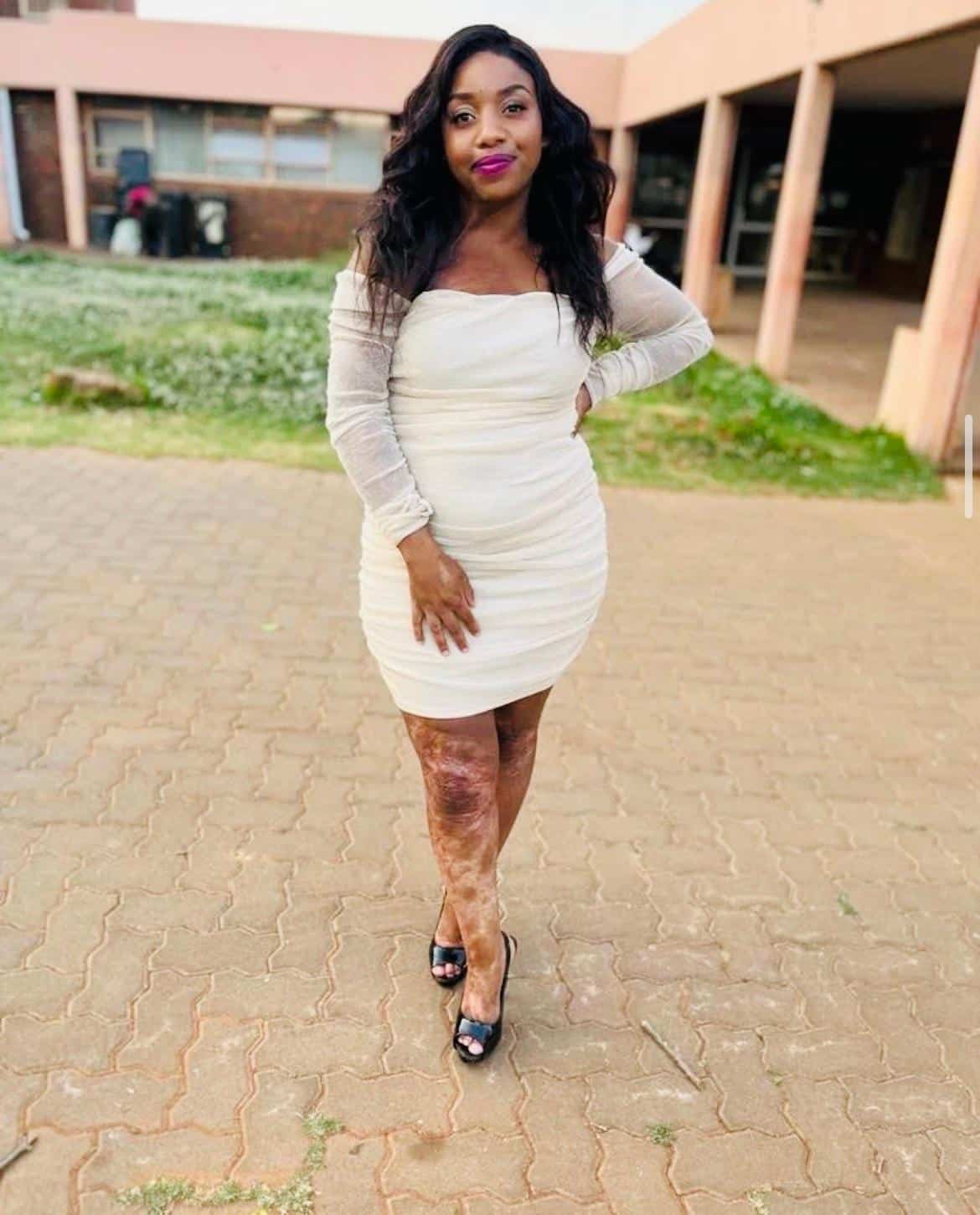
Nosicelo Madushana, a third-year medical student, sustained third-degree burns to 70% of her body at the age of four after a pot of boiling water fell on her.
Her journey underscores the long-term physical and emotional challenges faced by burn survivors.
“It wasn’t until I was in Grade 3 that I began to understand that I was perceived as different,” Madushana recalls. “That experience marked a turning point in my self-awareness and emotional resilience. It shaped me profoundly.”
Madushana, whose passion lies in research and the fight against cancer, said being a burn victim is her normal. She has no memory or photographic evidence of herself without burns.
“What I dislike the most is the empathetic gaze, the unsolicited pity, the assumption that I am a victim in constant need of help. I am not a tragic story. I am a woman who is brave, resilient, beautiful, and forging her own path.
Despite the hardships, Madushana remains determined: “My life is not defined by the incident, but by the choices I make and the legacy I intend to leave. My journey is one of strength, not sorrow.
“I am a three-time graduate, and I will not stop until I attain the prestigious Fellowship of the College of Pathologists of South Africa, a recognised postgraduate qualification in pathology for medical practitioners in South Africa.
“My journey is one of strength, not sorrow. I am committed to being a part of the global effort to eliminate this disease. Until that day comes, I dedicate myself to being a voice for cancer education, prevention, and early detection, empowering individuals with knowledge that can save lives.”
Do you have more information about the story?
Please send us an email to bennittb@rekord.co.za or phone us on 083 625 4114.
For free breaking and community news, visit Rekord’s websites: Rekord East
For more news and interesting articles, like Rekord on Facebook, follow us on Twitter or Instagram or TikTok.