Pretoria CBD residents told to boil tap water after sewer burst contaminates Findlay Reservoir supply
The City of Tshwane has issued an urgent boil-water advisory for Pretoria CBD after a damaged sewer pipe contaminated the Findlay Reservoir.
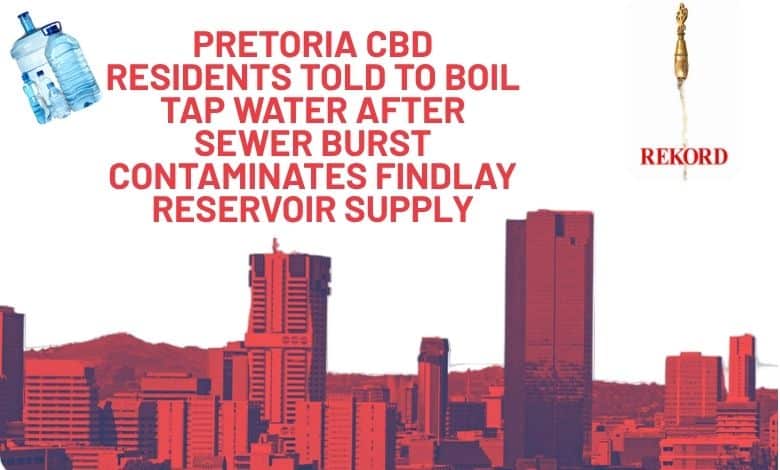
Pretoria CBD residents and businesses have been instructed to boil tap water following microbiological contamination detected in the Findlay Reservoir supply, raising fresh concerns about the capital’s water infrastructure.
In a notice dated October 22, the metro confirmed that water-quality testing identified microbiological non-compliance on October 21. Tshwane MMC for Health Tshegofatso Mashabela announced the finding on October 23.
According to the metro, the contamination followed an unexpected sewer pipe burst that allowed contaminated water to enter the supply system. Findlay Reservoir normally receives a combination of groundwater and water from Rand Water.
Metro spokesperson Antoinette Mostert confirmed the contamination and outlined immediate steps taken by the city.
She explained that while groundwater is generally high quality and requires minimal chlorination, the contamination resulted in microbial levels exceeding existing chlorination measures.
The metro isolated the affected source, emptied Findlay Reservoir, and switched Pretoria CBD and surrounding areas to an alternative supply from Salvokop Reservoir.
Mostert explained that municipal teams had also begun flushing the network to remove contaminated water.
Despite these interventions, the metro advised residents and businesses to continue boiling tap water until further testing confirms it is safe for consumption.
The affected areas include Arcadia, Asiatic Bazaar and Asiatic Bazaar Ext 1, Belle Ombre, Cape Boys’ Location, Daspoort, Elandspoort, Marabastad, Phillip Nel Park, Pretoria Central, Pretoria Ext 1, 9, 11 and 14, Pretoria Town and Townlands. Prinshof, Skougronde, Sunnyside and Trevenna, are also among other listed areas.
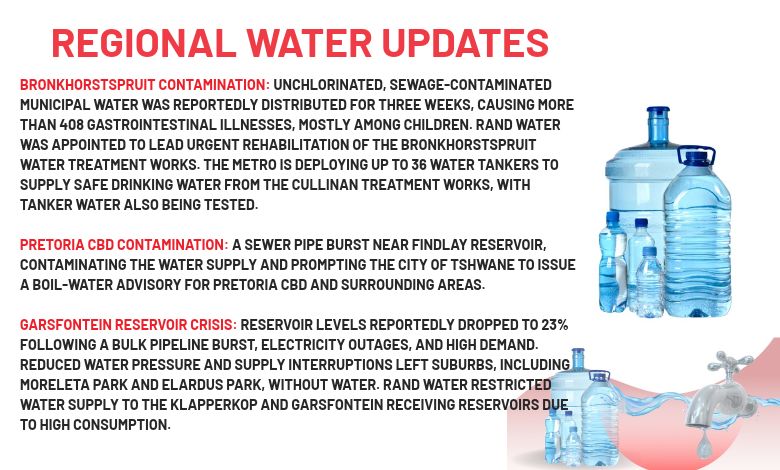
The metro stressed that the Findlay Reservoir incident is separate from and unrelated to the ongoing water crisis in Bronkhorstspruit and Garsfontein.
Residents in affected CBD areas are advised to discard stored tap water and ice made from tap water. Water intended for drinking, cooking, food preparation and brushing teeth must be brought to a boil for at least one minute and allowed to cool before use.
Water tankers will be deployed to provide access to safe drinking water, with locations and availability communicated to affected communities.
For resident Eric Cordier, the announcement reinforced concerns he has raised with authorities since 2014. Cordier believes Pretoria’s water problems are not isolated, arguing that ageing pipes, insufficient maintenance, and continued water wastage contribute to infrastructure failure.
He also raised concerns about car washes operating during water restrictions without adequately recycling water, arguing that excessive consumption and water running into streets add pressure to an already strained system.
Cordier said his household has been boiling drinking water for several years due to a lack of confidence in municipal supply quality.
“I have been warning about this moment, but nobody wanted to listen to me,” he said.
He described himself as despondent, adding that his household adopted precautions even before leaving home. He said his wife boils water and puts it into a bottle for him to take when he goes out, reflecting how the family changed its daily routine due to water quality concerns.
Cordier believes contamination reflects broader deterioration in Pretoria’s central areas and surrounding neighbourhoods. In his view, water infrastructure cannot be separated from the city’s general condition, where neglected maintenance and deteriorating services are increasingly visible. He argued that unless maintenance in older areas improves, residents will continue to face water-related problems.
Boiling water correctly
Boiling water correctly is essential during a boil-water advisory.
Residents should bring water to a vigorous, rolling boil and maintain it for at least one full minute before allowing it to cool. The recommended boiling time is three minutes.
If the water is visibly cloudy, it should first be allowed to settle and then filtered through a clean cloth or suitable filter before boiling. Once cooled, it should be stored in a clean, sanitised container with a lid to prevent recontamination. Water should not be mixed with untreated tap water after boiling.
The precaution applies to water used for drinking, preparing meals, washing food that will be eaten raw and brushing teeth. Residents should also discard ice made from potentially contaminated tap water and prepare fresh ice using water that has been boiled and cooled.
Boiling is effective against many disease-causing bacteria, viruses and parasites, but it does not remove chemical contaminants, heavy metals or other dissolved pollutants. Residents should therefore follow any additional instructions issued by the authorities if the nature of the contamination changes or further risks are identified.
The metro said water-quality monitoring, network flushing, and corrective work will continue at the plant, with the advisory remaining in place until testing confirms the supply is safe.
Residents are encouraged to share the notice with neighbours, tenants and others who may be affected, particularly people who might not have seen the original announcement.
Do you have more information about the story?
Please send us an email to bennittb@rekord.co.za or phone us on 083 625 4114.
For free breaking and community news, visit Rekord’s websites: Rekord East
For more news and interesting articles, like Rekord on Facebook, follow us on Twitter or Instagram or TikTok or WhatsApp Channel