Deadly air pollution threatens lives
The devastating impacts of PM2.5 pollution are clear, and South Africans can no longer afford to wait for change. In Pretoria, the small particle pollution can be attributed to power plants and other industries and a third of this small particle pollution according to the report, comes from mining activities.
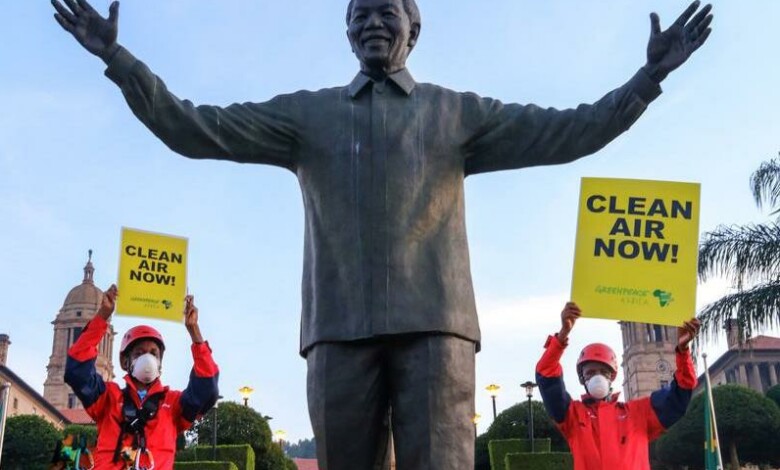
A new report from Greenpeace Africa and the Centre for Research on Energy and Clean Air (CREA), released on June 3, has sent shockwaves across South Africa, revealing a devastating public health crisis linked to air pollution.
In 2023 alone, 42 000 South Africans lost their lives due to fine particle pollution (PM2.5), with more than 1 300 of those deaths being children under the age of five.
PM 2.5 refers to fine inhalable particles in the air with a diameter of 2.5 micrometres or less. These particles can be inhaled and cause serious health problems. They are a common air pollutant found in various sources like car exhausts, coal-fired power stations, and industrial emissions.
How small is 2.5 micrometres? Think about a single hair from your head. The average human hair is about 70 micrometres in diameter, making it 30 times larger than the largest fine particle.
The report, titled Unmasking the Toll of Fine Particle Pollution in South Africa, paints a grim picture of the state of air quality in the country, with Gauteng, Mpumalanga, and the Highveld Priority Area bearing the brunt of the pollution’s lethal impact.
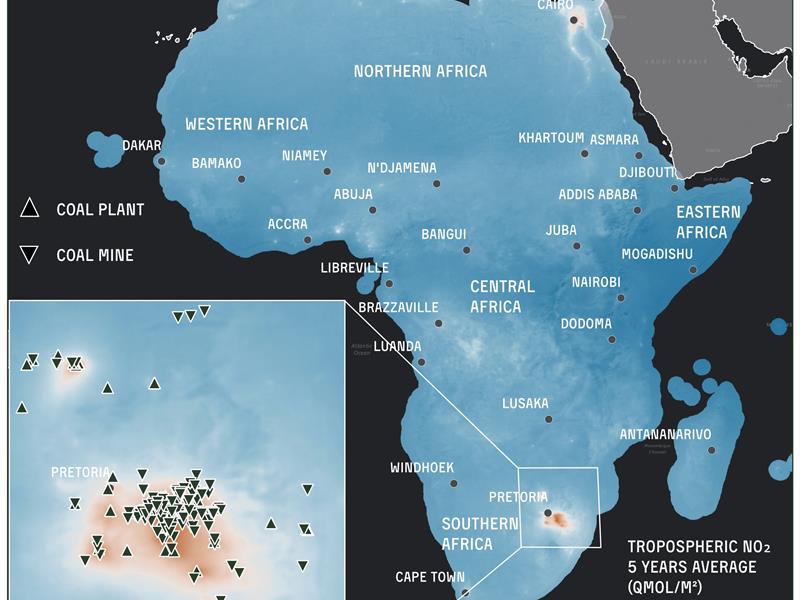
In Gauteng, over 16 000 deaths were attributed to the effects of PM2.5 pollution in 2023 alone.
The province is home to some of the largest coal-fired power plants and industrial zones in the country, making it a hotspot for pollution.
The findings underscore a growing concern that South African communities are living in an environment where the air they breathe is contributing directly to their deaths.
The culprits behind this crisis are well-known: large industrial giants in the coal and energy sectors, particularly Eskom, which operates one of the world’s largest fleets of coal-powered plants.
The report shows in total, Eskom emits more sulfur dioxide (SO2). It is a gaseous air pollutant composed of sulfur and oxygen that forms when sulfur-containing fuel such as coal, petroleum oil or diesel is burned in the entire power sectors of the European Union, the USA or China.
“Ironically, while South Africa’s Constitution guarantees the right to a healthy environment, this right is being trampled every day,” said Ibrahima Ka Ndoye, international communications co-ordinator at Greenpeace Africa.
“The corporations responsible for the majority of pollution are prioritising profits over people, and this is an unacceptable tragedy.”
The report estimates that exposure to PM2.5 in South Africa costs the country R960-billion in 2023.
This figure accounts for premature deaths, respiratory illnesses, lost workplace productivity, and strained healthcare systems.
The pollution’s toll on human life is deeply entrenched, as evidenced by the communities in the Highveld region, which have long been at the epicentre of South Africa’s coal industry.
The report specifies that in Gauteng cities like Johannesburg and Pretoria, industrial activity is a major contributor to the region’s poor air quality.
A total of 35% of the PM2.5 pollution in Johannesburg can be traced to power plants and other industries, according to the Clean Air Fund’s report.
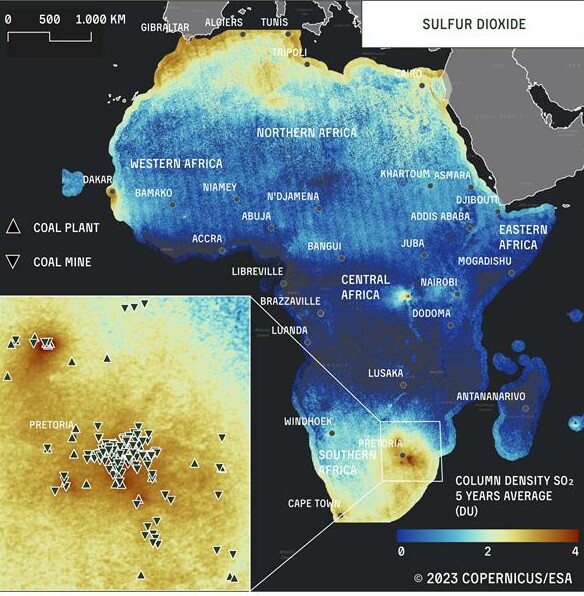
The report also singles Pretoria out as a city grappling with fine particle pollution, of which a third can be attributed to mining activities.
“We have to ask ourselves: How many more lives must be lost before action is taken?” said Cynthia Moyo, Climate and Energy campaigner at Greenpeace Africa.
“The science is clear: the air in South Africa is toxic. But it’s not just about environmental health. It’s about social justice. The people most affected by this pollution are often those who are already facing economic hardships.”
Despite mounting evidence and numerous calls for action, Eskom, the state-owned utility responsible for a substantial portion of South Africa’s electricity generation, continues to fall short on pollution controls.
Eskom has repeatedly sought exemptions from environmental regulations, citing the cost of upgrading emissions-control technology and delaying plant decommissioning.
The report highlights that aligning South Africa’s air quality standards with the World Health Organization (WHO) guidelines could prevent up to 33 000 deaths annually.
“The time to act is now. We cannot continue to allow polluters to profit at the expense of human lives,” said Moyo.
“Communities across South Africa deserve clean air, healthy environments, and a future free from the dangers of toxic pollution.”
The situation has reached a breaking point, and Greenpeace Africa is calling for bold, immediate action.
Ka Ndoye said the organisation’s key recommendations include an immediate end to exemptions from air pollution limits for major emitters such as Eskom, enforcement of national air quality standards to ensure public health is protected, and a just transition away from coal to renewable energy.
Do you have more information about the story?
Please send us an email to bennittb@rekord.co.za or phone us on 083 625 4114.
For free breaking and community news, visit Rekord’s websites: Rekord East
For more news and interesting articles, like Rekord on Facebook, follow us on Twitter or Instagram