
Students advocate for affordable accommodation in CBD
Given the city's large student community, students say more must be done to address safety, accommodation and rising costs.
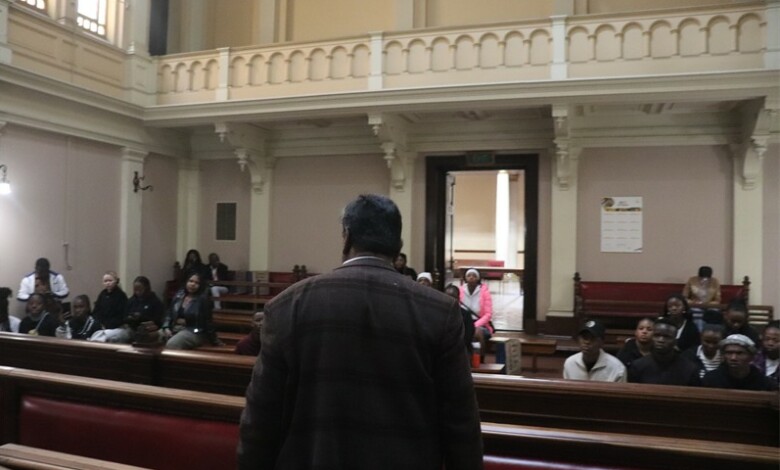
The Bad Buildings Committee says it is committed to erecting affordable student accommodation following a colloquium with TUT.
The colloquium took place on July 18 and was organised by the Office of the MMC for Corporate and Shared Services in partnership with Student Representative Councils (SRCs) and other youth leadership formations.
More than 200 students took to the Council Chambers to air out their grievances and forge a way forward in line with the Mandela Day theme.
“We want to build a city that is safe for students. We know that students are living in horrible conditions. We know that you have small spaces on campus, and you don’t have access to all the amenities you need. The biggest issue is the issue of dignity, so we really want to create dignified student accommodation, where you have enough room to live like a human being,” said MMC for Corporate and Shared Services, Kholofelo Morodi.
Morodi said the colloquium was a platform to listen, share and build partnerships with the metro’s student community. She believes it is important that students have a space where they can be safe, heard and involved in the shaping of their futures.
She named Soshanguve Campus as an example, noting that the whole street outside is filled with taverns.
“That’s not what we want because the country we envision is one where young people can reach their maximum potential. We need to create accommodation that puts you in proximity to things that will help you reach it. You can’t be in an environment where, 24 hours a day, there’s drinking and music. When do you learn?”
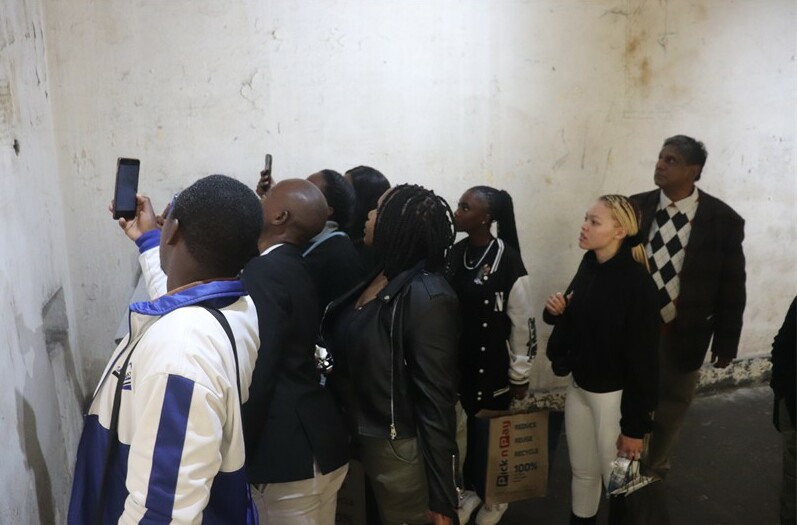
DESCRIPTION: Several students taking photos of Freedom Charter inside the Rivonia 9’s holding cells in the Palace of Justice.
She said the municipality will be focusing on that while working alongside the Community Safety department.
“It’s not right that we have students being robbed and killed. Students mustn’t be protesting for safety; we have girls being raped.”
According to Morodi, the TMPD will be hiring more people “to have boots on the ground. You must be able to walk the streets with your phone in your hand. You’ve got areas in Tshwane where that’s not possible, and that’s what we need to change”.
Morodi added that the student community is the biggest in Tshwane and creating an environment free from lawlessness, such as hijacked buildings, undocumented foreigners and ignorance of by-laws, is the only way it can flourish.
Students were taken on tours of the Old Ou Raadsaal Building and the Palace of Justice to gain glimpses into pivotal moments in South African history during the day’s events.
They saw the cell where the ANC and Umkhonto we Sizwe leaders were held during the Rivonia Trial, the courtroom where they were sentenced in and the original Freedom Charter written on the cell walls.
While many felt Mandela Day should be recognised, the South Africa he had envisioned, however, is a far cry from what Tshwane students face today.
“All of us are still struggling with unemployment, student accommodation and funding. We must take our spears and fight these struggles. Mandela has fought, but it’s still up to us as the youth to carry on,” said Tandazo Seoko, TUT Pretoria Campus’s SRC President.
“This is not even a TUT or Tshwane-specific thing; it’s all over. A majority of students are defunded and have no backing to pay for tuition fees. Till today, our students are struggling to find spaces in higher education.”
Seoko called on the government to implement plans to bring higher education to more students.
Beshley Disoloane from TUT’s Soshanguve campus said the metro’s water woes are making life difficult for students and shared similar sentiments regarding the need for more funding. “We want the City of Tshwane, especially, to consider that during these dialogues and commemoration,” Disoloane said.
He said commemorating Mandela Day carries little meaning when students are still subjected to economic inequality. He believes that until students are safe and can study for free, Madiba’s legacy won’t be fulfilled.
“Young people come to this province, come to this city, to study. The government must introduce measures to address the crime affecting students,” Disoloane said.
Teryl Mazwai, a Pretoria Campus student, said tuition fees are a great hindrance in the pursuit of education for many students, especially as most come from disadvantaged backgrounds. She said getting accepted alone is a feat, but maintaining fees and other expenses leaves students destitute, and more governmental interventions are needed.
“I think more things like today are needed, more tours to educate us on how we got to where we are now. Let us not forget where we come from,” Mazwai said.
Watch here: https://www.facebook.com/share/v/19ERLYBsBt/
Do you have more information about the story?
Please send us an email to bennittb@rekord.co.za or phone us on 083 625 4114.
For free breaking and community news, visit Rekord’s websites: Rekord East
For more news and interesting articles, like Rekord on Facebook, follow us on Twitter or Instagram or TikTok.


