Metro offers shelter after complaints over Kilner Park field occupation
Locals say the presence of a vagrant has led to noise, open fires, and public urination where children play. The metro says social workers will now investigate the site.
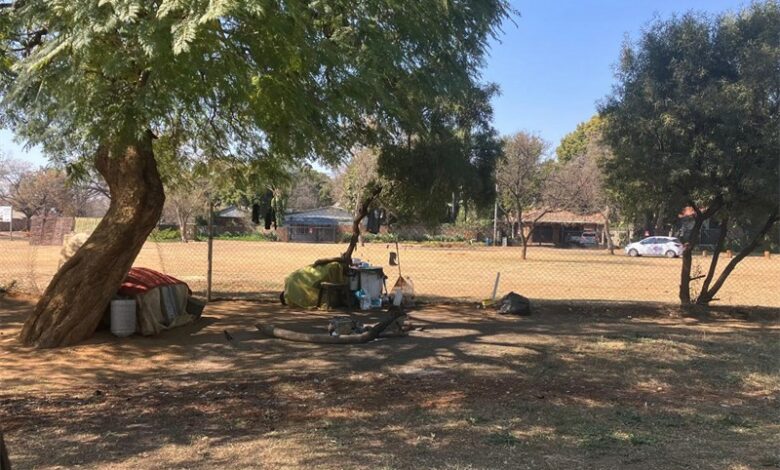
Following complaints from Kilner Park residents about an illegal occupation on a public field, the metro says it will deploy social workers to assess the situation and offer relocation to shelters.
Access to these services, however, remains voluntary.
Ward 84 councillor Anru Meyer said that an individual has set up a makeshift camp on the field, leading to a number of complaints from the community.
“The occupation started with the informal trade of wood screens made in the park, and several attempts were made to remove the trade, as the trader does not have a formal trade licence,” he said.
He said a tent-like structure was later seen, and residents complained about health and safety risks, as the individual relieved himself on the field, where local children play.
Meyer said the TMPD was informed; however, the individual came back soon after the police had left.
“The park is kept neat by the residents for the enjoyment of the public; however, urination is uncalled for,” he said.
He called on the metro to provide long-term solutions for social crime prevention.
“This includes reaching out to NGOs, of which one has already met with me to find shelters where [the] illegal occupants can be referred,” he said.
Resident Tabita Winter shared her frustration with the illegal occupation of fields in the area.
“It has brought about increased noise, frequent fires, and littering, which directly impacts our quality of life,” she said.
She said some residents feel unsafe walking near the area, especially in the early mornings and evenings.
“There are also hygiene concerns due to the lack of sanitation facilities, which raises fears of disease and contamination.
“There is a sense of lawlessness, which affects property values and deters potential homeowners or investors,” she continued.
She then said violation of by-laws leads to environmental degradation and increased crime concerns, and that not getting a response from the authorities only creates more frustration.
“People feel that the problem has been ignored for too long, and many are actively seeking solutions to restore the safety and cleanliness of the area,” she said.
In response to the complaints, the metro said they had not been aware of the issue; however, they would now intervene.
“The Community and Social Development Services (CSD) department, which is responsible for the social welfare of community members, was not aware of the illegal occupation of the open field,” said spokesperson Selby Bokaba.
He said, however, the matter was brought to the department’s attention for possible intervention.
“The CSD will deploy social workers to investigate the situation. If they consent to being relocated, the department will facilitate their placement into homeless shelters managed in partnership with local NPOs.”
Bokaba stated that, however, it should be remembered that access to these services is voluntary.
“If the individuals accept assistance, they will be relocated to designated shelters. Should they decline, law enforcement will take appropriate steps within the existing legal framework,” he said.
He said the timeline for addressing the situation will be dependent on the findings of the social workers’ assessment.
“This will determine the appropriate type of intervention and duration of support required,” he said.
Bokaba further noted that the state of homelessness in the metro is one of the key challenges in enforcing by-laws.
“While budget constraints do play a role, the issue extends beyond finances and requires collaboration across government departments, civil society, and communities.”
He said vagrancy is now largely driven by economic hardship. “Many individuals are seeking job opportunities and settling in areas where they believe employment may be accessible.”
He said enforcement is complicated by the reality that these people are often not criminals.
“They are often victims of poverty, which can be approached from a social development perspective, rather than a criminal one,” he said.
Do you have more information about the story?
Please send us an email to bennittb@rekord.co.za or phone us on 083 625 4114.
For free breaking and community news, visit Rekord’s websites: Rekord East
For more news and interesting articles, like Rekord on Facebook, follow us on Twitter or Instagram or TikTok.