Motorists urged to yield to emergency vehicles
A recent event in Hatfield has sparked renewed calls for greater public awareness regarding the proper way to contact emergency services and move out of the way.
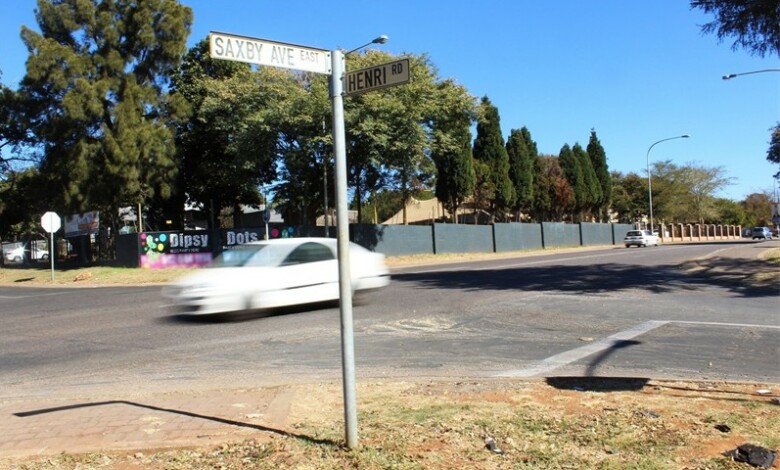
Emergency responders in Pretoria are raising concerns about repeated delays, often blaming motorists who fail to give way despite sirens and flashing lights.
The emergency services are cautioning motorists to note that this behaviour could have dire implications for critically ill patients.
This concern stems from an incident on April 16 in Hatfield, where a man was discovered severely injured at a guest house and required immediate medical assistance.
Although emergency responders managed to stabilise and transport him to the hospital, traffic delays continue to be a persistent issue for teams involved in life-or-death situations.
WATCH:
https://www.facebook.com/share/r/17frv6G3V3/
VEMRU spokesperson, Casper Visser, noted that these delays are part of a broader pattern encountered by emergency personnel daily.
“Almost every response during the day, there will be at least one car not paying attention and yielding,” Visser said.
He explained that such delays can have a significant effect on response times, especially in busy areas where every second counts. In some instances, patients are left waiting in unsafe or uncomfortable conditions as emergency services struggle to reach them.
“Recently, while standing with a patient on the N1 highway, it took the ambulance about 15 minutes to travel 2km through the congestion while the patient was waiting on the hot road in the blistering sun,” he said.
However, another emergency service provider said the issue, while not always severe, remains a consistent risk that can affect operations.
Paramedic Xander Loubser from Best Care Emergency Medical Service said delays are not always extreme but are frequently encountered in different forms.
“It is not a daily problem as such, but it is a daily possibility and a risk. There are small acts that can cause delays or put us at greater risk of causing an accident,” Loubser said.
He also pointed out that a lack of situational awareness among motorists, particularly in modern soundproof vehicles, contributes to the problem.
“The biggest issue is situational awareness. Vehicles today are more soundproof, so drivers may not immediately hear approaching sirens,” Loubser shared.
Both responders highlighted common mistakes made by motorists when emergency vehicles approach, particularly sudden or unpredictable reactions.
“Most common mistake is slamming on their brakes, especially on a single road with oncoming traffic,” Visser said.
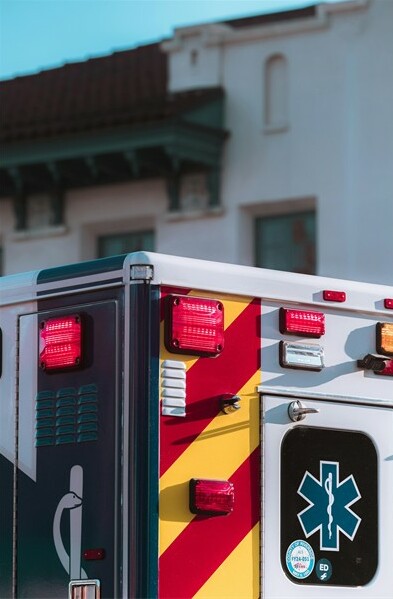
Loubser echoed this, advising motorists to remain calm and observant.
“Do not slam on your brakes. Slow down, observe in your mirrors, and see what the emergency vehicle’s intent is. If the vehicle is weaving through traffic, it is best to stay in your lane and allow it to pass safely,” he said.
Motorists are encouraged to create a clear passage for emergency vehicles in high-traffic situations.
“On a single road, maintain your speed and move to the left when it is safe to do so. On a double lane where traffic is standing still, move to the outside of the lane to create a passage through the middle,” Visser explained.
Loubser added that drivers should avoid misusing road infrastructure, such as yellow lanes.
“Yellow lanes are not designated emergency lanes, but in severe congestion, they may be used by emergency vehicles. Motorists should not use them to skip traffic, as this blocks access for responders,” he said.
Beyond road behaviour, both emergency service providers emphasised the importance of accurate communication when reporting emergencies.
“When reporting emergencies, residents should provide as accurate a location as possible and information on how many patients and how they got injured,” Visser said, adding that sending a pin location via WhatsApp can assist responders.
Loubser reinforced this, noting that clear directions and preparation at the scene can improve response times.
“Be clear about your location, ensure access points like gates are open, and have someone ready to guide the ambulance on arrival,” he said.
Emergency responders continue to call on motorists to stay vigilant and responsive on the roads, emphasising that public co-operation can significantly enhance the chances of timely medical interventions for patients.
Do you have more information about the story?
Please send us an email to bennittb@rekord.co.za or phone us on 083 625 4114.
For free breaking and community news, visit Rekord’s websites: Rekord East
For more news and interesting articles, like Rekord on Facebook, follow us on Twitter or Instagram or TikTok or WhatsApp Channel