Moot community escalates electrical safety crisis to Labour Department over injury fears
A dispute between residents in Villieria and the metro highlights a broader tension between municipal service delivery capacity, infrastructure vulnerability, and the legal obligations placed on public authorities to protect residents from preventable harm.
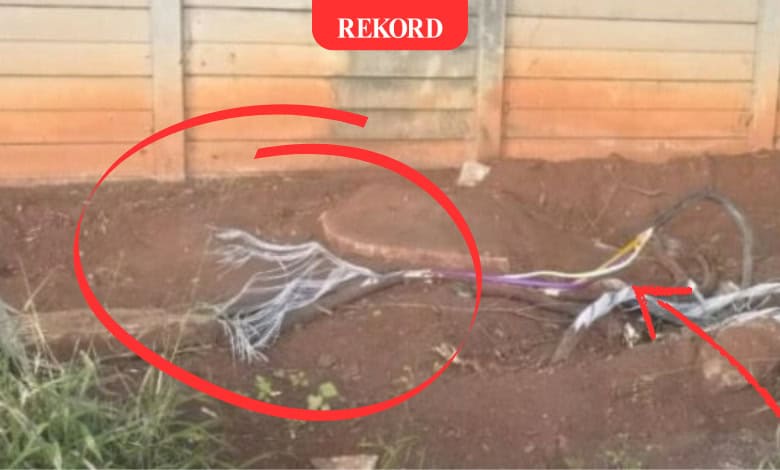
Residents in Villieria have escalated a growing dispute over exposed electrical conductors and delayed infrastructure repairs to the Department of Employment and Labour, citing serious concerns that continued municipal delays could result in further injuries or fatalities.
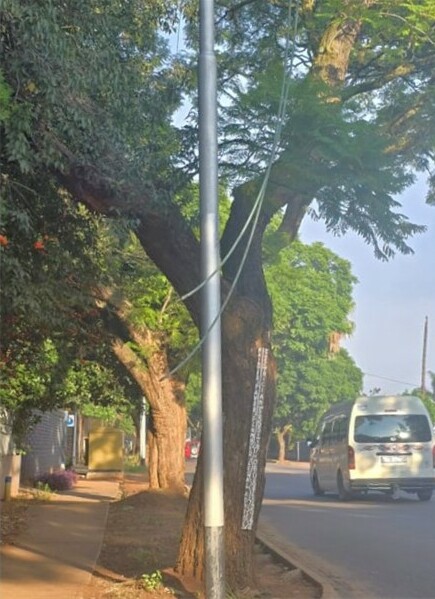
The escalation follows a series of reported incidents in early April, involving alleged cable theft and damaged electrical infrastructure across multiple streets, including 22nd and 27th avenues and Nico Smith Street.
Residents say that despite repeated complaints to the metro, hazardous conditions persisted for several days in high-density residential areas.
The matter intensified after an electrical injury was reported on April 13.
According to documentation submitted as part of the complaint process, the incident is believed to be linked to exposed live electrical conductors in the area.
Residents argue that this demonstrates a breakdown in response time and safety assurance mechanisms by the metro.
One of the complainants, Renier Weilbach, has submitted a formal statutory notification to the Department of Employment and Labour, requesting an investigation under the Occupational Health and Safety Act 85 of 1993.
The submission argues that the metro failed to ensure that members of the public were safe.
Residents said they have submitted photographs, complaint reference numbers, and timelines showing that reports were logged with the metro between April 10 and 15.
They argue that although initial isolation steps may have been taken, the full resolution of the hazard was delayed beyond what they consider acceptable safety standards.
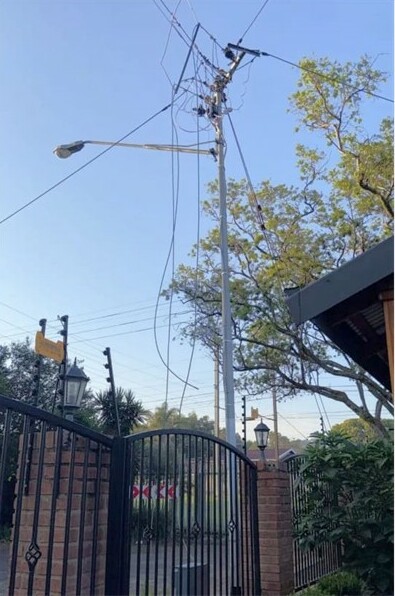
A key concern raised by residents is the gap between ‘isolating’ a hazardous area and fully repairing or securing electrical infrastructure.
They say this gap created continued exposure risks in a residential environment where pedestrian and vehicular traffic remained active.
The metro has confirmed receipt of complaints relating to the incident.
Metro spokesperson Lindela Mashigo stated that maintenance teams were dispatched following reports of electrical hazards and that investigations established that overhead lines had been stolen.
According to Mashigo, the affected area was isolated as an immediate safety measure and repair teams were assigned to attend to the damage.
The metro maintains that this forms part of its standard operational response to electrical infrastructure failures.
“The team was immediately dispatched to the site to isolate the affected section of the network and ensure that the area was made safe,” he said in his response.
However, residents dispute the effectiveness of the response timeline, arguing that the hazard was not fully resolved before the reported injury occurred.
They claim that repeated escalation attempts did not result in sustained on-site safety assurance.
The metro has further attributed delays in full restoration to broader challenges affecting electrical infrastructure across the metro.
These include high levels of cable theft, vandalism, and increased service interruptions, all of which, it says, place strain on repair capacity and response times.
“All reported hazardous conditions, particularly those posing a risk of serious injury or death, are treated as a priority,” Mashigo said.
Despite this assurance, residents argue that prioritisation does not necessarily translate into timely resolution on the ground.
They say their experience in Villieria reflects a wider pattern of delayed infrastructure repair in parts of Pretoria, particularly where repeated vandalism or theft occurs.
The matter has now taken on a new dimension, with the Department of Employment and Labour being asked to determine whether the metro complied with its obligations under occupational health and safety legislation.
The Occupational Health and Safety Act places a general duty on employers and responsible entities to ensure, as far as reasonably possible, that members of the public are not exposed to hazards arising from activities or infrastructure under the control of employers or responsible entities.
In practical terms, this includes ensuring that electrical installations are maintained safely, hazards are secured promptly, and risks are managed to prevent foreseeable harm.
The act further provides for inspections and formal investigations where there is evidence of potential non-compliance or where incidents result in injury.
Residents say this legal route became necessary after what they describe as insufficient municipal follow-through on repeated warnings.
DA councillor Wayne Helfrich has also repeatedly raised concerns about infrastructure reliability and response delays in the affected area.
He has questioned whether internal processes within the municipality are sufficient to ensure accountability when hazardous conditions are reported.
“I have requested the DA spokesperson for utilities to raise questions within the Section 79 Utilities committee with regards to lack of feedback and information, as well as a preventative plan and consequence management steps to be taken,” said Helfrich.
Residents say they are not seeking political confrontation but rather consistent and enforceable safety standards.
One resident involved in the complaint process said the key concern is not only the initial hazard, but the duration of exposure before full repair is completed.
According to residents, even short periods of exposed live electrical infrastructure present unacceptable risk levels in residential environments.
The metro maintains that its maintenance teams follow established procedures, including immediate dispatch, isolation of affected networks, and repair scheduling. Mashigo said internal investigation processes are triggered once incidents are reported and attended to.
However, residents say they remain unconvinced that procedural compliance translates into effective on-the-ground safety outcomes.
As the process unfolds, Villieria residents say they will continue to document and escalate incidents until they are satisfied that the area is safe and that accountability measures are clearly defined.
Questions were forwarded to the Department of Labour but no answers had been received by the time of going to print.
Do you have more information about the story?
Please send us an email to bennittb@rekord.co.za or phone us on 083 625 4114.
For free breaking and community news, visit Rekord’s websites: Rekord East
For more news and interesting articles, like Rekord on Facebook, follow us on Twitter or Instagram or TikTok or WhatsApp Channel