Forensic services suffer under Tshwane Ya Tima campaign
Repeated power outages at a forensic laboratory and several schools in Pretoria raise serious concerns over service delivery. The DA is requesting an investigation, while a court order has already ordered the restoration of power to schools. Critical services remain vulnerable amid aggressive collection measures by the metro and growing administrative disputes.
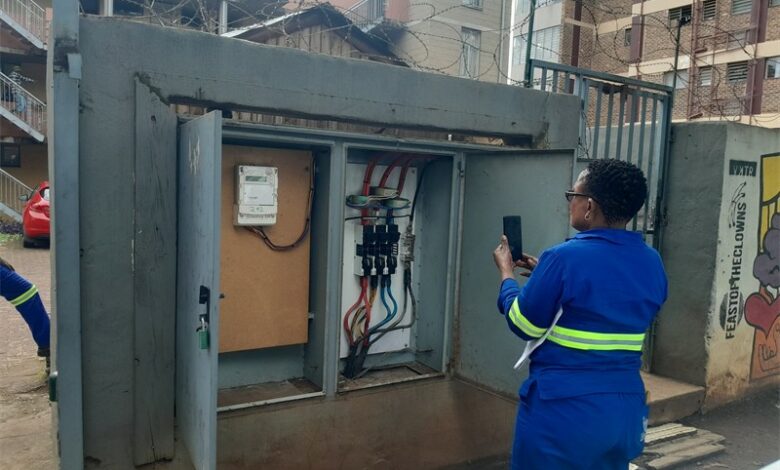
The metro’s aggressive revenue collection campaign, also known as #TshwaneYaTima, raised new concerns after power outages started affecting a critical forensic facility’s services.
In reaction to the uncertainty over power supply to the Tshwane Forensic Pathology Laboratory, undertakers were requested to remove bodies faster after post-mortem examinations, to prevent any possible further complications.
The DA announced that they were going to request the city manager to urgently investigate the power cuts at the Gauteng Department of Health’s laboratory, which is situated behind the Steve Biko Academic Hospital.
The campaign has been launched under the leadership of Mayor Dr Nasiphi Moya to collect outstanding debts.
Yet, new information indicates that its implementation may often affect critical services that are not part of debt disputes.
According to the DA, this important forensic laboratory in Pretoria where autopsies and post-mortem examinations are done, experienced repeated power outages this past two months.
These outages have, according to the party, created a climate of uncertainty and placed pressure on the institution’s ability to deliver essential services.
The party said it was reliably informed that the problem stems from an alleged demand by the metro for a significant advance payment, despite the fact that the institution reportedly has no outstanding debt.
Furthermore, it is argued that electricity is still being cut off regularly, even after the metro’s financial department confirmed that they are not in arrears and are operating on a prepaid system for power.
This situation reportedly forced the laboratory to rely on generators to keep operations going.
The laboratory functions under the Gauteng Department of Health and forms part of the province’s network of forensic pathology services.
The department manages 11 morgues across Gauteng, including this one in Pretoria, where post-mortems are carried out.
These laboratories play a key role in judicial investigations, especially in cases of unnatural deaths. The service also functions in collaboration with academic institutions that support training and research in forensic pathology.
Although there is currently no post-mortem backlog, the unpredictability of power supply remains a source of concern for staff and related services.
Madeleine Hicklin, a Member of the Provincial Council and spokesperson for Health of the DA in Gauteng, said the party discovered that regular power outages occurred at the institution these past two months.
This creates insecurity and affects residents’ access to essential forensic services.
She explained that the effect of the disruptions extends beyond the laboratory itself.
The uncertainty surrounding electricity is reportedly placing pressure on the chain of services, including undertakers.
“Undertakers are encouraged to remove bodies as soon as possible after post-mortems because of fears of further power outages,” Hicklin said.
She emphasised that while revenue collection is essential for the financial sustainability of municipalities, it should not be done in a way that disrupts critical services.
Post-mortem examinations in cases of violent, sudden or suspicious deaths depend on stable electricity.
Hicklin said these examinations require a reliable power supply, as outages can compromise the integrity of samples, complicate the identification of remains and jeopardise key evidence used in legal proceedings.
She warned that “forensic pathology services cannot be held hostage by a flawed collection campaign and could undermine a vital justice system”.
According to Hicklin, such processes should be in line with the rule of law and must not target innocent institutions.
The DA party further believes that collection should not be used as a tool that harms residents under the pretext of efficient management.
In the meantime, questions remain about how widespread the problem is and whether other critical institutions are experiencing similar challenges.
Hicklin said the DA will continue to monitor the matter and consider further steps if action is not taken quickly.
The metro has not yet responded to Hicklin’s specific allegations about the forensic laboratory, but the issue places the focus on the balance between aggressive debt collection and the protection of essential public services.
The recent court order on schools in Pretoria sheds further light on the broader implications of aggressive collection practices.
Several schools’ power has been cut for two weeks due to outstanding property taxes, despite the fact that their accounts for basic services such as electricity were paid.
The court found the action unlawful and ordered that power be restored immediately, underscoring the vulnerability of public institutions under such measures.
The metro has cut power to several key government institutions in Pretoria this year in an effort to collect outstanding debt.
This action affected, among others, the Kgosi Mampuru II correctional centre, where there is a dispute over the accuracy of the account statement.
The Government Information Technology Agency in Erasmuskloof has also been switched off due to alleged outstanding accounts, while offices of the Department of Labour and a SAPS academy experienced similar disruptions.
In the health sector, the Weskoppies Psychiatric Hospital was also included in power outages, which raised concerns over the impact it left on patients and services.
The mayoral office confirmed that the metro continued its #TshwaneYaTima campaign in the first week of May with several actions where electricity was cut at premises which owed the city.
During the collection, they returned to apartment blocks in the Pretoria city centre where power supply at residential complexes in Danville, as well as a business in Pretoria West, were disconnected.
Electricity was also disconnected at residential complexes in Rietvalleirand and Equestria in Pretoria east.
The combined value of revenue that the metro tried to collect, amounts to more than R1.39-million.
Do you have more information about the story?
Please send us an email to bennittb@rekord.co.za or phone us on 083 625 4114.
For free breaking and community news, visit Rekord’s websites: Rekord East
For more news and interesting articles, like Rekord on Facebook, follow us on Twitter or Instagram or TikTok or WhatsApp Channel