City plans R2.1bn Rooiwal upgrade to tackle ongoing water challenges
At the South African Human Rights Commission hearings on Gauteng’s water issues, municipal officials presented an update on the city’s water supply situation, infrastructure constraints, and planned interventions.
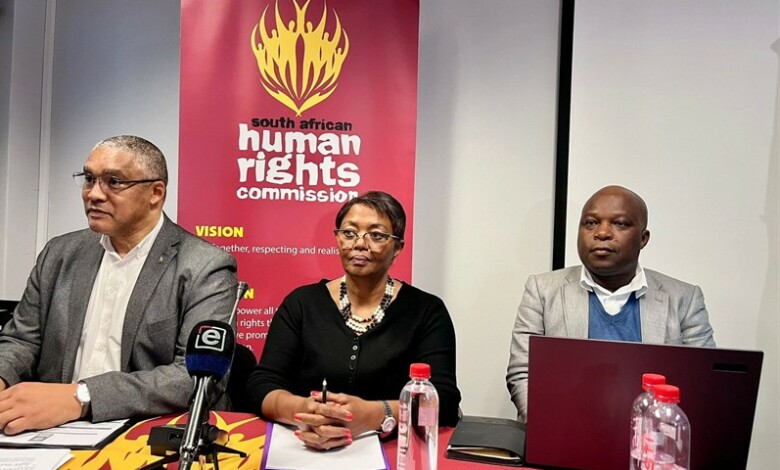
The Tshwane metro says it is working on reducing its reliance on water tankers by expanding its own fleet and investing in long-term infrastructure upgrades, despite ageing networks and ongoing supply pressures.
This was said during the South African Human Rights Commission (SAHRC) hearings into Gauteng’s water challenges, where metro officials outlined the city’s current water supply status, infrastructure challenges and intervention plans.
Addressing the commission on May 20, Tshwane COO Vuyo Zitumane said the metro has increased investment in its own tanker fleet to reduce costs and improve response times during water interruptions.
Zitumane said the city currently has 31 operational water tankers and is planning to expand the fleet.
“This has saved the city about R12-million between January and March 2026 on water tankers expenditure,” she said.
She told the commission that the city aims to become less dependent on outsourced tanker services, although upcoming planned maintenance by Rand Water may still require temporary external support.
“With the coming Rand Water planned maintenance to be carried out from May 29 until July 17, the city might be compelled to request the services of external water tankers to augment its own fleet,” Zitumane explained.
She also admitted that several of the city’s wastewater treatment plants remain below the required Green Drop standards.
However, she said the metro has already begun implementing interventions to improve water infrastructure and treatment capacity.
“One of the long-term interventions that the city needs to invest in is the Rooiwal Wastewater Treatment Plant, which will address the Hammanskraal water challenges,” she said.
According to Zitumane, the metro has already applied for R2.1-billion for infrastructure funding from the National Treasury to refurbish the Rooiwal Plant.
“The City of Tshwane recommits to its Water Stabilisation Plan to stabilise bulk supply, improve reservoirs and pump stations, manage pressure, fix leaks, reduce illegal connections and strengthen monitoring and metering,” she said.
The hearings, hosted by the SAHRC, focused on growing water supply challenges affecting municipalities across Gauteng.
Tshwane City Manager Johann Mettler told the commission that the city remains committed to ensuring sustainable access to potable water despite financial pressures and ageing infrastructure.
According to Mettler, the city sources 79% of its water from Rand Water, while about 19% comes from the city’s own treatment plants, boreholes, streams and fountains. Another 2% is supplied by Magalies Water.
He said the metro distributes water through a network spanning more than 10 328 kilometres across all seven regions of the city.
Mettler acknowledged that water supply interruptions experienced by residents are caused by a combination of ageing infrastructure, pipe bursts, illegal connections, vandalism and maintenance work on both municipal and Rand Water systems.
He warned that around 90 kilometres of the city’s pipeline network has reached the end of its operational lifespan and urgently requires replacement.
“This network of pipes must be replaced within the next five years, necessitating a budget of R55.4-million per annum for the next five years,” Mettler said.
He added that the city requires an estimated R23.8-billion for critical long-term water and sanitation infrastructure projects, including bulk pipeline upgrades, wastewater treatment plants, reservoirs, pump stations and sewer infrastructure.
Despite these pressures, Mettler said the city remains constitutionally obligated to provide water to about 502 informal settlements.
“The city provides water to these informal settlements through 5 000-litre and 10 000-litre stationary water tanks,” he said.
Mettler explained that many informal settlements are located in areas without bulk infrastructure or in flood-prone zones where permanent infrastructure development is difficult.
“It must be stressed that in the absence of bulk infrastructure, the provision of water supply to these informal settlements through water tankers is the only alternative that the city has to ensure that it meets its constitutional obligation of providing basic services to its residents,” he said.
https://x.com/GDCoGTA/status/2057093933339939056?s=20
##GautengWaterInquiry the City Manager for @CityTshwane Mr Mettler has conceded that the metropolitan has challenges, but there are rolling plans tackling those. Mr Mettler identified aging water infrastructure as some of the weaknesses relating to water provision #Reaspana pic.twitter.com/0mRKRUutBQ
— CoGTA (@GDCoGTA) May 20, 2026
Do you have more information about the story?
Please send us an email to bennittb@rekord.co.za or phone us on 083 625 4114.
For free breaking and community news, visit Rekord’s websites: Rekord East
For more news and interesting articles, like Rekord on Facebook, follow us on Twitter or Instagram or TikTok or WhatsApp Channel