Delayed subsidies place pressure on Gauteng schools and services
Schools are already facing mounting municipal debt, with the metro confirming that local schools collectively owe the metro more than R103-million.
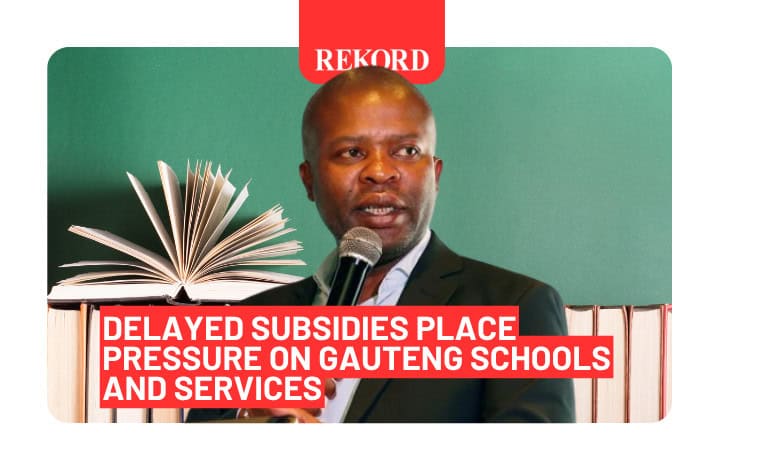
The Gauteng Department of Education (GDE) has committed to releasing delayed school subsidy payments from the beginning of June after schools across the province were left waiting for funds that were expected to be paid by May 15.
The department acknowledged the delays in the disbursement of subsidies, which schools rely on for day-to-day operations, including learning materials, municipal services, maintenance and administration.
Gauteng MEC for Education, Lebogang Maile, apologised to schools and stakeholders for the delay, assuring them that the funds would soon be accessible.
He explained that schools are entitled to the funding in terms of paragraph 12A of the National Norms and Standards for School Funding (NNSSF).
“We want to assure the public and all stakeholders that the funds are there and schools will start accessing them from the start of June,” he said.
Maile said the funds cover essential operational expenses such as learning and teaching support materials, municipal services, maintenance, and administrative costs.
“They also ensure equal access to quality education for all learners, regardless of the socio-economic status of the community, support schools that cannot raise adequate funds through school fees and assist schools to implement the provisions of the South African Schools Act (SASA) and the national NNSSF.”
Maile said the GDE recognises that the funds are also key in the promotion of proper school governance, financial management, and improved educational outcomes while addressing historical injustices of our society and improving conditions in previously underfunded public schools.
He added that according to the regulations, the subsidies must be paid on or before 15 May (50%) and again on or before 15 November (50%).
“Schools have already received the final allocation letters, which is an indication of how much they will receive from the department during the financial year.”
Meanwhile, Tshwane mayoral spokesperson Samkelo Mgobozi said schools within Pretoria currently owe the city about R103-million in outstanding municipal debt.
“This includes approximately R49-million owed by Section 21 schools, R52.8-million owed by Section 20 schools and approximately R1.2-million owed by special schools.”
Mgobozi said the city is not in the business of disrupting teaching and learning, nor does it take decisions affecting schools lightly.
“We fully recognise the importance of uninterrupted electricity supply in supporting learner safety, examinations, school administration, and a conducive learning environment.”
He added that at the same time, the city cannot be expected to continue indefinitely subsidising the operational obligations of provincial departments while still carrying the full cost of purchasing bulk electricity, maintaining infrastructure and sustaining service delivery across Pretoria.
“Like all consumers of municipal services, schools are required to comply with applicable legislation, municipal by-laws and the city’s approved credit control and debt collection policies.”
He said revenue collection remains essential to ensuring the continued provision of services to all residents.
The city can confirm that engagements have already taken place with both the GDE and the Gauteng Department of Infrastructure Development regarding the growing debt owed by schools.
“The city has requested urgent intervention from the provincial government to accelerate payments, strengthen oversight and prevent future service interruptions.”
Mgobozi said the city remains committed to co-operative governance and constructive engagement aimed at protecting the constitutional right to education while also ensuring accountability for municipal services consumed.
Do you have more information about the story?
Please send us an email to bennittb@rekord.co.za or phone us on 083 625 4114.
For free breaking and community news, visit Rekord’s websites: Rekord East
For more news and interesting articles, like Rekord on Facebook, follow us on Twitter or Instagram or TikTok or WhatsApp Channel