School shooting dispute sparks concerns about violent threats
Conflict between the school governing body at Pretoria Boys High School and the Gauteng Department of Education has intensified after the department overturned an expulsion recommendation against a learner accused of making violent threats. The dispute has raised questions around school safety, learner rights, disciplinary authority and the balance between rehabilitation and accountability.
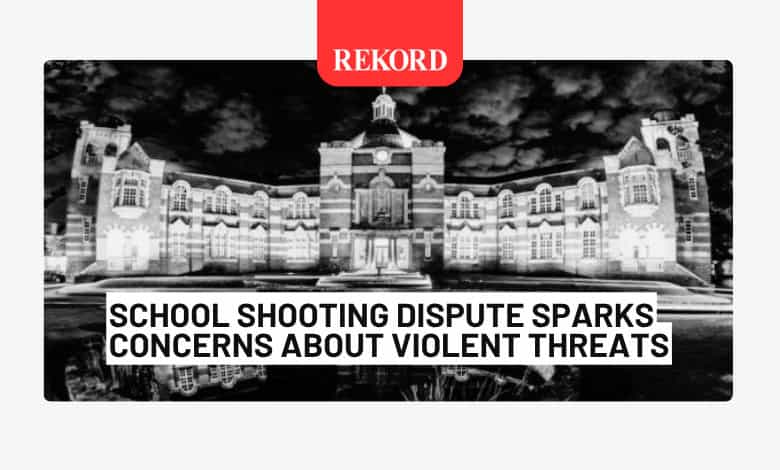
Pretoria Boys High School (PBHS) and the Gauteng Department of Education (GDE) are at odds over the handling of a learner accused of allegedly making violent threats against the school and a staff member.
The dispute is now escalating into a legal and governance conflict over school safety, learner rights, and disciplinary authority.
The conflict follows a disciplinary process at PBHS in which the school governing body (SGB) recommended that the learner be expelled after allegedly making serious shooting threats.
However, the GDE overturned the recommendation and allowed the learner to return to school under strict conditions and a 12-month intervention programme.
The SGB has now formally challenged the decision and confirmed to Rekord that it is engaging with the department’s Litigation and Advisory Unit in pursuit of what it described as ‘an acceptable outcome’.
This came after the SGB made an application to the Pretoria High Court on May 12 to expel the learner who made violent threats.
Evidence given to the court in affidavits by the school reference WhatsApp messages written by the learner making threats about a shooting at school.
The SGB had to withdraw the court application as the disciplinary process is still ongoing.
The first disciplinary hearing at the school was on February 25. The disciplinary committee recommended expulsion on March 27.
In a strongly worded response, the SGB said it viewed the alleged threats ‘in the most serious light’ and insisted it could not be found to have acted irresponsibly given the nature of the learner’s comments.
“The school is responsible for the safety of all its pupils and teachers, which must be balanced against the rights of one individual,” the SGB said. “Our concern for the schoolboy involved must be balanced against the serious nature of the threats and the safety of our teachers and pupils.”

The SGB said a thorough investigation and disciplinary process had been conducted before it recommended expulsion.
The learner will return to the school under strict conditions to write June exams.
The department, however, defended its intervention, saying the matter had been carefully assessed within the framework of constitutional protections, education law, and the best interests of the child.

According to GDE spokesperson Onwabile Lubhelwana, the department considered the seriousness of the alleged misconduct, the learner’s age, the legal framework governing school discipline, and the need for corrective intervention before deciding against expulsion.
“The decision was not to ignore the seriousness of the conduct, but to impose a sanction that balances accountability, safety, rehabilitation, and the learner’s constitutional right to education,” Lubhelwana told Rekord.
The department said the learner’s return to school is subject to strict conditions, monitoring, and behavioural intervention measures.
These include psycho-social support, parental involvement, regular progress reporting, and oversight by the school-based support team and district officials.
Lubhelwana said the department recognised concerns raised by educators, parents, and learners about safety at the school, but argued that disciplinary decisions involving minors must comply with the Constitution, the South African Schools Act, the Children’s Act, and the Promotion of Administrative Justice Act.
“The message is clear: threats of violence in schools are serious and will not be tolerated,” he said. “At the same time, disciplinary decisions involving children must be handled lawfully, fairly, and in accordance with the Constitution.”
The dispute has highlighted tensions between SGBs and provincial education departments over who ultimately controls disciplinary outcomes in serious misconduct cases.
While SGBs are empowered to conduct disciplinary hearings and recommend expulsion, the final authority rests with the Head of Department at a provincial education authority under the South African Schools Act.
Lubhelwana said the legislative framework exists to ensure ‘lawful oversight, procedural fairness and the best interests of the child’.
The department also stressed that allowing the learner to remain in school did not amount to an absence of consequences.
“The outcome therefore includes strict conditions, monitoring, support interventions and consequences should the learner fail to comply,” Lubhelwana said.
He added that the department believed the conditions attached to the suspended sanction were sufficient to manage potential risks while ensuring accountability.
“The school, district and relevant support officials are expected to monitor compliance closely and escalate any breach immediately.”
According to the department, any violation of the intervention programme or disciplinary conditions could lead to the matter being escalated and harsher sanctions being imposed.
The case has sparked broader concern among parents and school communities over how violent threats at schools should be handled amid growing fears around learner safety and behavioural incidents.
The SGB indicated that it remained deeply concerned about the implications of the department’s ruling for the safety of staff and learners.
However, the department maintained that each case involving serious learner misconduct must be assessed individually and in line with prescribed disciplinary procedures.
Lubhelwana said Gauteng schools are required to follow a formal framework involving suspension, disciplinary hearings, SGB recommendations, and departmental review where expulsion is recommended.
The department further indicated that support professionals such as psychologists, social workers, and psycho-social support officials may be involved where necessary to monitor and implement intervention plans.
The SGB urged media and the public not to identify any of the parties involved, warning that doing so would be irresponsible given the seriousness of the matter and the age of the learner.
Despite the disagreement, both parties indicated that discussions are continuing.
The SGB said it remained committed to constructive engagement with the department but declined to comment further while judicial review processes are being considered.
The GDE, meanwhile, said it remained available to engage with the school on additional support measures and insisted that threats of violence in schools would continue to be treated seriously.
The department has not indicated when the broader intervention process will be concluded, but confirmed that the learner will remain under ongoing monitoring and assessment throughout the 12-month programme.
Do you have more information about the story?
Please send us an email to bennittb@rekord.co.za or phone us on 083 625 4114.
For free breaking and community news, visit Rekord’s websites: Rekord East
For more news and interesting articles, like Rekord on Facebook, follow us on Twitter or Instagram or TikTok or WhatsApp Channel