Broken robots turn major roads risky
With 25 intersections down, congestion, confusion and near crashes are becoming the norm on key Pretoria roads.
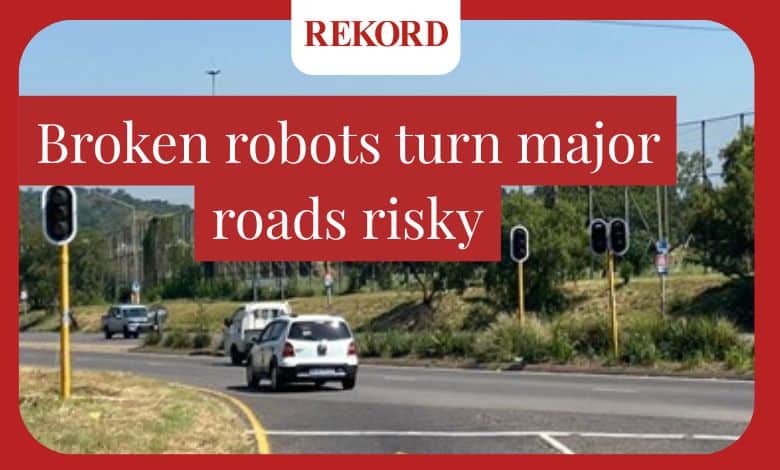
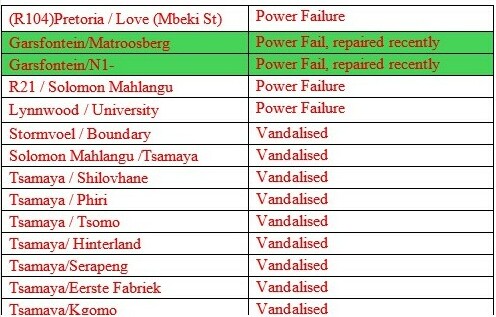
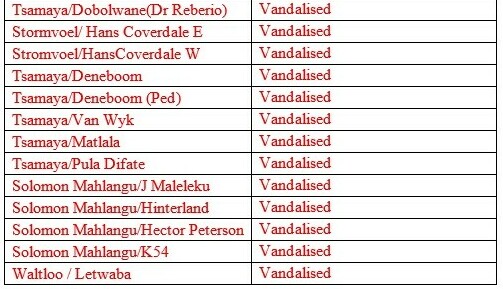
About 25 traffic light intersections across Region 6, stretching from the east of Pretoria to Mamelodi, are currently not working, turning some of the busiest roads into daily danger zones for thousands of motorists.
The prolonged outages, theft and vandalism at major intersections are causing severe congestion, aggressive driving, near collisions, and growing fears that fatal accidents are becoming inevitable.
Some of these intersections include Solomon Mahlangu Drive and the R21 interchange, Garsfontein and Matroosberg roads, Waltloo and Letwaba roads, as well as the K54 corridor.
The Tshwane metro has confirmed that there are currently 25 non-operational traffic light intersections across the identified areas.
Metro spokesperson Lindela Mashigo said three of the intersections are affected by power outages, while 22 have been impacted by vandalism and theft-related damage.
“Due to ongoing theft and vandalism, critical staff shortages, and budget constraints, the metro’s ability to repair and maintain traffic lights effectively across the city has been severely impacted,” said Mashigo.
He explained that theft and vandalism affecting both power supply connections and traffic signal infrastructure remain among the main causes of prolonged outages.
“Staff shortages limit the city’s ability to attend to all faults, defects and outages timeously, while budget constraints particularly affect cases where vandalised infrastructure must be completely replaced,” he added.
Mashigo acknowledged that while no confirmed accidents or incidents have formally been recorded at some of the affected intersections, the city has requested point-duty personnel during morning and afternoon peak periods to assist with traffic control and improve safety.
However, many motorists argue that traffic officers are often absent or only visible for limited periods, leaving intersections unmanaged for most of the day.
According to Mashigo, the current traffic signal repair budget is mainly intended to cover minor repairs such as replacing damaged poles or missing signal lights.
“Reinstating a vandalised intersection effectively requires the installation of a new traffic signal system,” he said.
He added that the average cost to fully reinstate a vandalised traffic light intersection is about R800 000.
“During the previous financial year, the city spent just over R6.2-million on the repair and maintenance of 1 001 traffic signal intersections across Tshwane, averaging roughly R6 197 per intersection.”
Mashigo also admitted that it does not currently have enough traffic signal maintenance staff to keep up with the growing number of faults across the metro.
“Although the existing personnel are highly skilled and technically competent, the limited number of available staff affects the metro’s ability to respond to all maintenance issues within the desired timeframes,” Mashigo said.
He added that while maintenance teams have sufficient tools and materials for routine repairs, the available budget is only enough to deal with daily minor repairs and not the growing backlog caused by continuous theft and vandalism.
He said in an effort to protect infrastructure, the city has started encasing traffic signal cables in concrete to make cable theft more difficult.
“In addition, traffic controllers are being installed in reinforced, tamper-resistant enclosures to reduce unauthorised access and protect critical equipment from vandalism,” Mashigo explained.
He said the city had installed backup power systems at 150 signalised intersections along major corridors in 2012, but most were later stolen or vandalised.
“Some private sector stakeholders have voluntarily connected nearby traffic signals to their own backup power systems where they are able to provide security for the equipment,” Mashigo said.
“These arrangements are currently undertaken on a donor-supported basis.”
Mashigo further revealed that the city has been working with approved equipment suppliers on smart traffic signal technologies since 2004, but ongoing theft and vandalism continue to undermine progress.
“Incidents continue on a weekly basis since 2013,” he said.
He also warned that power outages at traffic signal intersections often become the trigger for further vandalism.
“Power outages at traffic signal intersections are often the initial cause of further vandalism, particularly when electricity supply is not restored within a short period of time,” Mashigo added.
For motorists who use these roads daily, the impact is becoming increasingly dangerous.
At the intersection of Solomon Mahlangu Drive and the R21 off-ramp, traffic often backs up during peak hours, with taxis, trucks, buses and private vehicles all attempting to force their way through the intersection simultaneously.
Motorist Stanley van der Merwe, who travels through the interchange every morning to get to work in Centurion, said the situation has become terrifying.
“You literally hold your breath when entering that intersection now. People are impatient, taxis skip lanes, trucks push through gaps and everyone thinks they have the right of way,” she said.
“I have seen at least four near accidents there in the past two weeks alone. One day someone is going to die if this continues.”
Another motorist, Joel Campbell, who regularly drives through the Garsfontein and Matroosberg intersection, said it’s a struggle to pass through a busy intersection that have no operational traffic signals.
“You can see people hesitating in the middle of the intersection because nobody knows whose turn it is anymore,” he said.
“In the mornings it becomes a free-for-all. Some drivers become aggressive, others panic, and pedestrians are the ones most at risk because cars are coming from every direction.”
He said the frustration goes beyond traffic congestion.
“Many people believe the worsening condition of the city’s road infrastructure reflects years of neglect, underinvestment and reactive maintenance instead of long-term planning.”
Campbell said the infrastructure maintenance backlog is becoming increasingly visible across Tshwane, but residents continue to pay rates and taxes while critical infrastructure deteriorates.
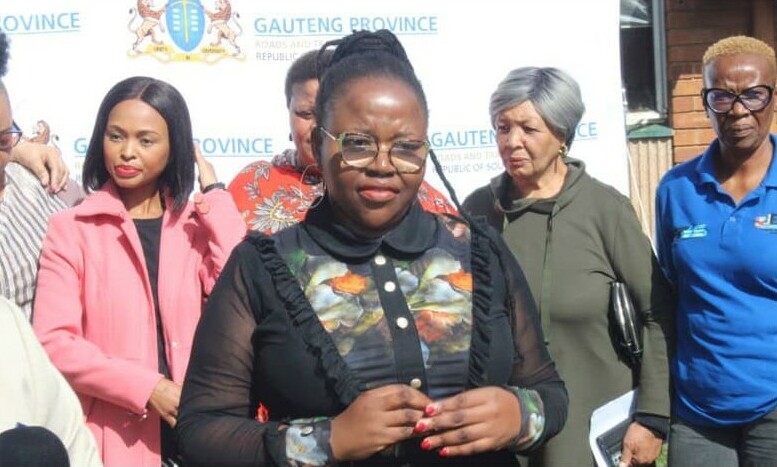
Persistent theft and vandalism of traffic signals in the province have resulted in widespread service disruptions, increased safety risks, and escalating maintenance costs, according to the MEC for Roads and Transport, Kedibone Diale-Tlabela.
The MEC said that in line with the Gauteng Infrastructure Act vandalism of public infrastructure is a criminal offence, and “the department will work with law enforcement to ensure that those responsible are held accountable”.
She encouraged communities to play an active role by reporting vandalism, criminal activity and faulty infrastructure to the relevant authorities.
Diale-Tlabela emphasised that the theft and vandalism of traffic signals is a direct threat to road safety, economic activity and service delivery.
She said the engagement reflects the firm commitment to protecting public infrastructure, restoring traffic signal functionality, and ensuring safer roads for all road users in Gauteng.
“We also acknowledge that road safety challenges extend beyond infrastructure alone. They require a co-ordinated, integrated response from all spheres of government and law-enforcement agencies to ensure safer communities and reliable transport systems,” the MEC explained.
She further emphasised that the failure of road infrastructure presents not only a safety risk but also a significant economic challenge. It contributes to congestion, delays and financial losses, while placing additional strain on public resources due to high repair and replacement costs.
Also Read: Silverton school up for renovation next year
Do you have more information about the story?
Please send us an email to bennittb@rekord.co.za or phone us on 083 625 4114.
For free breaking and community news, visit Rekord’s websites: Rekord East
For more news and interesting articles, like Rekord on Facebook, follow us on Twitter or Instagram or TikTok or WhatsApp Channel.