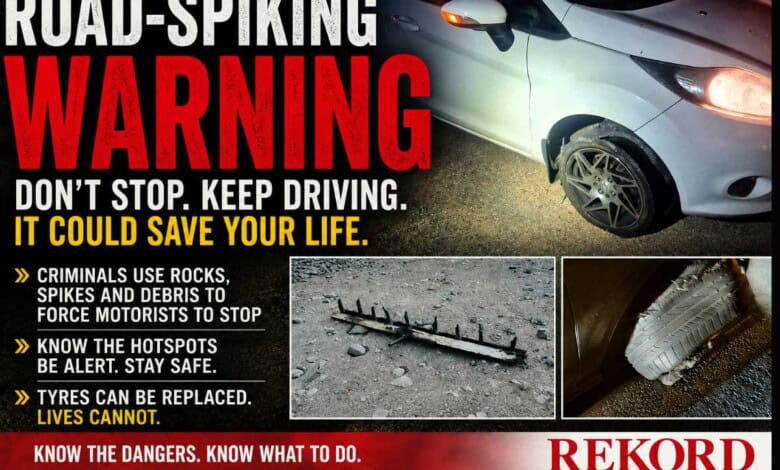
Motorists travelling on Gauteng’s highways are being urged to remain vigilant and familiarise themselves with known road-spiking hotspots as criminals continue to use dangerous tactics to target unsuspecting drivers.
The warning follows a recent incident in which three women were reportedly robbed after encountering an obstruction on the roadway. While details surrounding the incident remain limited, responders arrived to find the victims in a state of shock.
Safety groups say the incident serves as an important reminder that road spiking remains a real threat on several major routes in and around Pretoria.
Areas that have historically been linked to road-spiking incidents include sections of the N4 east between Pretoria and Bronkhorstspruit, particularly around the Donkerhoek and Mooiplaats areas, portions of the R80 between Pretoria North and Soshanguve, sections of the N1 near Hammanskraal and the N4 west towards Brits, as well as isolated stretches of road where motorists may be tempted to stop after hitting an obstacle.
Earlier this year, an alleged armed road-spiking suspect was shot and injured during a security operation on the N4 near Mooiplaats after rocks were reportedly used to target a motorist. The incident highlighted the ongoing threat posed by criminals operating along major transport routes.
Also read: Armed spiking suspect shot and injured on N4
Security experts stress that motorists should never stop immediately after striking rocks, spikes or other suspicious objects in a high-risk area.
Instead, drivers should:
- Stay calm and maintain control of the vehicle.
- Continue driving, even if tyres have been damaged.
- Head to the nearest safe location such as a police station, toll plaza or busy 24-hour filling station.
- Contact emergency services, a vehicle tracking company or local security provider while en route.
- Keep doors locked and windows closed.
- Avoid exiting the vehicle until it is safe to do so.
According to safety organisations, most vehicles can continue moving for several kilometres, even with severely damaged tyres.
“The cost of replacing tyres or rims is insignificant compared to the risk of stopping in a dangerous area,” safety groups warn.
Motorists are also encouraged to report suspicious rocks, debris or spikes on the roadway to authorities immediately and to share safety information with family members who regularly travel on Gauteng’s highways.
With school holidays and increased travel periods approaching, authorities say awareness remains one of the most effective tools in preventing motorists from becoming victims.
Also read: Here are the spiking hotspots in and around Pretoria
Do you have more information about the story?
Please send us an email to bennittb@rekord.co.za or phone us on 083 625 4114.
For free breaking and community news, visit Rekord’s websites: Rekord East
For more news and interesting articles, like Rekord on Facebook, follow us on Twitter or Instagram or TikTok or WhatsApp Channel.