Zwartkop organisation is changing lives one bag of clothing at a time
Clothes to Good has spent the past 15 years transforming donated clothing into livelihoods, educational resources and employment opportunities for vulnerable communities across Gauteng.
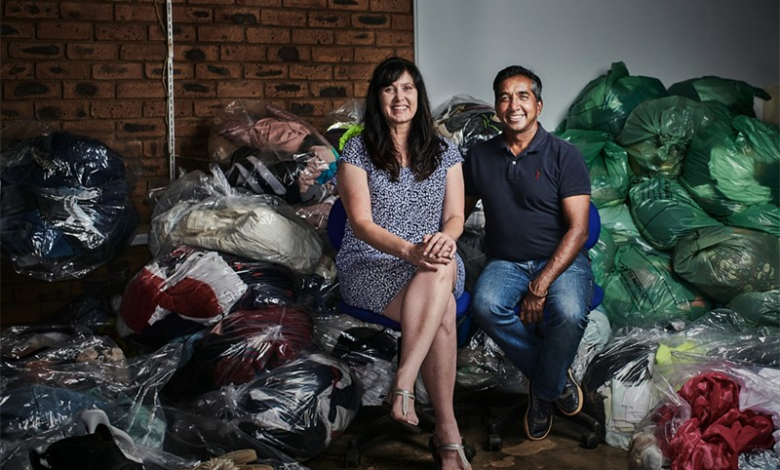
A non-profit organisation in Zwartkop, Centurion, is proving that something as simple as unwanted clothing can create jobs, support families, empower individuals with disabilities, and protect the environment.
For the past 15 years, Clothes to Good (CTG) has been transforming discarded textiles into opportunities for vulnerable communities in Centurion and across South Africa.
Through a unique model that combines textile recycling, disability inclusion, and community development, the organisation has made a lasting impact.
Clothes to Good was founded in July 2011 by Jesse Naidoo. He said the inspiration came from a resident who had lost his job, prompting Naidoo to create a sustainable business opportunity for him.
At the same time, Naidoo proposed an inter-class pre-loved clothing recycling challenge to the principal of a local school in Centurion.
“The response exceeded all expectations. Learners and teachers collected more than four tonnes of clothing, and a neighbour’s vacant house was made available for use. That is how Clothes to Good was born,” he explained.
What began as a small community initiative has since evolved into a thriving social enterprise focused on alleviating poverty.
At its Zwartkop premises, every donated item is carefully weighed and sorted into 28 categories before entering one of three recycling streams: re-use, up-cycling or down-cycling.
According to Naidoo, about half of all donated clothing can still be worn and is channelled into the organisation’s re-use programme.
“Through this initiative, vulnerable individuals, particularly women, gain access to quality pre-loved clothing, which they can sell within their communities to generate income. Today, Clothes to Good supports more than 300 registered micro-businesses across Gauteng, including 93 mothers of children with disabilities,” he said.
He explained that the programme goes beyond simply providing stock.
Participants receive mentorship, business coaching, and practical training in areas such as sales, customer service, stock management, financial literacy, budgeting, and personal development.
“To further support these entrepreneurs, a multidisciplinary team, including occupational therapists, social workers, and business development specialists, helps them overcome personal and business challenges,” said Naidoo.
“One success story that stands out is about a participant who used the income from her micro-business to put two of her sons through university. Today, one is an accountant, and the other is a private school teacher. She now owns her home and supports other mothers in the programme,” said Naidoo.
He added that around 10% of donated textiles are up-cycled into educational and therapeutic resources for under-resourced communities.
These include beanbags, skipping ropes, soft balls, and other learning materials used by Early Childhood Development (ECD) centres.
Specialised resources, such as weighted vests and lap pads for children on the autism spectrum, are also produced through this programme.
Materials that can no longer be reused are stripped of components like zips and buttons before being baled and sent for shredding.
“The resulting fibre is used in industries such as mattress production, construction, and automotive manufacturing. This ensures textiles are kept out of landfill sites,” Naidoo explained.
Currently, the organisation diverts about 600 tonnes of textile waste from landfills annually and plans to increase this figure as it expands into larger premises.
Clothes to Good has become a trusted community partner in Centurion. Residents can donate clothing and textiles at the organisation’s premises on Migmatite Drive in Zwartkop or through collection points at H&M and Levi’s stores in Centurion Mall.
Donors are rewarded with discount vouchers from participating retailers as an incentive to recycle responsibly.
The organisation also collaborates with schools, churches, businesses, and other community groups through recycling challenges and collection drives.
“School partnerships have been central to our success. These initiatives have resulted in thousands of spekbooms being planted, many toy-making workshops hosted, and thousands of educational resources donated to low-resourced communities, all while supporting vulnerable women and people with disabilities,” said Naidoo.
One of the organisation’s most popular projects is the Clothes to Trees programme, which rewards participants with a Spekboom plant and an H&M voucher for every bag of clothing recycled.
Another key initiative is the Clothes to Play programme, which provides toy-making workshops to create educational materials for ECD centres.
Inclusion is central to everything Clothes to Good does.
Naidoo stated that currently one in every three employees at the organisation is a person with a disability.
He said with over 50 employees, the organisation runs the OnRoute Supported Employment Programme, which provides tailored support to employees with disabilities.
Occupational therapists and social workers work closely with them to develop skills and enable their active participation within the organisation.
“Many children with disabilities have benefited indirectly from our work. For instance, some mothers can now afford nappies and transport, allowing their children to attend school. The stories of every person with a disability and every vulnerable person are the achievements we humbly celebrate.”
Looking ahead, the organisation aims to expand its reach and educate even more people about the power of recycling.
“Our vision is to show communities that items they no longer need can become tools for social change,” said Naidoo.
“What people discard could change lives for the good. It supports families with livelihoods, creates employment, especially for people with disabilities, and brings smiles to children in low-resourced areas. It even helps children with disabilities to be included.”
Residents who wish to support Clothes to Good can contact the organisation via email at jesse@c2cx.co.za, on WhatsApp at 072 464 8059 or by calling 012 663 4168.