New by-law to tackle hijacked and abandoned buildings through court-appointed administrators
The Problem Building and Property Management By-law establishes a legal framework for identifying, regulating and intervening in buildings that have become neglected, illegally occupied or pose a risk to residents.
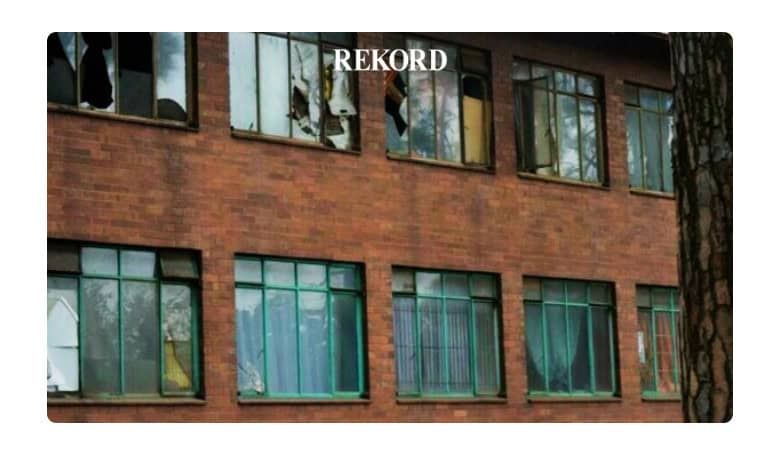
The Tshwane metro has approved a new by-law to address hijacked, abandoned and unsafe buildings and properties across the metro.
The Problem Building and Property Management By-law was approved on June 25 with 124 votes in the Tshwane Council.
This by-law introduces stronger measures to improve public safety, recover municipal costs and revitalise deteriorating areas across the metro.
It establishes a legal framework for identifying, regulating and intervening in buildings that have become neglected, illegally occupied or pose a risk to residents.
MMC for Economic Development and Spatial Planning, Sarah Mabotsa, said the by-law outlines the responsibilities of property owners, the process the metro must follow to declare a building a problem property, and the legal options available to address such buildings.
“The implementation and enforcement of this by-law will help improve the state of our city, deal with illegally occupied buildings and create a conducive environment for economic growth and development,” said Mabotsa.
Property owners are required to maintain their buildings in a safe condition. If a building becomes derelict, owners must secure it against unauthorised access and obtain the necessary demolition permits where required.
Should owners fail to fulfil these obligations, the metro may approach the courts to appoint an independent administrator to take over the management of the property.
Mabotsa said a court-appointed administrator may be authorised to collect rent from occupants, pay outstanding municipal accounts for services such as electricity, water, sanitation and property rates, and oversee maintenance, repairs or renovations.
“Any costs incurred by the administrator can be recovered from the property owner.”
In more severe cases, where owners fail to take corrective action, municipal services are affected and there is little prospect of recovering costs, the by-law allows the metro to apply to the courts to expropriate the property in accordance with Section 17.
The by-law distinguishes between abandoned properties, defined as buildings or land permanently deserted by their owners, and problem buildings, which are formally declared through a process outlined in Section 11.
The MMC said the legislation was developed following a public participation process that included newspaper notices and consultation meetings held across all seven regions of Pretoria between November and December 2025.
“Public comments were incorporated where appropriate before the final version was adopted. The city’s Legal Services Department has confirmed that the by-law is lawful, constitutionally compliant and within the municipality’s legislative powers.”
The multiparty coalition government said the by-law forms part of its broader strategy to tackle urban decay and revitalise the inner city.
“This new by-law provides stronger mechanisms to ensure that buildings and properties within the city of Tshwane are safe for occupancy and do not become centres for criminal activity. It also enables the metro to recover municipal service costs through court-appointed administrators,” Mabotsa said.
DA ward councillor Pogiso Mthimunye said residents have long raised concerns about hijacked and neglected buildings, which he described as crime hotspots, illegal activities and deteriorating service delivery.
While acknowledging the need to address problem buildings, Mthimunye said the DA could not support the new by-law in its current form.
“We support the principle behind dealing with problem buildings, but we cannot support this by-law because it contains several concerning provisions,” he said.
Mthimunye argued that the legislation grants excessive powers to municipal officials without sufficient checks and balances.
“During the public participation process, residents raised concerns about the extensive powers given to a single official, who can then appoint additional officials without any clear criteria or transparency regarding their qualifications,” he said.
He further claimed that the by-law allows officials to initiate the seizure of problem buildings and enforce demolition orders, collect money owed to the city while requiring affected property owners or residents to challenge these decisions through costly court proceedings.
“This by-law concentrates power in the hands of the administration rather than the people. There is also vague wording in several provisions, which gives officials broad discretionary powers,” Mthimunye said.
He added that good governance should prioritise accountability and protect residents’ rights.
“We believe the by-law should be referred back for further refinement to ensure it empowers residents rather than expanding the powers of the administration. For these reasons, the DA rejects the by-law,” he said.
ANC ward councillor Joel Masilela-Mahlangu said the party supports the adoption of the new by-law, arguing that it provides the metro with the necessary legal tools to address urban decay and improve public safety.
He said deteriorating and hijacked buildings have become a serious challenge across the city.
“Urban decay is a reality. Problem buildings and neglected properties place lives at risk, while hijacked buildings have become hotspots for crime, violence and drug-related activities,” he said.
Masilela-Mahlangu added that abandoned and illegally occupied buildings undermine economic activity, discourage investment and erode the dignity of communities.
According to him, the by-law gives the municipality stronger powers to intervene where property owners fail to fulfil their responsibilities.
“This by-law equips the city with the necessary powers to deal with problem buildings. It allows the municipality to issue compliance notices, reduces delays caused by owners hiding behind shell companies, and enables the city to recover outstanding municipal debts from property owners,” he said.
He added that the legislation recognises that not all neglected buildings result from deliberate neglect.
“The by-law distinguishes between criminal neglect and genuine economic hardship, allowing the city to provide appropriate assistance while ensuring that residents’ safety and human rights remain a priority,” he said.
Masilela-Mahlangu said the by-law is intended to protect vulnerable residents rather than promote evictions.
“It seeks to protect vulnerable people while ensuring that neglected buildings can be rehabilitated and redeveloped into affordable housing, social housing and student accommodation where appropriate,” he said.
Meanwhile, the Freedom Front Plus (FF Plus) also welcomed the adoption of the by-law, describing it as an important step towards rehabilitating the metro’s declining urban areas while protecting constitutional property rights.
FF Plus councillor Mari Joubert said the inner city continues to deteriorate due to hijacked buildings and criminal activity that threaten residents’ safety and reduce property values.
“The Freedom Front Plus believes law-abiding taxpayers deserve a municipality that acts decisively against urban decay,” Joubert said.
She said the party supports the by-law because it gives the municipality sufficient powers to act against negligent property owners while ensuring that constitutional protections remain in place.
Joubert stressed that all evictions must comply with the Prevention of Illegal Eviction (PIE) Act and may only take place through a court order.
She also emphasised that any administrative intervention remains subject to the Constitution.
Jourbert further argued that authorities should distinguish between buildings hijacked through organised criminal activity, where restoring the rights of legitimate owners should be prioritised, and genuinely abandoned or dilapidated buildings that require structured redevelopment.
She also called for clearer national legislation governing compensation for property owners who become victims of criminal building hijackings.
According to Jourbert, the by-law represents a positive step towards creating a safer, cleaner and more liveable Pretoria, provided that due legal process and property rights are respected throughout its implementation.
Do you have more information about the story?
Please send us an email to bennittb@rekord.co.za or phone us on 083 625 4114.
For free breaking and community news, visit Rekord’s websites: Rekord East
For more news and interesting articles, like Rekord on Facebook, follow us on Twitter or Instagram or TikTok or WhatsApp Channel