Conservation pioneer leaves indelible mark
Dr Gus Mills, a Tuks alumnus and a renowned brown hyena, cheetah and African Wild Dog specialist, has died, leaving behind a remarkable legacy spanning decades of research, conservation leadership and public education. His work helped shape carnivore conservation in South Africa and influenced generations of researchers, practitioners and wildlife enthusiasts around the world.
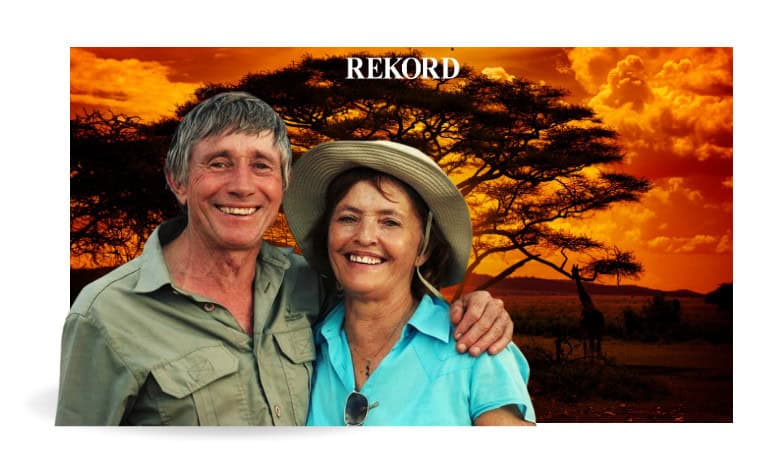
The conservation community is mourning the death of Tuks alumni Dr Gus Mills, a renowned brown hyena, cheetah, and African Wild Dog specialist.
His decades of research, writing and conservation leadership left an enduring mark on carnivore conservation in South Africa and internationally.
Eleanor Momberg, spokesperson for the Endangered Wildlife Trust (EWT), said Mills was a leading authority on nature’s apex predators and served in senior roles within several international conservation bodies, including the International Union for Conservation of Nature Carnivore Specialist Groups.
He was a former chairperson of the Hyena Specialist Group and served on the steering committees of the Cat Specialist Group and the Canid Specialist Group.
He also founded the EWT’s Carnivore Conservation Group, which has since developed into a leading force in carnivore conservation.
Mills’ association with the organisation began in 1973, when he undertook research into brown hyenas in the Kalahari.
It was also the year the organisation was established by South African conservationist and artist Clive Walker, James Clarke, and Neville Anderson.
A year later, the organisation funded equipment for Mills’ research project – then an MSc student at the University of Pretoria.
Mills continued his research into brown hyenas and spotted hyenas for 15 years, culminating in the publication of Kalahari Hyenas: the comparative behavioural ecology of two species in 1990.
Momberg said he was asked by the then EWT director, Dr John Ledger, in 1996 to establish the organisation’s Carnivore Conservation Group.
She explained the initiative was made possible through a partnership with SANParks, which allowed Mills to work full-time on carnivores while establishing and running the group and working for SANParks.
The Carnivore Conservation Unit is recognised today for its work in lion population research, the metapopulation management of cheetah and African Wild Dog across southern Africa, and efforts to address threats to carnivores posed by human-wildlife conflict and the illegal wildlife trade.
During his time at SANParks, Mills researched cheetahs, African wild dogs, honey badgers, brown hyenas, and lions.
Momberg said he introduced the concept of metapopulation management for African Wild Dogs. With the assistance of the late Pat Fletcher, they brought together numerous agencies and landowners to achieve the genetic management of scattered wild dog populations through the Wild Dog Advisory Group.
Derek van der Merwe, manager of the EWT’s Carnivore Conservation Unit, said Mills’ early work helped shape many of the approaches that underpin carnivore conservation today.
“It is remarkable to reflect on how much has changed since those early days, when Gus would fly over the Kruger National Park in a small EWT aircraft equipped with telemetry equipment, tracking African wild dogs from the air. Those pioneering efforts helped establish many of the approaches that underpin carnivore conservation today,” he said.
Mills retired from SANParks in 2006 after 40 years of service.
Momberg said, based in the Kalahari with his wife, Margie, he then embarked on a study of cheetah. Their work contributed to the publication of A Natural History Guide to the Arid Kalahari in 2014.
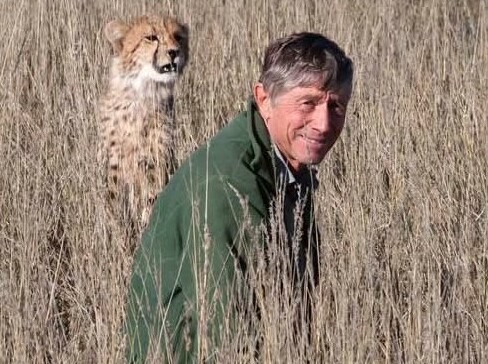
Dr Gus Mills, renowned carnivore conservationist and specialist in Brown Hyena, cheetah and African Wild Dog research, devoted decades to studying and protecting some of Africa’s most threatened predators, leaving an enduring legacy through pioneering research, conservation programmes, writing and mentorship. Photo: Facebook/Wild and Free Wildlife Rehabilitation
Four years earlier, Mills had published Hyena Nights and Kalahari Days, one of his most memorable books and a work that continued to raise awareness about a species that has often been misunderstood.
His work as a conservationist was matched by his ability to communicate his knowledge and passion to the public.
Van der Merwe described Mills as a quiet but immensely influential presence in conservation.
“There are few people whose authenticity, humility, and dedication matched his. His writings, particularly Cry of the Kalahari, captured not only the science of conservation, but also the wonder and privilege of sharing the landscape with Africa’s wildlife.”
CEO of EWT, Yolan Friedmann, said Mills had also had an immense influence on her career.
“I had the privilege of getting into the field with Gus as an early-stage career conservationist, and to watch with wonder how he tracked wild dogs. I remember with fondness bumping around in the back of bakkies as we tore after these extraordinary carnivores in pursuit of their prey. Gus instilled in me a love for Wild Dogs and I worked with Gus to develop the first project to develop a sustainable Wild Dog population outside of the Kruger National Park through range expansion into KwaZulu-Natal, in the early 2000s.”
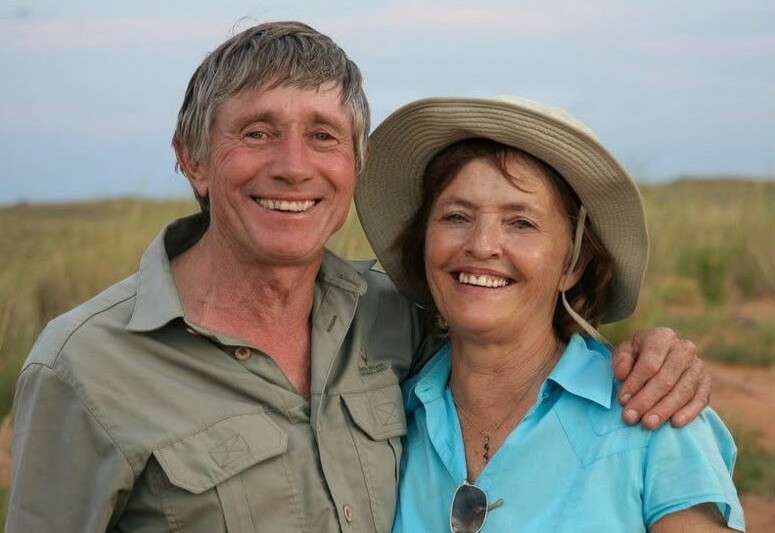
Description: Male and female
His wife, Margie, worked alongside him in the field in the Kalahari, enduring the hardships of remote areas and contributing to their joint books in a partnership that lasted for more than half a century.
Momberg added they share the grief of losing Mills with Margie, their biologist son Michael, daughter Debbie and their grandchildren.
“For the conservation community, his legacy will endure through the carnivore research and conservation programmes he helped establish, the generations of researchers he influenced and the continued efforts to protect the species to which he devoted his life,” she emphasised.
Do you have more information about the story?
Please send us an email to bennittb@rekord.co.za or phone us on 083 625 4114.
For free breaking and community news, visit Rekord’s websites: Rekord East
For more news and interesting articles, like Rekord on Facebook, follow us on Twitter or Instagram or TikTok or WhatsApp Channel