Critical water crises intensify pressure on mayor
The metro is facing mounting scrutiny over four separate water-related incidents affecting Bronkhorstspruit, Pretoria’s central business district (CBD) and Garsfontein as well as Pretoria North, prompting calls for investigations into water safety, infrastructure maintenance and the municipality’s handling of public warnings.
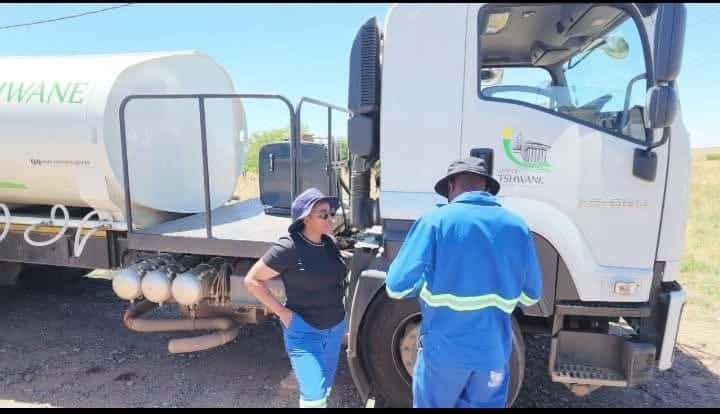
The metro faces mounting pressure over water contamination in Bronkhorstspruit and Pretoria’s CBD, alongside supply disruptions in Garsfontein and Pretoria North.
As investigations begin and residents demand answers, opposition parties question municipal preparedness and infrastructure maintenance.
The incidents differ in cause and impact. Bronkhorstspruit has been affected by a failure to disinfect water at its treatment plant, Pretoria’s CBD experienced sewage-related contamination, and Garsfontein and Pretoria North have faced supply disruptions after infrastructure failures and restrictions on bulk water supply.
The developments have intensified political pressure on Mayor Dr Nasiphi Moya, with opposition parties calling for accountability while the metro undertakes remedial measures.
Bronkhorstspruit faces health crisis
The most serious public-health incident has occurred in Bronkhorstspruit and surrounding communities, where 595 people, including 262 children aged four and younger, were reported to have fallen ill, according to information presented to Parliament on October 23.
The national Department of Water and Sanitation informed Parliament on October 23 that the Bronkhorstspruit Water Treatment Works had received a formal notice of non-compliance in February this year.
The municipality submitted a corrective action plan in March, covering the procurement of treatment chemicals, filter refurbishment, pump installation and recruitment of critical personnel.
However, the parliamentary briefing indicated that the plan had not been implemented as intended.
Chlorine dosing at the plant stopped on September 23, and water continued to be distributed for a further 21 days without disinfection.
The department’s findings have raised questions about the management of treatment chemicals, the monitoring of water quality and the escalation of warnings within the municipality.
Deputy Minister of Water and Sanitation David Mahlobo announced that criminal action would be pursued against municipal officials after the failures.
Earlier in the week, he announced that criminal action would also be taken against the metro over the incident.
The allegations and reported findings have prompted demands for an investigation into who was aware of the chlorine shortage, when senior officials were informed and why residents were not warned earlier.
In a press release on October 26, Moya acknowledged the metro’s failure to meet certain commitments to the Department of Water and Sanitation, particularly the interruption of chlorine supplies. She emphasised that the Bronkhorstspruit Water Treatment Works’ challenges stem from years of infrastructure deterioration and underinvestment.
“I accepted responsibility on behalf of the city for these shortcomings in executing the water plan, including the unacceptable interruption of chlorine supplies that contributed to the current crisis.”
She added: “However, it is important to distinguish between the city’s failure to achieve certain outcomes and the suggestion that the longstanding challenges at the plant were ignored or that no meaningful interventions were undertaken to address them.”
The EFF has called for Moya to resign, arguing that the information presented to Parliament supports its allegations that the municipality failed to act adequately on warnings about water safety.
In a statement dated October 25, the party welcomed investigations announced by the Public Protector and the South African Human Rights Commission.
The EFF called on both institutions to establish who knew about the contamination risks, when they were informed and why corrective action was not taken.
The party also reiterated its demand for Moya’s resignation and called for fair compensation for affected families.
DA Tshwane Caucus leader in Tshwane Cilliers Brink has announced that the party intends to submit an application under the Promotion of Access to Information Act to obtain records relating to the water crisis in Bronkhorstspruit.
He said the proposed application would seek correspondence, meeting minutes, laboratory results, treatment records and warnings received by the mayor and senior officials.
“Even more damning, the report given at the parliamentary portfolio committee meeting by the department reveals that Moya and senior officials received at least three reports about water quality in the months leading up to the crisis,” said Brink. “Tests conducted in June, July, August and September continued to detect E. coli contamination. Despite these warnings, the Bronkhorstspruit Water Treatment Works was allowed to operate for three weeks without chlorine, while residents continued receiving contaminated water through their taps.”
Metro urges CBD residents to boil tap water
A separate incident affected Pretoria’s CBD and surrounding neighbourhoods after a burst sewer pipe contaminated the water supply associated with Findlay Reservoir.
The metro issued a warning advising affected residents and businesses to boil tap water before consumption on October 22.
According to the metro, the contamination was confirmed on October 21. The municipality subsequently emptied the reservoir, switched to an alternative supply and undertook cleaning and flushing measures. Areas identified in the boil-water alert included Pretoria Central, Arcadia, Sunnyside, Marabastad, Belle Ombre and Trevenna.
The municipality later reported that laboratory testing supported the lifting of the boil-water advisory on October 24.
VF Plus Tshwane councillor Rina Marx criticised the contamination incident in the CBD, arguing that sewage entering a drinking-water system raised questions about infrastructure maintenance and oversight.
“The health of residents must never be jeopardised due to negligence or poor management,” said Marx. “The metro must now act transparently and ensure that something like these contamination incidents never happens again.”
Eastern suburbs battle water outages
Garsfontein and surrounds in the east have experienced a different problem, with an inlet-pipe failure at the reservoir on October 19 disrupting water supply to three wards.
According to the metro, repairs were carried out during the week of October 20, but the disruption affected reservoir levels and supply to downstream areas.
The disruption coincided with Rand Water restrictions affecting the Garsfontein and Klapperkop systems, with some higher-lying neighbourhoods continuing to experience low pressure or interruptions.
It was announced late on October 25 that there are signs of recovery.
DA councillor Lida Erasmus said misleading information is doing the rounds on ongoing water supply problems from the Garsfontein reservoir.
Erasmus said she had been informed that water was being pumped into the Garsfontein system, but questioned whether the infrastructure was functioning properly.
According to information supplied on October 26 by Erasmus, of the three reservoirs at Garsfontein, one is reportedly out of commission due to a leak, while another supplies lower-lying reservoirs. The third is believed to serve the Elardus Park system by providing the pressure needed to operate the pumps. She suspects that a pipe burst reported more than a week ago remains unrepaired, leaving the reservoir supplying Elardus Park non-functional and preventing water from reaching residents.
“Enough is enough,” said Erasmus, calling on Moya and city officials to take responsibility, repair the inlet pipe and restore the reservoir.
A further crisis came to light on October 25 after the Roodeplaat Water Treatment Facility had been without electricity since an outage affecting the Rooiwal-Pyramid network on October 23. The interruption in water to the plant affects supply to the Montana Reservoir. Metro and Rand Water electricians are on site, working to identify the fault on the electricity line supplying the plant.
Do you have more information about the story?
Please send us an email to bennittb@rekord.co.za or phone us on 083 625 4114.
For free breaking and community news, visit Rekord’s websites: Rekord East
For more news and interesting articles, like Rekord on Facebook, follow us on Twitter or Instagram or TikTok or WhatsApp Channel