UP veterinary hospital breeds 700-plus guide dog puppies
The faculty celebrated its 100th artificial inseminated litter when a Labrador named Petra gave birth to a litter of eight puppies recently.
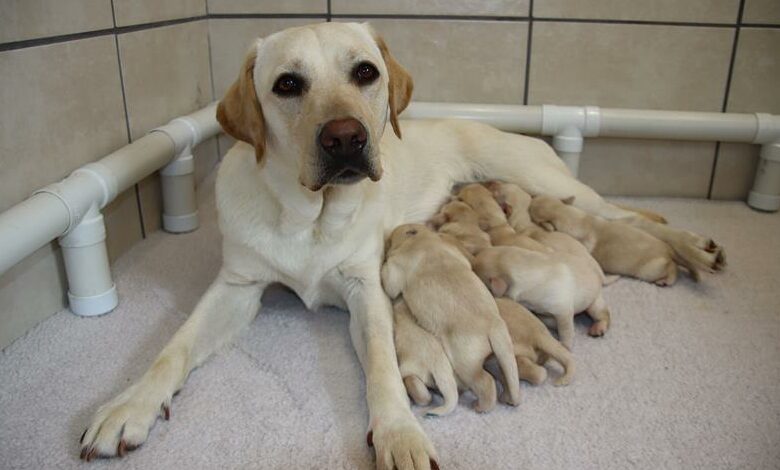
The University of Pretoria’s veterinary science faculty at Onderstepoort has helped the SA Guide-Dogs Association (Saga) breed more than 700 helper dog puppies for disabled people since 2014.
It has done this through artificial insemination.
Recently, the faculty celebrated its 100th artificially inseminated litter when a Labrador named Petra gave birth to eight puppies.
This was after Petra was impregnated using frozen sperm from a dog named Murray.
Most of the 717 dogs birthed this way were Labradors or Golden Retrievers.
Murray is only now being trained to become a guide dog, according to Saga kennel manager Caroline Human.
She said Petra’s litter was dubbed the “P” litter, meaning that all of her puppies’ names would begin with the letter “P”.
“Petra’s female parent, Nadya, has since gone on to graduate as a guide dog. This while Petra’s male parent, Yogi, is a stud from Guide Dogs Australia.”
Puppies initially live in Saga volunteers’ homes before they are called in for formal training.
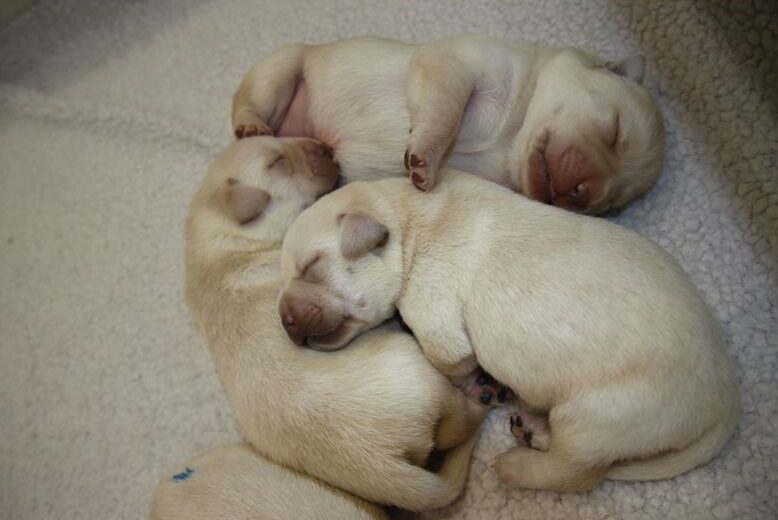
Most puppies are subsequently trained as guide dogs for visually impaired people, autistic children and people with physical disabilities.
The association had exclusive use of the Onderstepoort Veterinary Academic Hospital reproduction clinic’s services since 2014, said Leigh de Beaufort, who is in charge of kennels, puppy breeding and puppy raising at Saga.
She said UP had helped ensure that enough assistance dogs were available.
Previously, Saga relied on natural mating and sometimes surgical AI with frozen-thawed semen.
However, in 2014, the association decided to start importing frozen semen from reputable international guide dog schools in Australia, the USA and UK.
“We wanted to expand the gene pool of assistance dogs used in South Africa. We also wanted to improve the statistics of our progeny of puppies in terms of their health, working potential and temperament.”
De Beaufort said the Onderstepoort reproduction clinic used a technique called trans-cervical artificial insemination (TCI), using frozen-thawed semen.
She hoped that Saga would in future be able to share approved frozen semen with other international guide dog schools to further expand local assistance dogs’ gene pools.
“The use of frozen semen to breed dogs is common practice today,” he said.
“It can be used to raise future generations, and also allows for the safe international movement and transportation of desired genes.”
Saga wants to breed at least 80 puppies annually to ensure that enough animals are available to receive formal training as guide dogs as around 50 dogs graduate each year.
ALSO READ: Daimler celebrates 60 years in South Africa
Do you have more information about the story?
Please send us an email to editorial@rekord.co.za or phone us on 083 625 4114.
For free breaking and community news, visit Rekord’s websites: Rekord East
For more news and interesting articles, like Rekord on Facebook, follow us on Twitter or Instagram