E-tolls: business as usual until new agreement
Gauteng premier Panyaza Lesufi says that e-tolls were not in the future for the province, but that a new plan would have to be negotiated first.
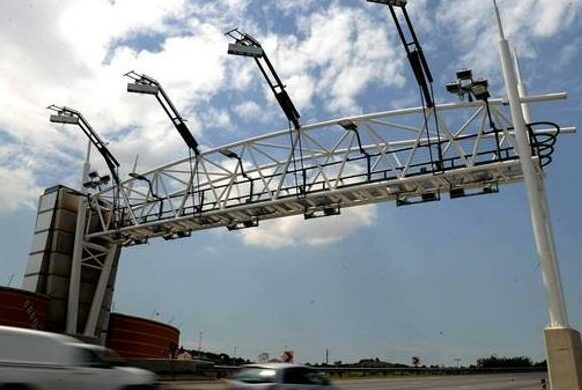
The e-tolling system will stay until a new revenue model can be agreed upon for the freeway network, Gauteng premier Panyaza Lesufi said.
Lesufi, however, stressed that e-toll will not be one of the solutions.
He made the remarks while briefing the media about the future of the controversial e-toll system operated by Sanral to fund the 201km of roads under the Gauteng Freeway Improvement Project (GFIP).
Sanral has a legal obligation to collect the money owed to them until an alternative is declared and gazetted. The province has until December 31 to come up with an alternative.
Lesufi said that the negotiations to end e-tolls were not easy, but he thanked the national government for reaching an agreement that would allow for the end of e-tolls. He said the provincial government was now dealing with a “time bomb” of the R26-billion amount.
He said that when the e-tolls were created, South Africa had an important reason to modernise and expand the road network ahead of the 2010 World Cup and that the infrastructure helped alleviate traffic and led to economic growth opportunities.
“But the people said they didn’t want e-tolls. We can’t fold our arms and ignore this.”
Finance minister Enoch Godongwana, in his mid-term budget speech on October 26, announced that the state will take over a large portion of Sanral’s e-toll debt, which totals R47-billion.
Godongwana said that the national government would take over 70% of the debt, while the remaining 30% would be left with the Gauteng government.
Gauteng finance MEC Jacob Mamabolo said e-tolls were not part of the province’s future and, therefore, not part of the provincial government’s revenue-generating solutions.
“E-tolls are effectively done away with immediate effect,” he said, adding that Gauteng residents are relieved of the burden of paying for e-tolls.
More details on this will be announced when Mamabolo presents the province’s medium-term budget policy statement to the Gauteng provincial legislature on November 24.
Outa CEO Wayne Duvenage questioned the debt owed by Sanral, however.
Sanral had a total debt of almost R46-billion, with about R43-billion of that being attributed to the GFIP, with Outa pointing out that the original capital cost shown in Sanral court papers amounted to R20.63-billion in 2012 when the project was completed.
According to Outa, e-toll compliance was at only 17.65%.
“Even if Sanral did not settle R1 of the initial capital debt or the interest accrued, a bond of R20-billion over the past 12 years at 10% interest will not amount to more than R33-billion,” said Duvenage.
“What’s more, in the time since the project was completed, Sanral was allocated a total of R22.4-billion from the national treasury for the financial management of the GFIP.
“The question we need answering is: what has Sanral done with the government grants received for GFIP over the last decade?”
E-tolling was introduced by the transport department in December 2013 as a measure to collect the money to service the huge loan Sanral made to upgrade Gauteng highways.
ALSO READ: Double delight for Pretoria golf star at PGA Championship
Do you have more information about the story?
Please send us an email to editorial@rekord.co.za or phone us on 083 625 4114.
For free breaking and community news, visit Rekord’s websites: Rekord East
For more news and interesting articles, like Rekord on Facebook, follow us on Twitter or Instagram