WATCH: Technological lab launched at UP to tackle SA unemployment
“This next generation of graduates is expected to change jobs and professions multiple times across many new emerging sectors, and will need to continuously upskill in order to stay employable.”
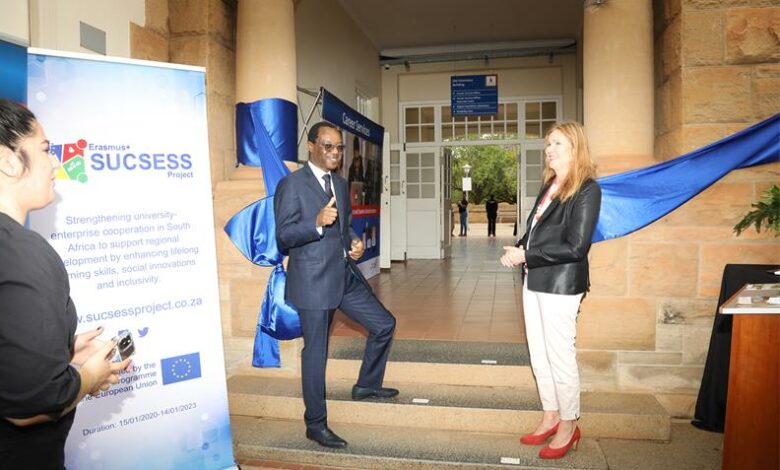
The University of Pretoria (UP) launched an employability-focused laboratory dubbed the Digital Capability Lab on Tuesday aimed at addressing South Africa’s high youth unemployment.
The newly launched lab is set to upskill students by developing them into employable graduates.
The site is part of an initiative project by the European Union (EU), with which UP has partnered in a three-year project aimed at researching ways of reducing youth unemployment and increasing student employability in South Africa.
The EU’s programme wants to support education, training, youth and sport and has an estimated budget of €26.2-billion.
The 2021-2027 programme places a strong focus on social inclusion, green and digital transitions, and promoting young people’s participation in democratic life.
The project allows ways for researchers to tackle the scourge of youth unemployment by boosting student employability in South Africa.
UP has become a part of the six higher education institutions involved in the EU Erasmus+ SUCCESS Project.
The other institutions include Haaga-Helia University of Applied Sciences and the University of Oulu (Finland), Sheffield Hallam University (United Kingdom), the University of Johannesburg and the University of Zululand (South Africa).
The aim is to promote collaboration between Higher Education Institution (HEI) students, teachers, and the industry in knowledge triangles.
The focus of the partnership is to build new learning methods and experiential learning, which is intended to make it possible for students to learn together with industry.
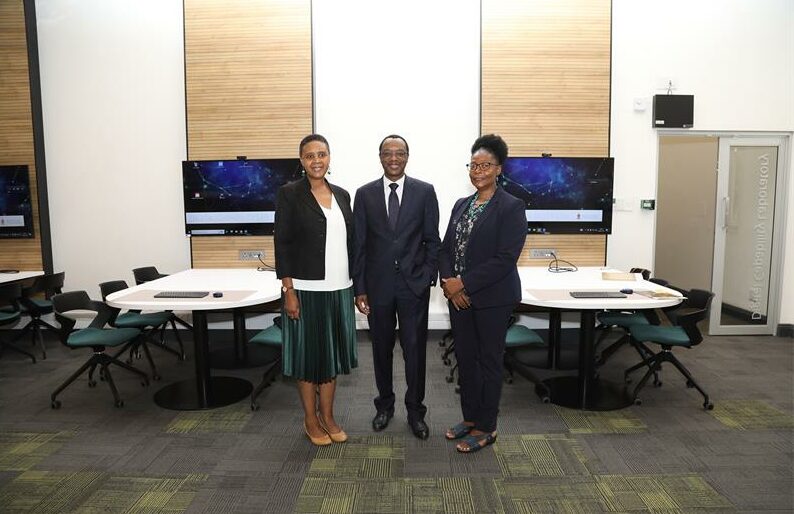
UP Vice-Chancellor and Principal, Prof Tawana Kupe, said the university must prepare and equip its students for the future world of work, which is anticipated to be vastly different from the current one.
“This next generation of graduates is expected to change jobs and professions multiple times across many new emerging sectors. It will need to continuously upskill to stay employable.”
Kupe said educational authors worldwide agreed that the current educational systems and qualifications would rapidly become dated and obsolete; therefore it was essential to cherry-pick necessary skills.
“It is important that we recognise which essential skills need to be developed for our graduates to actualise themselves and function optimally in the workplace, as well as contribute to the developmental aspirations of South Africa and Africa,” he said.
He said the digital capability lab would be transdisciplinary-focused and be managed by the Faculties of Humanities, Economic and Management Sciences (EMS) and UP’s Department of Career Services.
Deputy Dean of Teaching and Learning in the Faculty of Humanities Prof Sandy Africa said the lab’s equipment and technologies would assist to harness the students potential.
“When innovative ideas, industry tools, community engagement and professional simulations are effectively applied to real-world scenarios and contexts, youth employment opportunities in the global South become endless,” said Africa.
She highlighted that technology was essential in tackling youth unemployment.
Dean of the Faculty of EMS Prof Margaret Chitiga-Mabugu said UP needed to ensure that it developed employable graduates.
“This lab attests to our commitment to equipping our students with capabilities for the future,” she said.
Prof Chitiga-Mabugu said postgraduate students in the Business Management and Financial Management programmes had already started using the labs to identify financial vulnerabilities in companies and explaining these using economic and supply chain data.
WATCH:
Do you have more information about the story?
Please send us an email to editorial@rekord.co.za or phone us on 083 625 4114.
For free breaking and community news, visit Rekord’s websites: Rekord East
For more news and interesting articles, like Rekord on Facebook, follow us on Twitter or Instagram