Rand Water blames dry Tshwane taps on power failures
“Power outages remain one of the biggest threats to our networks’ stability.”
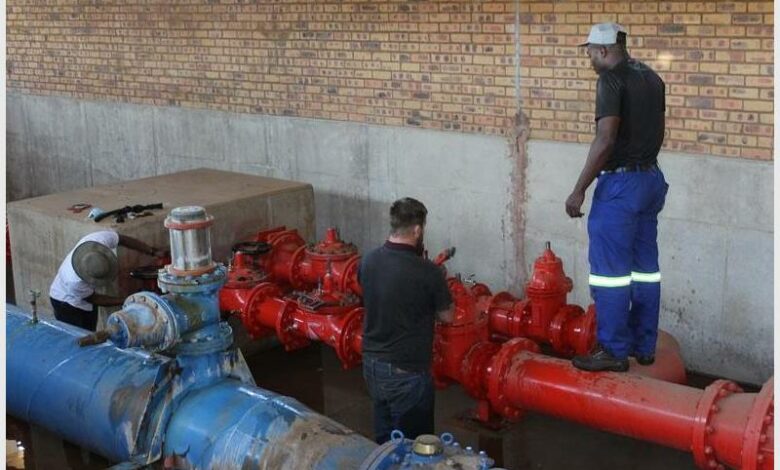
Rand Water has blamed the running dry of Tshwane taps on power failures, high demand and the heatwave.
In the meantime, it would continue with its generator installation project to reduce power outages.
A spokesperson, however, warned that the project wouldn’t cover all Rand Water sites.
“Power outages remain one of the biggest threats to our networks’ stability,” said Rand Water spokesperson Makenosi Maroo.
She said the systems had started stabilising and pumping was at maximum capacity since municipalities requested a meeting on the lack of water pressure to their reservoirs.
“Full recovery will depend on less frequent power failures. In the meantime, Rand Water urges all consumers to use water wisely.”
Operations were affected when Rand Water’s Eikenhof, Mapleton, Palmiet and Zwartkopjes stations, which pump water to 59 reservoirs in municipalities, suffered power outages.
Maroo said water storage in the reservoirs was stabilised at around 30%.
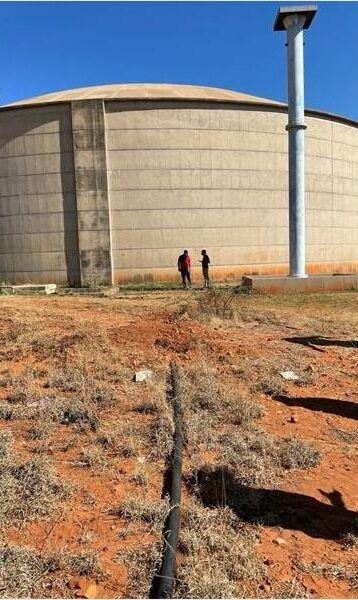
“When some of the reservoir levels were below 15%, the municipalities started experiencing inadequate to no supply to high-lying areas in their networks.”
She said the water crisis was worsened by power failures that hit the Zuikerbosch purification plant and the Eikenhof pump station on January 13.
These power outages lasted for six hours and affected Zuikerbosch pumping station’s engine room 4, which supplies almost 40% of Rand Water’s capacity.
At the Eikenhof booster station, a three-hour power outage made it impossible to feed water into reservoirs.
“On January 29, the Eikenhof station experienced yet another power failure that affected water pumping from this station.
This incident caused a further depletion of reservoir levels leaving some reservoirs at 0%.”
Rand Water’s system is extremely sensitive to any power outages and may take a minimum of four hours to recover after an outage.”
Tshwane has since seen some improvements in its water capacity.
Tshwane mayor Randall Williams said he had engaged with Rand Water’s CEO and board chairperson on the water problem on Monday afternoon.
“Their water management teams and the metro’s technical teams joined the discussion,” he said in a statement.
“Our focus was on the inability to get our high-lying water reservoirs to recover in areas such as Soshanguve, Mooikloof, Grootfontein and Laudium.
“These areas have been grappling with little to no water for over a week.”
Williams welcomed the constructive commitment from Rand Water to ensure that technical teams work together to better manage the water supply to these areas.
“Out of the three metros in Gauteng, the City of Tshwane receives the least amount of bulk water, a matter which we intend to interrogate further particularly because Tshwane is the largest city in the province in terms of geographical size and has a significant manufacturing sector, which both drives water consumption.
“Nonetheless, we are fully committed to working with Rand Water to better manage our water demand and consumption.”
Tshwane metro spokesperson Selby Bokaba said the Garsfontein reservoir improved gradually overnight and was sitting at an average of 39%.
“There is a little flow from Rand Water to Garsfontein hence, the steady recovery.”
He said Elardus Park reservoir was at 32% due to pumping from Garsfontein being stopped.
“The demand at Garsfontein reservoir is exceeding the supply. There is no movement at Mooikloof reservoir. It is almost empty at 1.98% because of the absence of water supply from Rand Water.”
The Parkmore high-level and low-level reservoirs supplying Menlyn and surrounding areas were in a good state at 62% and 69%.
“There is no movement at Grootfontein reservoir with the current level at 4.16%. This is after the metro isolated the reservoir outlet for most of yesterday, including overnight, to retain the water at the reservoir.”
The Laudium reservoir has improved overnight from 5.21% to 25%.
Bokaba, however, said this was worrying as under normal circumstances, the reservoir could recover to more than 50% overnight.
“The supply from Rand Water system is minimal.”
“The Atteridgeville high-level reservoir, which also supplies Kalafong hospital, is depleted due to the pressure from Rand Water not being sufficient for the water to reach the reservoir.”
Bokaba said a dedicated water tanker had been deployed to fill the hospital’s tanks.
“The Lotus Gardens reservoir went from 21% to 28% overnight. This means that there is very little flow from Rand Water to the reservoir.”
He said there was also insufficient supply from Rand Water to the Soshanguve reservoirs.
This means @Rand_Water must have severely throttled their RW outlet to keep water at the reservoir hence the notable improvement and insufficient supply to the Sosha reservoirs.
— City of Tshwane (@CityTshwane) January 30, 2023
#WaterOutages: Atteridgeville HL reservoir, that also supplies Kalafong hospital, is still empty due the pressure from @Rand_Water not being sufficient for the water to reach the reservoir. A dedicated water tanker has been deployed to fill up the hospital’s tanks.
— City of Tshwane (@CityTshwane) January 30, 2023
ALSO READ: Metro blames Eskom for slow progress on debt settling
Do you have more information about the story?
Please send us an email to editorial@rekord.co.za or phone us on 083 625 4114.
For free breaking and community news, visit Rekord’s websites: Rekord East
For more news and interesting articles, like Rekord on Facebook, follow us on Twitter or Instagram