Centurion municipal arrears remain close to R1.5-billion
Improved repayment rates suggest progress, yet disconnections, rising arrears in certain wards, and financial constraints indicate that Centurion residents and businesses continue to battle with heavy municipal debt burdens.
Residents and businesses in Centurion continue to grapple with municipal debt, with the Tshwane metro reporting that arrears in the area have risen slightly, despite stronger repayment rates.
Metro spokesperson Lindela Mashigo confirmed that by the end of July, the combined debt from Centurion’s 12 wards had increased by about 1% over the 19 months.
This resulted in an outstanding amount of just under R1.479-billion, compared to R1.467-billion at the end of January 2024.
“The city implemented tariff increases in July 2024 and again in July 2025, yet it still managed to collect steadily and keep arrears stable,” he said, also pointing to repayment performance as a positive indicator.
He explained that the average repayment rate across all wards rose from just under 56% in January 2024 to 75% by July this year.
“Six wards recorded higher repayment rates, while six wards showed a decrease. These results reflect the effectiveness of the city’s credit control and debt recovery initiatives,” he said.
The area with the highest outstanding debt was Ward 48, which includes Rietfontein and Vlakfontein.
This part of the city owed nearly R405-million, more than double that of any other ward in Centurion. This is up from under R250-million in the previous financial year.
Ward 78, which owes the least, has decreased its debt to under R24-million from just over R28-million. This area stretches from Zwartkop in the south to Lyttelton in the north, and from Eldoraigne in the west to Irene in the east.
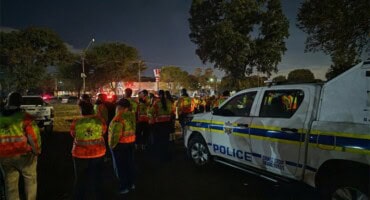
Mashigo said the city had intensified credit control measures to address these challenges, saying, “Between January and July 2025, a total of 42 873 actions were carried out in Centurion.”
He explained that almost 39% of these were physical deliveries of final demand notices, while just over 25% were water disconnections, and almost 24% were electricity disconnections. The remaining actions included inspections and reconnections.
“Not all actions were successful, as in some cases meters had already been switched off in earlier disconnections and were found to be off when officials arrived,” said Mashigo.
He noted that during this period, around 20 500 disconnection attempts were carried out across businesses, government, and residential properties.
“Businesses faced 4 536 disconnections, government departments 305, and households 15 671. These included 9 807 electricity disconnections and 10 705 water disconnections.”
Mashigo added that from January to July this year, a total of 1 122 electricity meters were reconnected once accounts were settled, along with 442 water meters.
Ward-level data also points to uneven outcomes, with Ward 77 – centred on Olievenhoutbosch – recorded the highest number of water disconnections with over 2 800 water meter disconnections, followed by Ward 48 with almost 2 100.
Ward 61, an area that covers both Laudium and Atteridgeville, experienced the most power disconnections with just under 1 750 meters disconnected. This is followed by Ward 48 with over 1 500. In total, Ward 48 had more than 3 500 electricity disconnections during the period, the highest in Centurion.
In total, Ward 48 saw the most disconnections over power and water, with just under 3 600 disconnections reported.
“These figures underline the impact of the city’s debt recovery measures, even though the challenge of non-payment persists,” said Mashigo.
In March last year, Rekord reported that the metro revealed the extent of Centurion’s municipal debt, which stood at R1.467-billion across the 12 wards.
At the time, former MMC for Finance Jacqui Uys said Centurion was not spared as Tshwane intensified efforts to recover its citywide debt, which at that time stood at over R23-billion.
Repayment rates across the whole metro varied widely, with Ward 64 at over 70% and Ward 106 at just under 8%.
Uys also cautioned that during disconnection operations at the time, the metro uncovered illegal connections and launched criminal investigations, which had pointed to a broader network of corruption, possibly involving city officials colluding with clients to be reconnected illegally.
ALSO READ: Clean-up campaign rids CBD streets of drugs, trash
Do you have more information about the story?
Please send us an email to bennittb@rekord.co.za or phone us on 083 625 4114.
For free breaking and community news, visit Rekord’s websites: Rekord East
For more news and interesting articles, like Rekord on Facebook, follow us on Twitter or Instagram or TikTok