Mams residents blame unreliable waste collection as cause of illegal dumping increase
Residents warn that uncollected waste is turning neighbourhoods into health hazards, while environmental experts caution that dumping threatens soil, water, and air quality, worsening risks as the rainy season approaches.
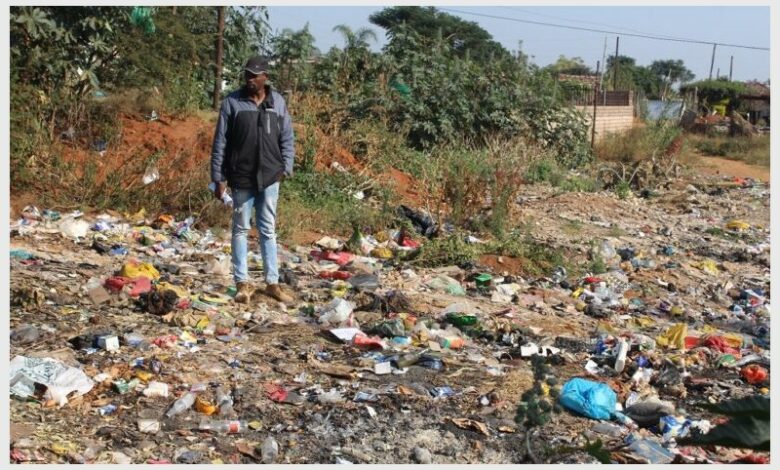
The metro has identified close to 110 illegal dumping hotspots across Region 6, with areas like Mamelodi, Nellmapius, Silverton, and Garsfontein being the hardest hit.
These sites have turned into persistent eyesores and serious health hazards for residents, and community members argue that without consistent waste removal services, people are left with little choice but to dispose of rubbish illegally.
They also blame the city for not running awareness campaigns to teach residents about the dangers of improper dumping and the long-term harm it causes to both the environment and public health.
Some of the known illegal dumping hotspots include the Mamelodi West Hostel, nearby the Heatherly cemetery, outside Marry Me informal settlement, the Mamelodi West Cemetery, Tsamaya Road, Solomon Mahlangu Drive near Mamelodi Mall, and Moloto Road.
Ernest Magane from Marry Me said informal settlements in Mamelodi are still struggling with loads of rubbish and the consequences of lack of proper handling of refuse and illegal dumping sites.
Magane said the issue of resolving illegal dumping sites is by educating the public about recycling and how to take care of their own environment.
“A recycling programme will also help in the fight against unemployment and poverty.”
According to Magane, residents at the informal settlement have also converted an illegal dumping site into a vegetable garden.
Magane claimed that they do not receive services from the metro, especially regarding waste collection and as long as this continues, residents will continue to dump rubbish in the open veld, voicing the opinion that the metro should prioritise informal settlements when clearing illegal dumping sites.
He said should dumping continue, their health will be put at risk, and the situation could worsen, especially with the rainy season approaching.
Environmental activists caution that unregulated waste disposal not only damages the natural landscape but also releases hazardous chemicals into the ecosystem, threatening biodiversity and accelerating long-term environmental degradation.
Experts stress that the problem extends far beyond aesthetics: illegal dumping attracts vermin, spreads disease, contaminates soil and water, and in some cases, blocks stormwater drainage, heightening the risk of flooding during heavy rains.
Professor Patricia Forbes, Head of the Environmental Monitoring and Sensing Research Group at the University of Pretoria, said illegal dumping poses wide-ranging dangers.
“When waste is dumped illegally, aside from being an eyesore, pollutants from the waste can leach into soil, and rainfall can wash these pollutants or even the waste itself into groundwater and stormwater systems,” she explained.
“This is really concerning, because stormwater eventually flows into our rivers and dams, and this is the same water we treat for drinking purposes. In some cases, waste is even set alight, releasing toxic fumes that put many at risk of respiratory illness.”
Forbes added that the widespread attitude that dumped waste is ‘someone else’s problem’ is dangerously short-sighted.
“Illegal dumping threatens all of us. It contaminates the land, the air we breathe, and even the water we depend on. The risks are [both] immediate and long-term, and they affect every single member of society,” she warned.
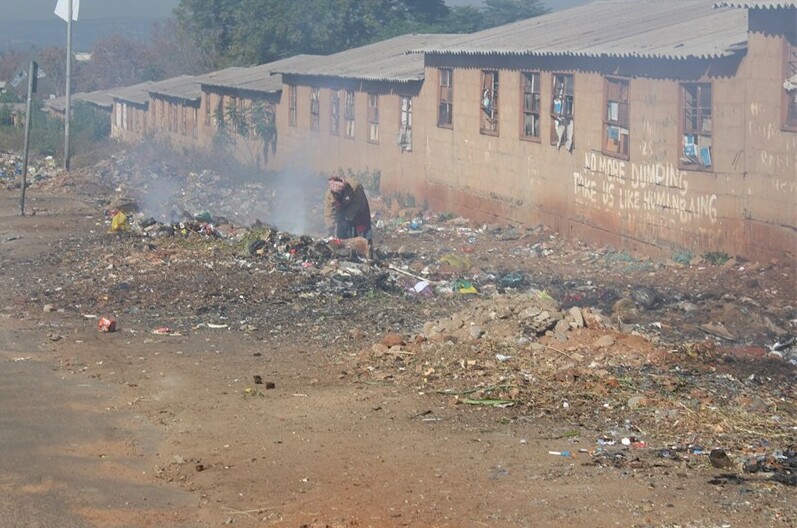
According to the city, illegal dumping is not simply the result of inadequate infrastructure, but also community behaviour.
“Illegal dumping is influenced by the community behaviour, and the main contributing factors include lack of education and awareness, as well as limited access to waste management facilities,” explained Tshwane spokesperson, Lindela Mashigo.
Mashigo said the issue is compounded by the absence of fully operational waste sorting facilities in Region 6.
“While four sites have been identified in Region 4 (Southern), the process of finding suitable locations across the city including in Region 6 is ongoing.”
He said the city is working to identify strategic areas in consultation with stakeholders, while also considering environmental sensitivity and alignment with municipal plans.
Mashigo stressed that waste sorting facilities could play a key role in reducing the problem, stating, ‘The purpose of waste sorting facilities is to provide convenient, well-managed points, where residents and businesses can responsibly take their recyclable material and help reduce illegal dumping’.
He said to address the mounting challenge, the metro has implemented several strategies, including a daily illegal dumping clearance schedule, collaboration with waste by-law enforcement units from the Tshwane Metro Police Department (TMPD), and regular community clean-up campaigns.
Mashigo noted that the municipality has also strengthened its enforcement framework.
“The city has established the Integrated By-Law Enforcement Committee (IBEC), comprising various stakeholders, with the main focus of supporting and enhancing the enforcement of the city by-laws. Through this committee, various enforcement campaigns are carried out on hotspot areas city-wide,” he said.
He said the Re-Kaofela campaign has also been launched to encourage community involvement.
“The campaign urges residents to use only city-approved waste receptacles and to take personal responsibility for keeping their surroundings clean.”
Mashigo said that the city’s environment and agriculture management department, together with TMPD, conducts joint operations to address these hotspots. However, identifying and prosecuting offenders remains a challenge.
He added that while enforcement and clean-up efforts are ongoing, the city acknowledges that a long-term solution will require a combination of infrastructure improvements, public education, and community cooperation.
Mashigo said the eventual roll-out of multi-purpose waste sorting facilities across all regions is expected to help curb the problem, but also appealed to residents to play their part in ending the scourge of illegal dumping.
ALSO READ: Residents launch programme to restore Pretoria East Cemetery
Do you have more information about the story?
Please send us an email to bennittb@rekord.co.za or phone us on 083 625 4114.
For free breaking and community news, visit Rekord’s websites: Rekord East
For more news and interesting articles, like Rekord on Facebook, follow us on Twitter or Instagram or TikTok.