Air pollution: All levels of government blamed
North residents face daily air pollution risks, with little action from the metro, provincial, or national government. Councillor Rina Marx and Greenpeace accuse authorities of failing residents in public health. Despite warnings and protests, pollution persists. Greenpeace urges an end to Eskom exemptions, demanding urgent enforcement and real accountability from all levels of government.
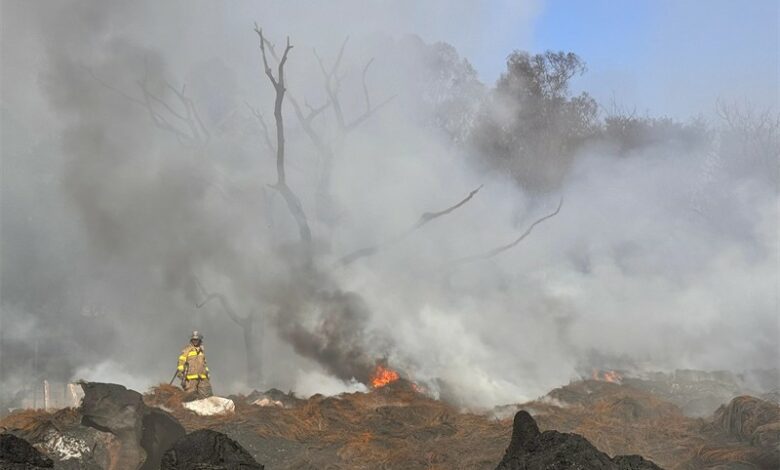
The communities of Pretoria North are under threat from air pollution that poses a growing risk to public health.
Despite repeated appeals to both the metro and provincial environmental departments, meaningful action remains absent.
This is according to councillor Rina Marx of the Freedom Front Plus, who has accused all levels of government of failing to protect residents against pollution.
Marx has spent the past two years documenting air pollution in the area, which she said can also be attributed to a lack of enforcement of by-laws by the metro.
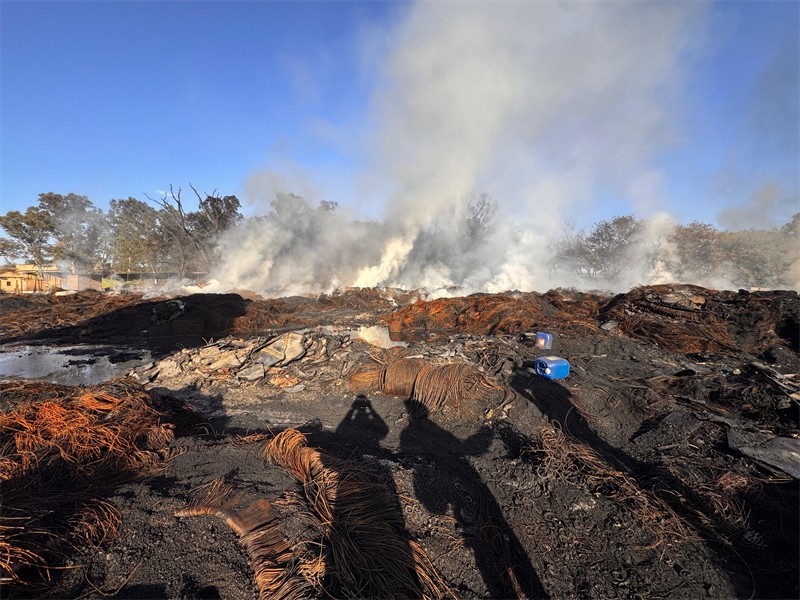
She raised particular concern about a local tyre recycling plant for a while, warning the metro of its potential dangers weeks before a major fire broke out at the facility on 16 August.
“The pollution from the fire had a serious impact on residents’ health for more than three weeks,” Marx said. “We are already seeing a rise in respiratory illnesses reported at local clinics, and this is directly linked to the worsening air quality in the area.”
Marx said she plans to work with national environmental advocacy groups and raise the issue once again in the city council to highlight what she sees as a systemic failure at local, provincial, and national levels to address pollution in South Africa.
“The residents of Pretoria North, Akasia and greater Pretoria deserve a safe, clean, and healthy environment,” she said.
Her comments come just days after Greenpeace Africa staged a protest outside the offices of the Department of Forestry, Fisheries and the Environment (DFFE) in Arcadia.
During the demonstration, activists handed over a memorandum calling for urgent government intervention to uphold the constitutional right to clean air.
The department has since issued a response defending its approach.
Representatives of the office of The Minister of Forestry, Fisheries and the Environment, Dion George, emphasised that one of the points Greenpeace raised, the pollution exemptions granted to Eskom, are not open-ended, but rather structured to balance environmental concerns with the country’s economic needs.
“Exemptions granted to Eskom were formulated in line with the National Environmental Management: Air Quality Act,” said departmental spokesperson Shelton Mollentze. “These are time-bound and come with strict conditions. They are part of our commitment to transition to renewable energy while honouring our international obligations.”
But Greenpeace Africa remains unconvinced.
Cynthia Moyo, the organisation’s spokesperson, said the department is falling far short of its constitutional duty to protect citizens from pollution.
“Greenpeace Africa welcomes the DFFE engagement on air pollution but remains deeply concerned that the department’s responses fall far short of upholding South Africans’ constitutional right to clean air,” said Moyo. “Granting Eskom repeated exemptions is a direct betrayal of public health and a dangerous derailment of our urgent energy transition.”
Greenpeace cited research at the protest indicating that over 42 000 South Africans die prematurely each year from air pollution.
The group also points to a staggering toll on infants and children, including more than 47 000 underweight births and 43 000 preterm births a year, alongside high rates of asthma and other chronic respiratory conditions.
Mollentze said the government recognises the serious health risks posed by air pollution, but noted that scientific estimates vary depending on the methodology.
He confirmed that the department is working closely with the South African Medical Research Council to establish reliable and consistent data to inform policy.
“The department is guided by the Constitution and the objectives of the National Environmental Management Air Quality Act to reform the law regulating air quality in order to protect the environment by providing reasonable measures for the prevention of pollution and ecological degradation and for securing ecologically sustainable development while promoting justifiable economic and social development,” said Mollentze.
About enforcement, Mollentze said new regulations were introduced in August 2024 to compel polluters in priority areas like Mpumalanga and the Vaal Triangle to reduce emissions.
A revised air quality management plan was implemented in March 2025 in the Highveld Priority Area, with further reviews underway in other polluted regions.
7
Greenpeace argues that enforcement is still far too weak, and that existing plans often fail to materialise into real change.
“Without strict penalties and true accountability, these plans are nothing more than words on paper,” Moyo warned. “Communities continue to suffer while government delays action. This is a national crisis.”
The department maintains that its Just Energy Transition Framework and Investment Plan are long-term solutions designed to steer the country away from coal dependency, while creating new jobs in green industries.
“Additional to this, government has developed legislation to encourage private embedded power generation, and liberalisation of the electricity market to encourage more private sector participation,” said Mollentze.
Do you have more information about the story?
Please send us an email to bennittb@rekord.co.za or phone us on 083 625 4114.
For free breaking and community news, visit Rekord’s websites: Rekord East
For more news and interesting articles, like Rekord on Facebook, follow us on Twitter or Instagram or TikTok.