Centurion councillors push to protect critical electrical infrastructure
Highly organised cable theft is crippling Centurion’s electricity supply, prompting councillors to push for community upliftment projects to protect critical infrastructure.
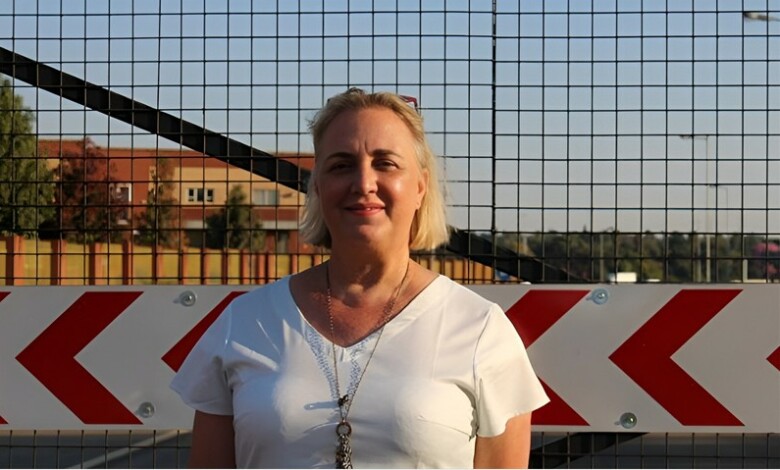
Cable theft in Centurion has become widespread, with a spate of apparently highly organised criminal operations, prompting councillors to push for greater protection of critical electrical infrastructure.
The councillors have said that the implementation of Community Upliftment Projects (CUPs) could assist in deterring crime in their wards.
The CUP initiatives combine municipal technical expertise with local resources, giving communities the manpower, equipment, and oversight needed to safeguard substations, streetlights, and vulnerable assets.
Ward 69 councillor Cindy Billson explained that the CUP framework allows residents and businesses to contribute funds, technical expertise, or equipment, while the city provides materials, technical knowledge, and guidance.
She said that by enabling faster repairs, more active monitoring, and visible deterrents, CUP projects reduce downtime caused by theft and improve the reliability of the electricity supply.
“When repairs happen faster, it reduces the incentive for repeat attacks. Local associations and businesses play a crucial role in ensuring long-term sustainability.”
She mentioned the successes of similar initiatives in other areas, including Zwartkop, Uitsigpark, Mulder’s Mile, and Thatchfield Estate, as examples of how proactive community-city partnerships can protect infrastructure.
Billson highlighted that technology such as motion-sensor alarms, CCTV integration with private security, and physical deterrents, like concrete caging and welded barriers, can complement CUP efforts.
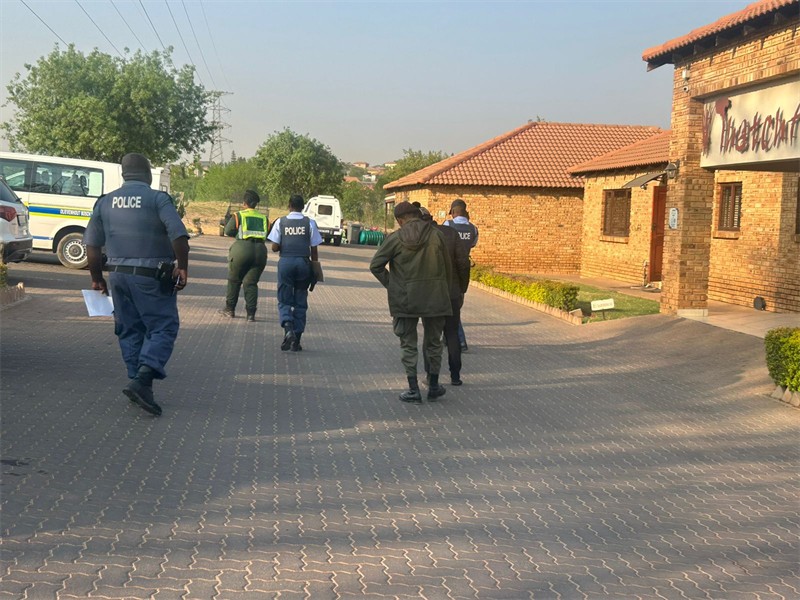
At policy level, she mentioned the need for harsher sentencing and dedicated SAPS task teams.
“Centurion cannot afford to treat cable theft as just another crime. It is economic sabotage, and the repeated outages erode public confidence, frustrate residents, and complicate councillors’ work.
“CUP initiatives offer a proactive solution, giving communities ownership in protecting their infrastructure.”
Billson also detailed an attempted cable theft incident along Rooihuiskraal Road at the N14 bridge on September 11, where five perpetrators targeted a newly installed cable after previous theft at the same site on September 4.
She said one suspect was caught while the others escaped, demonstrating the sophistication and boldness of these syndicates.
Billson emphasised that the incident highlights the importance of partnerships between communities and security companies.
“Private security acted quickly to intercept the criminals, but stronger coordination with SAPS and municipal protection is essential to ensure arrests lead to convictions.”
She noted that more layered security measures are needed at hotspots like the N14 bridge, including tamper-proof infrastructure, a permanent patrol presence, and integrated monitoring.
Billson said that while private security partnerships are essential, they cannot operate in isolation.
“Security companies act as first responders, but proper follow-up from SAPS, prosecutions, and municipal protection is necessary to translate arrests into convictions.”
She also highlighted the role of scrap metal dealers in driving theft, warning that legislation exists, but enforcement is uneven.
Thatchfield Estate manager Mossie Mostert described the September 11 incident.
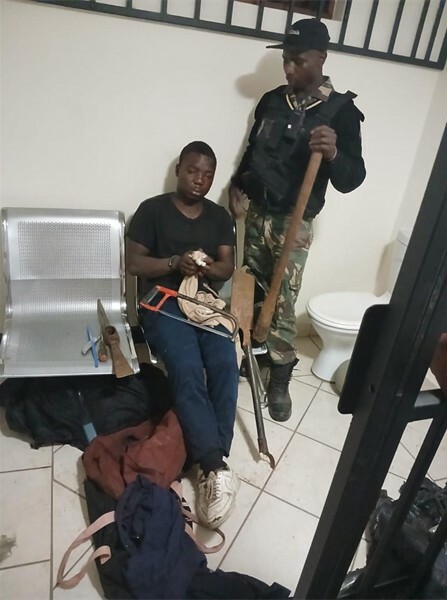
He said that around 22:30, the security team spotted five perpetrators hiding under the bridge along the Rooihuiskraal cable route. When they saw the lights of the security vehicle, the perpetrators fled.
“Security personnel chased them and fired warning shots, managing to apprehend one suspect while the others escaped.
“Reaction officers and N14 patrollers later observed the remaining four approaching from the direction of the Rooihuiskraal substation, but they disappeared into nearby bushes.”
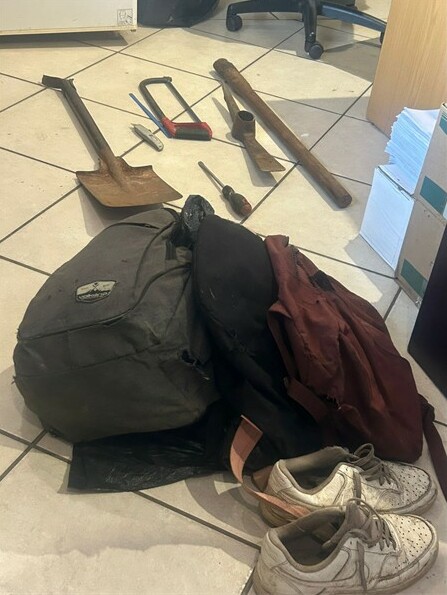
He said that tools, including a pick, hacksaw blades, screwdrivers, a spade, and knives, were found next to the cable route, highlighting the equipment and planning involved in the theft attempt.
Ward 64 councillor Alta De Kock said the incident illustrated how cable theft in Centurion has become increasingly organised and dangerous.
She said that councillors are working with private security companies, but without strong municipal and SAPS support, theft will continue.
“If it weren’t for the security teams, there would have been more power outages,” she said.
She added that better security measures, including electronic alarms and improved street lighting, are urgently needed, and residents remain frustrated by repeated outages.
This was not an isolated event. On September 5, large parts of Rooihuiskraal North, Rooihuiskraal, Wierdapark Ext 2, Eldoraigne Ext 18, and The Reeds lost power, following another cable theft at the same bridge.
At the time, Billson highlighted the increasing frequency and scale of these incidents.
“Cable theft has been occurring a lot more often at the bridge. With this particular theft of an 11m cable, it seems like the thieves used machinery to get the cable out, because it doesn’t look like it was done by hand,” she said.
Metro spokesperson Lindela Mashigo previously confirmed to Rekord that cable theft and vandalism remain significant challenges for the city, causing frequent and prolonged power failures.
In December last year, Mashigo said Region 4 (Southern) had experienced a wave of theft and vandalism affecting streetlights, meter boxes, low- and medium-voltage cables, switchgear, substations, and transformers.
At the time, he indicated that the only long-term prevention of copper and aluminium theft was a national ban on dealing in scrap copper or aluminium.
Mashigo added that the city had begun replacing most cables with aluminium, which is less attractive to thieves, and that some consumers have been safeguarding meter boxes with strong cages.
In March this year, Mashigo said that while the metro continued to replace cables, the investment in existing copper infrastructure made complete replacement a long-term process.
He emphasised that the city continues to assess the situation and replace cables where necessary, but full replacement cannot happen quickly.
Regarding security measures, Mashigo said they could not disclose details for safety reasons.
He also noted that cable theft is costly, with Region 4 alone losing between R600 000 and R1.2-million per month, making it the largest expense on the Energy and Electricity Operational Budget.
Mashigo urged residents to report any cable theft or vandalism to SAPS or the TMPD to help investigations.
Do you have more information about the story?
Please send us an email to bennittb@rekord.co.za or phone us on 083 625 4114.
For free breaking and community news, visit Rekord’s websites: Rekord East
For more news and interesting articles, like Rekord on Facebook, follow us on Twitter or Instagram or TikTok.