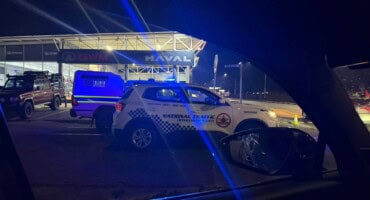
Pretoria North residents celebrate long-awaited sewer repair
The metro’s completion of critical repairs marks a victory for residents who had been enduring hazardous road conditions and recurring leaks.
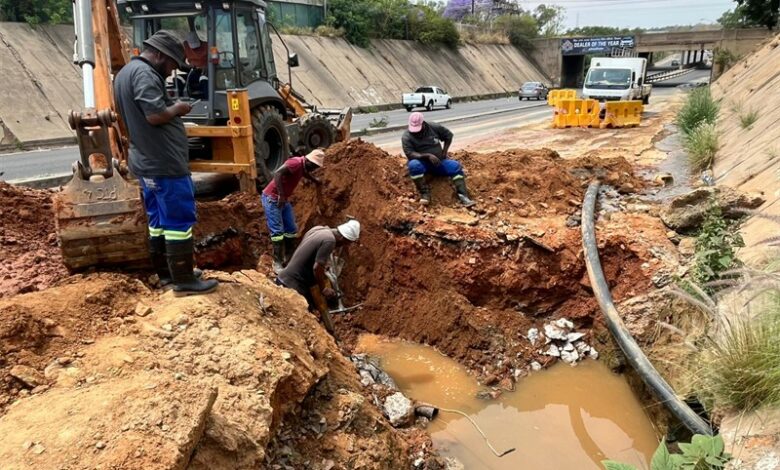
After nine long months of frustration, traffic chaos, and unpleasant odours, Pretoria North residents can finally celebrate, as the infamous sewer hole has been repaired.
The Tshwane metro’s internal teams recently completed the long-awaited repair work under the bridge at the main entrance to Pretoria North, ending a crisis that had left one of the area’s busiest access routes nearly unusable for months.
Ward 2 Councillor Quentin Meyer confirmed that the pipe has been replaced and the trench closed. This marks a huge milestone after a drawn-out battle between the community, AfriForum, and the metro.
“The pipe is in, the trench is closed, and now we just need two weeks for it to dry before the Roads Department can repair the surface. For now, it’s a huge relief. We don’t talk, we do,” said Meyer.
Residents echoed this relief, saying they are beyond grateful that the constant sewage leaks and traffic disruptions will finally come to an end.
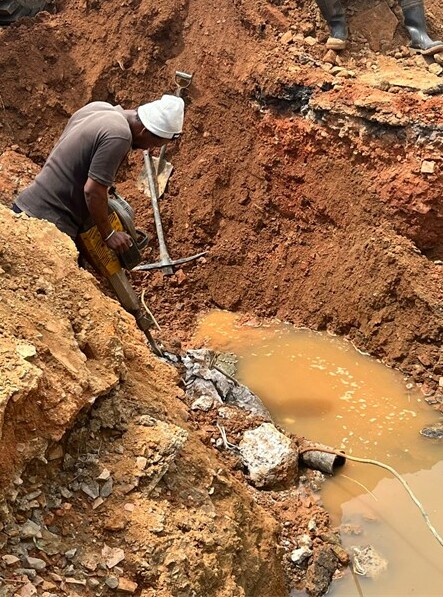
Workers use an excavator and manual tools to fix the sewer pipe, with muddy water indicating the completion of a nine-month-long repair effort in Pretoria North.
Pretoria North resident Jacky Sikhwari said the fix was long overdue.
“It’s been a nightmare. For months, that section was almost impossible to drive through, and it’s just wonderful to see real progress,” he said.
The sewer collapse, located under Rachel de Beer Street near the railway bridge entrance, had plagued the community since early this year.
Residents repeatedly complained about overflowing sewage, foul smells, and dangerous road conditions that had transformed the area into what many described as a dirt road.
Despite numerous reports, the metro’s earlier repair attempts failed, with the problem recurring several times.
Metro spokesperson Lindela Mashigo explained that the issue stemmed from a collapsed sewer pipe that had been encased in concrete to support heavy traffic, a structure that made repairs complicated and risky.
According to Mokgadi Supe, Director of Region 1’s Wastewater Collection and Water Distribution, the metro had repaired the section three times, but new damage kept appearing.
The municipality has since referred the section for a full capital expenditure (capex) pipe replacement to prevent future failures.
Frustrated by months of inaction, AfriForum North of the Mountain announced that it would intervene through a community-funded repair initiative.
The organisation launched a donation-matching campaign, pledging to match every rand contributed by residents to cover the R130 000 cost of repairs.
AfriForum’s representative Llewellynn Hemmens confirmed that preparations were well underway when the metro unexpectedly moved in to carry out the work.
“We have been putting pressure and pleading for nine months to get any sort of assistance.
“We had arranged with a contracting team, did site inspections, and even set a date for the repair. But before we could start, the metro suddenly arrived on scene, without co-ordination, planning or traffic control,” said Hemmens.
He described the metro’s intervention as chaotic.
“The tractor-loader-backhoe (TLB) arrived with no safety barriers or traffic control, then pipes and equipment came in one by one, blocking traffic for kilometres.
“If they had just given notice a day or two before, we could have helped manage traffic and ensured a safer, more organised process.”
While the metro insists it carried out the work internally, AfriForum believes its sustained pressure forced the metro to finally act.
“It’s quite clear the metro had no intention of fixing the hole. We had to plead for nine months and even raise enough money to do it ourselves before they stepped in.
“We are happy the problem is fixed, but it shouldn’t take that much effort from residents before the municipality does its job.”
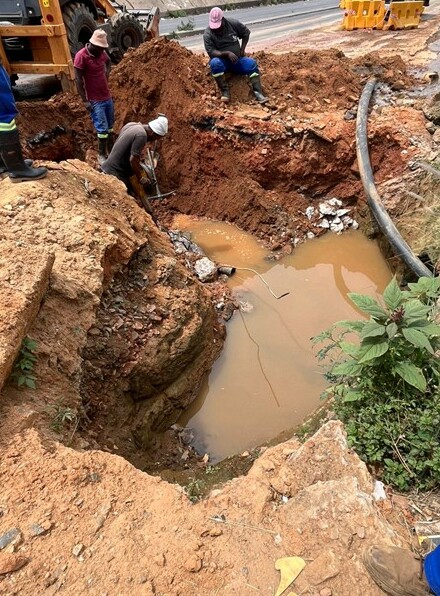
Water drained out of the hole. Photo: supplied
Workers use an excavator and manual tools to fix the sewer pipe, with muddy water indicating the completion of a nine-month-long repair effort in Pretoria North.
AfriForum confirmed that residents contributed just over R25 000, with the organisation covering the remainder through its national fund.
Hemmens said that since the metro took over the sewer repair, the collected money will now be redirected to other pressing community issues.
“We asked residents where they’d like the funds to go, and the overwhelming response was potholes.
“We will respect that and focus our efforts on fixing potholes around Pretoria North. The funds will stay in this community.”
Despite the relief, residents remain cautious about the metro’s long-term commitment to maintenance.
Pretoria North resident Werner Louw said the community hopes this fix is permanent.
“Let’s hope this fix lasts. We have had so many promises before. It’s good to see it done, but the metro must follow through with proper road repairs and regular checks.”
Meyer said, “This shows what can happen when residents stand together. It’s been a tough few months, but this victory belongs to the people of Pretoria North.”
Do you have more information about the story?
Please send us an email to bennittb@rekord.co.za or phone us on 083 625 4114.
For free breaking and community news, visit Rekord’s websites: Rekord East
For more news and interesting articles, like Rekord on Facebook, follow us on Twitter or Instagram or TikTok