WHO visit highlights Tshwane’s health progress
A high-level World Health Organization (WHO) delegation’s visit reinforced global partnerships and showcased the city’s commitment to accessible, people-centred health services.
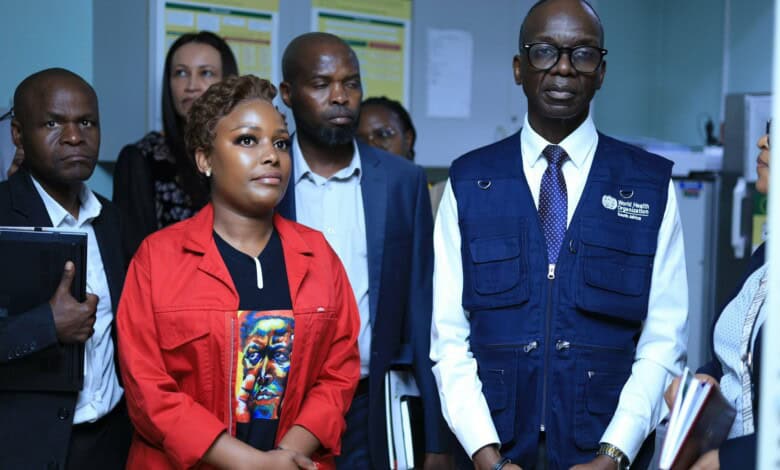
The metro recently welcomed a delegation from the World Health Organization’s (WHO) African Region to the FF Ribeiro Clinic for an oversight visit.
Regional director Professor Mohamed Janabi arrived in South Africa for his first official visit this week.
The visit underscores WHO’s continued partnership with the SA government in advancing national and regional health priorities.
Janabi’s first engagement was a courtesy call on the Minister of Health, Dr Aaron Motsoaledi, at the National Department of Health, where discussions focused on strengthening health systems and accelerating progress toward universal health coverage.
He also visited the Nuclear Medicine Research Infrastructure (NuMeRI) facility at Steve Biko Academic Hospital, witnessing how national investment in research and innovation drives improvements in health service delivery.
The day concluded at FF Ribeiro Clinic in the CBD, a model for people-centred primary healthcare where Janabi met frontline health workers contributing to a stronger, fairer health system for all.
Janabi’s delegation also sought to evaluate progress toward achieving the 95-95-95 HIV targets.
The 95-95-95 targets are a set of goals set by UNAIDS (the Joint United Nations Programme on HIV/Aids) to help end the Aids epidemic.
The aim is for 95% of people living with HIV to know their status, 95% of those diagnosed to be on antiretroviral therapy (ART), and 95% of those on ART to be virally suppressed by 2025.
The visit included facility observations, performance discussions, and knowledge sharing aimed at strengthening collaboration and enhancing HIV prevention, treatment, and care services, reaffirming the shared commitment to improved health outcomes for all.
Tshwane’s MMC for Health Tshegofatso Mashabela said the visit was also to strengthen partnerships between the three spheres of government – national, provincial, and local – and international health bodies to enhance the delivery of primary healthcare services.
“Discussions focused on collaborative strategies to maintain and expand the city’s ideal clinic status across its 24 healthcare facilities, as well as the continued rollout of mixed-use facilities and mobile clinics aimed at improving access to quality healthcare in all communities.
“We want to emphasise the city’s commitment to ensuring equitable, sustainable, and people-centred health services, noting that strong partnerships and adequate resourcing remain critical in delivering on this mandate,” Mashabela said.
The MMC believes that engagement also reinforced Tshwane’s role as a key stakeholder in South Africa’s broader public health system and its dedication to aligning local health priorities with national and global health goals.
ALSO READ: Contact crimes spike in CBD concerning
Do you have more information about the story?
Please send us an email to bennittb@rekord.co.za or phone us on 083 625 4114.
For free breaking and community news, visit Rekord’s websites: Rekord East
For more news and interesting articles, like Rekord on Facebook, follow us on Twitter or Instagram or TikTok.