Mooikloof residents decry wildlife loss, dust from soil dump
While the department maintains that it has complied with all legal requirements for the Garsfontein Road project within the road reserve, residents argue that more oversight is needed regarding the knock-on effects of associated operations – especially when they occur in sensitive, semi-rural environments.
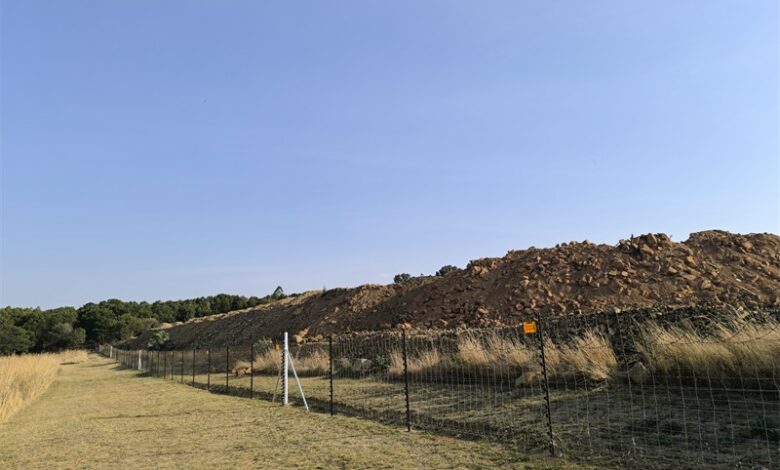
Large volumes of soil being transported and dumped on private land in the Mooikloof area have residents of Rietfontein Agricultural Holdings seriously concerned.
They say ongoing operations related to the Garsfontein Road upgrade project are severely impacting their health, safety, businesses, and local biodiversity.
The operation involves the transportation and dumping of large volumes of soil on private land in the area, reportedly for platform development linked to the road extension.
According to residents, the activity has destroyed indigenous habitat, displaced wildlife, and triggered noise and dust pollution incompatible with the surrounding residential and business environment.
One resident, who asked not to be named, said the once-quiet area ‘has become a construction zone, with dust choking the air and animals fleeing the destruction of their habitats’.
Many species, including vervet monkeys, hedgehogs, bats, and chameleons, have reportedly been displaced as trees have been cut down and burned.
The noise from machinery and trucks is audible for kilometres, disturbing both people and local businesses that rely on a peaceful environment to operate effectively.
In response to Rekord enquiries, the Gauteng Department of Roads and Transport, through its head of Communications, Melitah Madiba, provided a detailed statement addressing the issues raised.
Madiba clarified that the operation is taking place on private property and that the agreement for the use of the land was made between the property owner and the road project’s contractor, which was appointed by the department.
As such, she said the responsibility for many of the issues, including wildlife protection, vegetation clearing, and community consultation, rests primarily with the property owner, not the department or contractor.
“The contractor’s role is limited to the placement of surplus material under agreement with the owner. However, the contractor undertakes to avoid unnecessary disturbance during haulage operations, including restricting activities to designated areas and limiting vegetation clearance.”
Regarding allegations of displacement and habitat destruction, Madiba referred to environmental legislation.
“In terms of the National Environmental Management: Biodiversity Act and the National Environmental Management Act, the property owner remains accountable for ensuring reasonable steps are taken to safeguard indigenous species.
“Should any displaced wildlife be encountered, the property owner is expected to liaise with local environmental authorities or licensed wildlife rescue organisations for safe relocation.”
When asked whether an Environmental Impact Assessment (EIA) was conducted for the soil dumping activities, the department stated that no EIA was triggered for this part of the project as it does not qualify as a listed activity under current regulations.
“Public consultation is a requirement only where a listed activity triggers the need for an EIA,” said Madiba. “As this operation is not classified as a spoil dumpsite and does not constitute a listed waste disposal activity, no EIA process was triggered, and therefore no formal community consultation process was legally required.”
However, she did confirm that the Garsfontein Road upgrade project itself has received all required environmental approvals, including an EIA and Water Use Licence, from the Gauteng Department of Agriculture and Rural Development.
This technical distinction has left residents frustrated, as the visible impacts of the dumping operation – whether classified as a spoil site or not – are significant and ongoing.
Without public consultation or oversight, many fear that environmental laws are being exploited through loopholes.
Residents and business owners say the constant noise from trucks and the slamming of tailgates during rock dumping has made it difficult to operate.
There have also been reports of damage to boundary fences and electrical fencing, increasing risks to animals and people.
Madiba acknowledged these complaints and advised affected parties to formally lodge concerns.
“Any residents or businesses experiencing adverse impacts such as excessive noise, air pollution, or property damage are encouraged to formally lodge their concerns with the contractor and the resident engineer,” she stated.
“Where substantiated, appropriate remedial action will be taken in consultation with the property owner and affected parties.”
In terms of dust control, residents have disputed claims that any effective suppression measures are being implemented.
“Water tankers are deployed on the haulage roads to suppress dust during active operations, particularly in dry or windy conditions,” she said. “Routine dust suppression is undertaken in accordance with good construction practice,” said Madiba.
Still, no formal air quality monitoring has been conducted by the contractor, and no penalties have been issued for non-compliance to date.
On the issue of tree burning and vegetation clearing, the department distanced itself, stating: “The property owner has confirmed that no indigenous vegetation has been harmed and only invasive species such as black wattle and blue gum have been removed,” said Madiba.
“The contractor has not undertaken nor authorised any vegetation clearing or burning as part of its scope of works.”
However, this claim conflicts with reports from residents who have documented the destruction of long-established indigenous trees, which served as habitat for various species.
Do you have more information about the story?
Please send us an email to bennittb@rekord.co.za or phone us on 083 625 4114.
For free breaking and community news, visit Rekord’s websites: Rekord East
For more news and interesting articles, like Rekord on Facebook, follow us on Twitter or Instagram or TikTok.