Thousands gain home ownership as city pushes housing progress
The metro has handed out over 3 000 title deeds across its regions, with Soshanguve and Mamelodi among the biggest beneficiaries of the housing initiative.
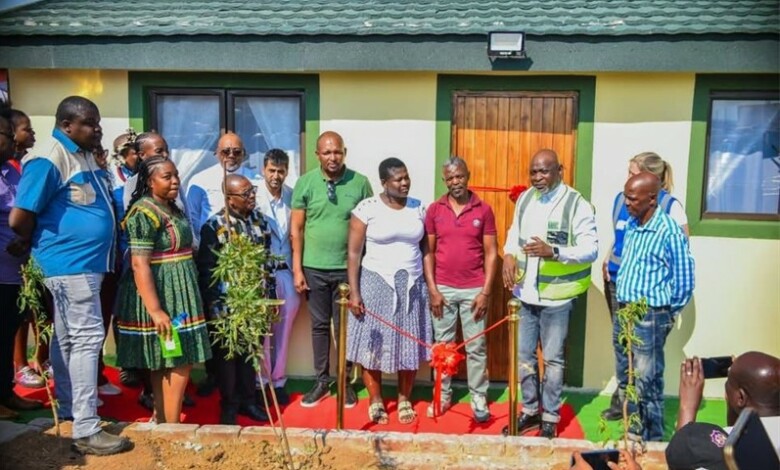
The metro’s multi-party coalition government marked its first year in office with a message of progress, accountability, and renewal.
But while thousands of residents are celebrating finally receiving the long-awaited deeds to their homes, many others are still waiting for this life-changing event to happen.
Johannes Hlongwane, a resident of Soshanguve South Ext 6, expressed his deep gratitude.
“I am very happy to receive my title deed today. I moved to my RDP house in November 2020, and I never thought that one day I would get my title deed,” he shared.
For many residents, the documents not only provide legal proof of ownership but also unlock opportunities such as access to housing subsidies, home loans, and the ability to legally transfer property to family members.
The milestone forms part of the metro’s human settlements programme, which has been at the forefront of restoring dignity and stability to residents.
During a report-back session, MMC for Human Settlements, Alderman Aaron Maluleka, shared the department’s progress since the coalition government took office, detailing efforts to transfer legal ownership and improve living conditions across Tshwane’s regions.
According to Maluleka, the metro has made major strides in issuing title deeds and providing home ownership to families who have waited years, or in some cases, even decades, for legal recognition of their properties.
“Over the past year, we have advanced the handover of title deeds across all regions, including Soshanguve, Mabopane, Hammanskraal, Atteridgeville, and Olievenhoutbosch.
“To date, 3 368 title deeds have been issued, transferring rightful ownership to families who have waited far too long,” announced Maluleka.
Soshanguve recorded the highest number of beneficiaries, with 2 134 title deeds handed over, followed by Mamelodi (229), Hammanskraal/Temba (216), Olievenhoutbosch (208), Winterveldt (195), Atteridgeville (120), Mabopane (80), Nellmapius (66), Ga-Rankuwa (47), and Eersterust and Rethabiseng, which each saw 14 families finally receive their ownership documents.
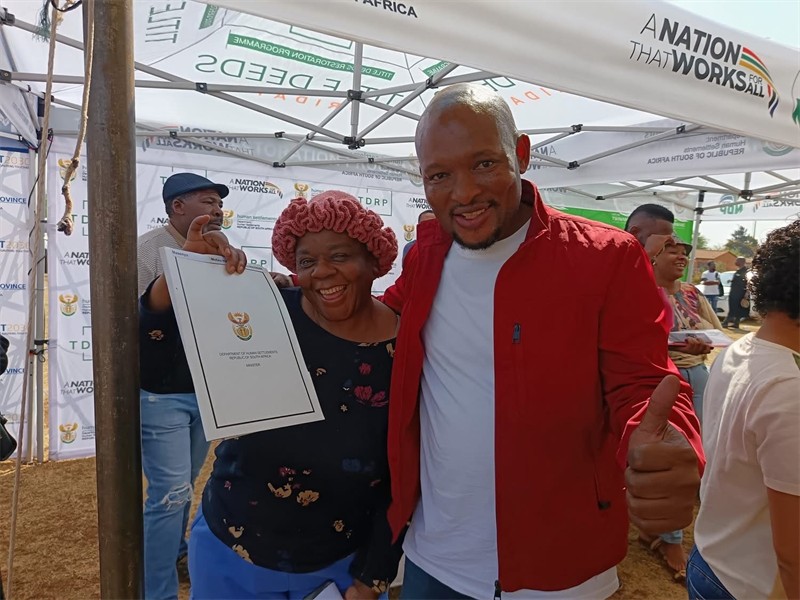
Resident Julia Ntshong expressed happiness at finally receiving her title deeds after decades of waiting.
“I am overjoyed. I can finally call this home mine in every sense,” she said.
Eunice Matjila, a pensioner, described the peace of mind the title deeds bring.
Councillors Zacharia Ntola and Jan Baloyi emphasised to members of their communities to keep their title deeds safe.
While some families are rejoicing, others continue to live in uncertainty as old backlogs and legal complexities delay the issuance of outstanding title deeds.
Maluleka acknowledged these challenges, explaining that unresolved estates, illegal sales, untraceable beneficiaries, and cross-border property dynamics in the Mabopane, Winterveld, and Ga-Rankuwa (MAWIGA) area remain major stumbling blocks.
He said, “These are not easy obstacles, but I assure you that our department is working closely with the courts, provincial partners, and communities to unlock these backlogs. Our people deserve ownership, and we will not rest until this right is realised for all.”
Beyond issuing title deeds, the Human Settlements department has also been working to improve living conditions in informal settlements by providing rudimentary services.
Across all seven regions, the metro has rolled out water tanks, basic sanitation facilities, and graded access roads to enhance accessibility and hygiene.
Communities that have benefited from these interventions include Mazambaneng, Vumaskloof, Brazzaville, Jeffsville, and Lethabong.
According to Maluleka, these efforts form part of the metro’s broader mission of inclusion, ensuring that every resident, regardless of where they live, has access to essential services.
The metro is driving relocation projects aimed at moving families from unsafe and uninhabitable areas into formalised stands with basic infrastructure.
Some residents said the pace of delivery remains slow, and they worry they may not live to see their own title deeds.
“We appreciate what the city is doing, but we just hope they won’t forget about us. We have been waiting for more than 10 years,” said Ga-Rankuwa resident, Lindi Monareng.
Maluleka admitted that budget constraints and land acquisition litigation continue to hinder progress.
“Limited capital budgets slow the delivery of bulk services. Litigation over land acquisition often delays progress. But what remains constant is our commitment to dignity.
“Every title deed we issue, every family we allocate a permanent stand, and every informal settlement we service is a step towards building a metro where every resident feels recognised and respected.”
He added that the metro’s vision is to ensure that opportunity begins at home.
“Tshwane is a metro of opportunity. Through our Human Settlements programme, we are ensuring that opportunity begins at home, a home with a title deed, a home on a serviced stand, a home that gives dignity.”
Do you have more information about the story?
Please send us an email to bennittb@rekord.co.za or phone us on 083 625 4114.
For free breaking and community news, visit Rekord’s websites: Rekord East
For more news and interesting articles, like Rekord on Facebook, follow us on Twitter or Instagram or TikTok.