Pretoria schools face safety inspection shortfall
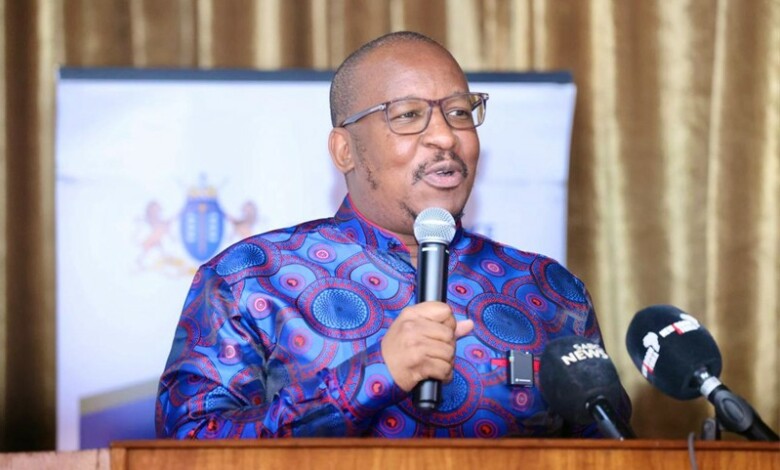
Michael Waters of the DA warned that only 5% of Gauteng school structures have been assessed, leaving thousands of learners potentially at risk.
Serious concerns have emerged about the structural safety of several public schools in Pretoria.
This, after it was revealed in the Gauteng Provincial Legislature (GPL), that only a small fraction of schools in the province have undergone the mandatory condition assessments required by law.
The information, released in response to a question in the GPL posed by DA Member of the Provincial Legislature Michael Waters, has drawn attention to the state of Pretoria institutions. He named Hoërskool Pretoria-Wes, Laerskool Fleur in Centurion, Laerskool Queenswood, and the Pro Arte School of Specialisation in Pretoria east as examples. All these schools were flagged for maintenance or safety concerns.
Under the Government Immovable Asset Management Act (GIAMA), all government-owned buildings, including schools, are required to undergo inspection at least once every five years to assess their structural integrity and ensure compliance with safety standards.
In Gauteng, the Department of Infrastructure Development (DID) is responsible for conducting these condition assessments, and the Gauteng Department of Education (GDE) must act on the findings through maintenance or capital improvement projects.
The written response from Gauteng Education MEC Matome Chiloane shows that, within Pretoria, several schools have undergone assessments in the last five years.
These include Hoërskool Pretoria-Wes, Hoërskool Silverton, Laerskool Fleur, Laerskool Queenswood, Laerskool Swartkop, Laerskool Uniefees, Laerskool Wierdapark, Laerskool Wonderboom-Suid, Mayville Primary School, and the Pro Arte School of Specialisation.
Collectively, these institutions formed part of a wider group of 57 schools across Gauteng identified for inspection due to possible structural concerns.
The inspections did not yield pass or fail results but instead rated each school’s overall condition on a scale from one to five.
Inspectors examined structural and infrastructure faults and also checked for the presence of hazardous materials such as asbestos.
While none of the Pretoria schools were found to require immediate closure, all were noted to have issues that demanded varying levels of attention.
Chiloane said the GDE is using the findings to guide maintenance priorities and budget allocations.
However, the response also revealed that not all information about individual school safety hazards, incident reports, or cost implications was included in the Legislature’s reply.
More concerning to Waters was the acknowledgement that only a fraction of the province’s total public schools had been assessed within the five years required by GIAMA.
According to the data presented, only 105 of Gauteng’s 2 061 public schools, just around 5%, had undergone formal inspections.
This means that more than 1 950 schools in Gauteng have not been structurally evaluated in recent years.
For Waters, this shortfall represents not just a breach of administrative duty but a direct threat to learner safety.
“The fact that only a small fraction of schools have been inspected in the past five years is deeply alarming,” he said.
“The government is legally obliged to conduct these assessments. The failure to do so puts thousands of children and educators in potential danger. The Department of Education cannot claim to prioritise safety while neglecting the very inspections that ensure it.”
Waters’ concern also focused on Pretoria, where several older schools date back decades and still contain infrastructure built with materials that have long been deemed unsafe.
The presence of asbestos, in particular, has been a recurring issue, despite previous commitments by Premier Panyaza Lesufi’s administration to eliminate asbestos structures from all schools.
In 2023, Lesufi pledged to replace asbestos classrooms and build 18 new schools across the province, yet the latest figures suggest limited progress on both fronts.
The DA maintains that the provincial government has failed to uphold its constitutional duty to provide a safe learning environment.
Waters argues that the absence of comprehensive inspections leaves authorities blind to potential dangers until they become emergencies.
“It should not take a tragedy for the government to act,” he warned. “Preventive maintenance and regular safety checks are not luxuries. They are legal and moral obligations.”
The DA now plans to escalate the matter to the Public Protector, requesting an investigation into whether the Gauteng government has violated its statutory obligations under GIAMA and its constitutional responsibility to provide safe, adequate school infrastructure.
Do you have more information about the story?
Please send us an email to bennittb@rekord.co.za or phone us on 083 625 4114.
For free breaking and community news, visit Rekord’s websites: Rekord East
For more news and interesting articles, like Rekord on Facebook, follow us on Twitter or Instagram or TikTok.