Backlash as schools left unguarded after security contracts cancelled
Concerns are growing over learner and staff safety after school security contracts were cancelled without proper risk assessments, raising fears about vandalism, burglaries and violence at vulnerable schools.
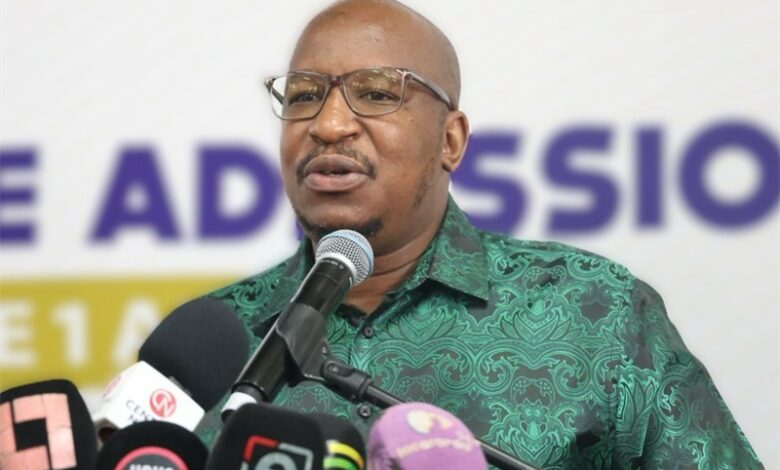
The move to cut security at Gauteng schools – without a risk assessment – has ignited fierce backlash.
“The Gauteng Department of Education’s decision to cancel school security contracts without a proper risk assessment is not merely mismanagement: it is recklessness. Learners, teachers, and school staff have been left exposed to criminal threats in schools that are meant to be safe spaces for education and development.”
So says Michael Waters, DA Gauteng Spokesperson for Education.
He has condemned the move as a direct threat to human life and announced that the DA will demand the immediate reinstatement of Private Security Industry Regulatory Authority (PSIRA) accredited security personnel in high-risk schools.
In the Gauteng Provincial Legislature on November 25, MEC for Education Matome Chiloane admitted that the department had not conducted any cost or risk analysis before removing security guards.
“The department has not conducted a cost analysis on the financial impact of cancelling school security contracts and the potential costs of vandalism, burglaries and related incidents that may occur during the absence of school security.”
Despite this glaring oversight, the department proceeded to withdraw trained security personnel, citing budget pressures as the justification.
“The cancellation of the security contracts was based on the budget pressures. That is why we came to that particular decision,” Chiloane explained.
This explanation has drawn outrage from Waters, as it disregards both human life and the value of public infrastructure.
Waters emphasised, “Just last week, a principal at a school in Tembisa was shot dead alongside an administrator. You cannot place a value on a human life.”
Department spokesperson Steve Mabona said on November 18, the department was left deeply shocked and saddened following a tragic incident at Inxiweni Primary School in Tembisa, where the school’s principal and an administrative staff member were fatally shot inside the school’s administration block.
According to reports, the incident occurred at around 17:00 at the school. The principal, Nozibele Tabu (58) and the administrator, Nobantu Njombeni (55), were preparing for a meeting scheduled for later that week.
A school clerk was later arrested for the double murder.
Waters also highlighted the financial irresponsibility of the decision.
He pointed out that schools are high-value public assets costing hundreds of millions to build. Yet, the department did not consider the costs of potential vandalism, theft, or arson resulting from the absence of security.
“It is quite astonishing that the Department of Education cancels security at all schools, a huge investment by the taxpayer. Yet they do no analysis on whether the cost will be of vandalism and theft resulting from no security at night, holidays [and] weekends,” Waters said.
Chiloane attempted to defend the withdrawal of security guards in the Legislature, citing alternative measures, including patrollers, the Adopt-a-Cop Programme, and training safety committees in school governing bodies.
However, these substitutes are inadequate, according to Waters.
He said that patrollers are not PSIRA-accredited, lack proper training, and are largely unavailable after hours, on weekends, and during school holidays.
“They only work school hours; they do not work after school. They do not work at night. They do not work on weekends; they certainly do not work on school holidays. It leaves the buildings vulnerable to vandalism and burglary.”
Chiloane provided rough estimates during the meeting for reinstating security at high-risk schools.
He admitted that deploying guards and installing metal detectors at the 75 highest-risk schools would cost around R166-million per year for guards and R225 000 for metal detectors.
For all 2 240 public schools in Gauteng, estimates rose to almost R540-million for guards and over R6-million for metal detectors.
Chiloane acknowledged that these figures were preliminary and that no detailed security review had been conducted.
He called security interventions temporary measures, claiming they were meant to stabilise schools facing gang violence.
“Each and every school that we intervened at, the intervention was supposed to be temporary, not more than three months; but some schools, we kept them longer because obviously the situation was not stabilising. Mainly because of the communities those schools found themselves in, for instance when there is gang violence.”
Waters warned that the decision endangers both learners and teachers while exposing school property to damage and theft.
He reiterated that a DA-led government would not have compromised safety, stating, “The department took shortcuts with the safety of the learners of our schools and the teachers teaching in those schools, and it is an absolute disgrace.”
Chiloane also stressed community involvement, encouraging school governing bodies and local stakeholders to assist in protecting schools.
“We are running those programmes and also the Code of Conduct in our schools because it is not necessarily that people who vandalise schools are people who come from outside, but also internally. Learners, in some schools, actually do vandalise school property, in some instances, even educators.”
Questions have been forwarded to the Department of Education, and information will be added as soon as received.
Do you have more information about the story?
Please send us an email to bennittb@rekord.co.za or phone us on 083 625 4114.
For free breaking and community news, visit Rekord’s websites: Rekord East
For more news and interesting articles, like Rekord on Facebook, follow us on Twitter or Instagram or TikTok or WhatsApp Channel