Claims of road grant underspending rejected
The city has rejected claims by the Freedom Front Plus that millions in infrastructure funding were left unspent, saying several figures cited by the opposition party are incorrect.
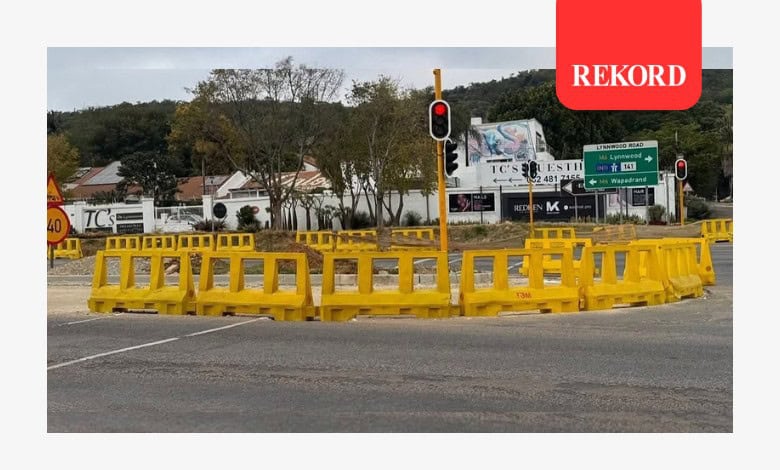
The Tshwane Metro has rejected claims that it failed to spend hundreds of millions of rands allocated for public road infrastructure.
This follows after the Freedom Front Plus (FF+) accused the metro of poor financial management that allegedly resulted in millions of rands earmarked for development projects being lost or left unspent.
The party accused the metro of failing to spend infrastructure grants effectively and called for disciplinary action against officials after National Treasury allegedly reclaimed R155.4-million in development funding.
However, the metro maintains that several of the figures cited by the opposition are incorrect and do not reflect the actual expenditure recorded by the Roads and Transport Department.
Tshwane mayoral spokesperson Samkelo Mgobozi said the reduction of R224-million in Public Transport Network Grant (PTNG) funding was not the result of poor spending. It formed part of a national directive requiring municipalities to reduce grant allocations as government phases out the existing Bus Rapid Transit (BRT) funding model.
“It is important to clarify that the R224-million was not transferred to the city by National Treasury and therefore did not constitute funding available to the city for expenditure during the 2025/26 financial year,” Mgobozi said.
He further disputed claims that an additional R24-million remained unspent, saying expenditure against the PTNG allocation it actually received reached about 98%.
“Expenditure against the PTNG allocation actually received by the city stands at approximately 98%, demonstrating a high level of utilisation of the funding that was available,” he stated.
Mgobozi said the Roads and Transport Department also challenged figures relating to individual infrastructure projects.
While FF+ councillor Nick Pascoe claimed the Mabopane Block A Roads Project achieved only 3% expenditure and the Stinkwater Flooding Backlog Project stood at 29%, Mgobozi said its records show expenditure of about 81% and 100% respectively.
Mgobozi said the city rejected allegations that contractors abandoned these projects during the 2025/26 financial year.
“From the perspective of the Roads and Transport Department, no projects were abandoned by contractors during the 2025/26 financial year,” he said, adding that contractual and legislative measures are applied where contractors fail to meet obligations.
Pascoe, however, argued that the latest grants and subsidies report reveals widespread failures in delivering essential infrastructure.
“The metro’s latest progress report on grants and subsidies exposes serious failures in the spending of development funds,” he said.
He claimed residents continue to suffer while funding intended for roads, water and sanitation projects remains unspent. The FF+ also pointed to delays affecting water infrastructure in Mamelodi Ext 11, the Parkmore Reservoir, sewer replacement projects and HIV/Aids programmes.
Pascoe called for disciplinary action against officials responsible for the loss of R155.4-million, investigations into delayed tenders and expired contracts, and the blacklisting of contractors who abandon municipal projects.
Despite the political criticism, Mgobozi said the metro remains committed to improving project implementation by accelerating procurement processes, strengthening project management and increasing oversight of contractor performance.
He warned that proposed reductions in national transport funding over the next two financial years could significantly affect future transport expansion.
The city had also commenced planning work for future rollout corridors, including: Line 1B: Wonderboom to Akasia, Line 1C: Akasia to Kopanong/Soshanguve, Line 4: Denneboom/Mamelodi to Wonderboom, Line 5B: Menlyn to Centurion, and Line 6: Olievenhoutbosch to Pretoria CBD.
Mgobozi said the city has invested about R11-billion in the Integrated Public Transport Network programme up to June 30, 2025.
This investment includes dedicated public transport infrastructure, bus depots and operational facilities, stations and feeder systems, vehicle procurement, taxi industry transition and compensation, and integrated transport operational planning.
“Infrastructure for Lines 1A, 2A, 2B and portions of Line 2C has already been implemented, including services extending towards Mamelodi and Atteridgeville.”
He said the city acknowledged that implementing integrated public transport systems within the South African urban environment has been complex and long-term in nature.
“At the same time, substantial strategic infrastructure has been delivered and important foundations have been established for future integrated and sustainable public transport within Tshwane.”
He said the current national review process therefore presents an important opportunity to refine and strengthen future funding and implementation models that allow municipalities to continue expanding accessible, reliable and affordable mobility solutions for residents over the long term.
“The city remains committed to ensuring that the substantial public investment already made delivers maximum value, while working with national government and other stakeholders to establish a sustainable funding model for the next phase of Tshwane’s integrated public transport system,” he concluded.
Do you have more information about the story?
Please send us an email to bennittb@rekord.co.za or phone us on 083 625 4114.
For free breaking and community news, visit Rekord’s websites: Rekord East
For more news and interesting articles, like Rekord on Facebook, follow us on Twitter or Instagram or TikTok or WhatsApp Channel