North Gauteng High Court affirms role of private and volunteer firefighting services
The court dismissed the city’s bid to block private firefighting services, prompting renewed debate over regulation, coordination, and who ultimately carries responsibility for emergency response in the metro.
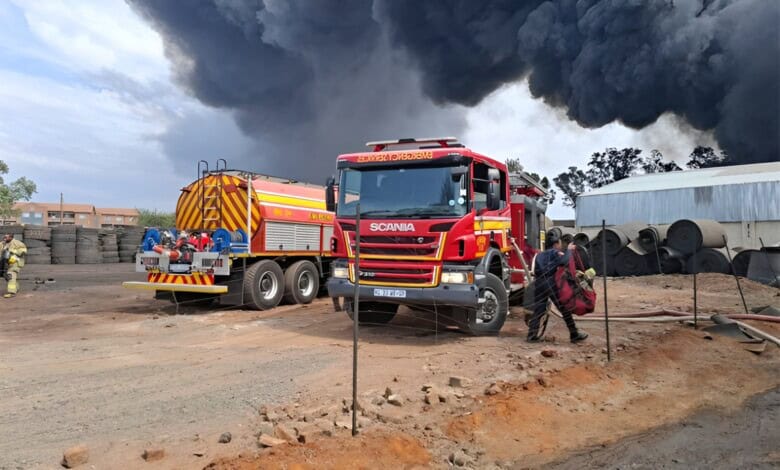
The Tshwane municipality has acknowledged a ruling handed down by the North Gauteng High Court on December 17, allowing private companies and voluntary associations to provide firefighting services within the metro.
However, it has emphasised that it still seeks to operate as the primary authority responsible for emergency response, governance, and public safety in the capital.
The ruling follows an application brought by the city, which approached the North Gauteng High Court in an effort to have private firefighting services declared illegal.
The metro initially argued that only its official fire brigade was authorised to operate within its jurisdiction, citing concerns about public safety, the absence of regulation, and the risks associated with multiple responders operating outside municipal command structures.
In its judgment, the court dismissed the city’s application with costs, finding that the Fire Brigade Services Act of 1987 does not prohibit the rendering of firefighting services by private businesses to their clients or by volunteers affiliated with recognised associations.
However, the court cautioned that private firefighting services may not interfere with the fire brigade’s powers granted by the Fire Services Act.
MMC for Community Safety, Hannes Coetzee, said the metro respects the authority of the courts and has taken careful note of the ruling.
He stated that the metro is now considering the implications of the judgment, particularly in relation to governance, risk management, liability, and the municipality’s constitutional responsibilities to residents.
“While the city respects the judgment and acknowledges that private and voluntary firefighting activity may lawfully exist, we do not support the unregulated delivery of emergency services.”
According to Coetzee, firefighting is a high-risk and time-critical function that requires clear command, co-ordination, and accountability.
He warned that the presence of multiple, uncoordinated responders at an emergency scene can create confusion, compromise safety, and undermine effective incident management.
“For this reason, any non-municipal support must operate within clearly defined frameworks, under co-ordinated command, and in a manner that strengthens rather than complicates the city’s emergency response,” he added.
Coetzee emphasised that the constitutional responsibility for public safety remains with the city and that this responsibility requires order, oversight, and control.
He explained that where services involve life, health, and property, the city carries a direct and ongoing duty to ensure those services are reliable, professional, properly co-ordinated, and subject to appropriate oversight.
“The existence of lawful private or voluntary activity does not absolve the city of this responsibility, nor does it diminish the constitutional duty owed to residents. These responsibilities cannot be outsourced,” he said.
Coetzee also emphasised that firefighting and emergency response are fundamental municipal services, and that residents should not be required to pay privately for the protection of life and property due to gaps in public capacity.
He stated that the multi-party coalition government believes access to emergency services must be equitable, reliable, and publicly accountable, regardless of a resident’s ability to pay.
“Our focus following this judgement is not on legal contestation, but on governance and service delivery. We remain determined to ensure that Tshwane fulfils its responsibilities directly, ethically, and competently, in a manner that prioritises public safety and the rule of law,” said Coetzee.
He added that the municipality will continue to act in the best interests of its residents, guided by the constitution, applicable legislation, and an unwavering commitment to professional public service.
In response to the ruling, the Sinoville Firefighting Association shared a statement on social media, describing the judgment as a decisive victory for community safety.
“This judgement is a decisive victory for community safety and affirms the critical role of volunteer firefighting services where municipal capacity falls short.”
The association says it has full confidence in the outcome and reaffirmed its commitment to continuing to serve and protect the community.
Fidelity Services Group also welcomed the judgment. Group CEO Wahl Bartmann said the ruling provides long-overdue legal certainty.
He explained that Fidelity SecureFire exists to protect lives, assets, and critical infrastructure for clients who choose additional layers of protection, including businesses, communities, and insurers who rely on predictable and professional fire response.
“The court has confirmed that this can be done lawfully, responsibly, and nationally within the framework of South African law,” he said.
Bartmann added that Fidelity remains fully open to co-operation with municipalities and the public.
“In a country like South Africa, where resources are often stretched, help and capability should be accepted with open arms. Public safety is not a competition; it is a shared responsibility.”
He reiterated that innovation must be welcomed rather than suppressed, explaining that new technology, data, and response models strengthen outcomes when responsibly applied.
He added that progress in emergency services comes from partnership rather than resistance.
ALSO READ: Metro files court application against private fire services providers
Do you have more information about the story?
Please send us an email to bennittb@rekord.co.za or phone us on 083 625 4114.
For free breaking and community news, visit Rekord’s websites: Rekord East
For more news and interesting articles, like Rekord on Facebook, follow us on Twitter or Instagram or TikTok or WhatsApp Channel