The Gauteng provincial government, via the Department of Education, launched the 39th School of Specialisation (SoS) on August 14 in Pretoria Tuine, with a focus on automotive and manufacturing studies.
Led by Provincial Education MEC Lebogang Maile, the launch was a day filled with innovation, opportunity, and hope for the future, as the school became the first Afrikaans-English dual-medium SoS in the country.
The SoS was first conceptualised in 2014 to develop high-performing learners with specialised skills aligned with priority economic sectors and scarce skills occupations.
The programme aims to equip learners with specialised knowledge and skills by the time they leave high school. It provides a strong academic foundation as well as practical skills. This prepares them to further their studies or enter the workplace as artisans and engineers, where they can begin contributing to the economy.
Pretoria Tuine SoS is located in an area associated with the automotive industry, as well as research, industrial development, innovation, and engineering.
This aligns the school’s automotive and engineering curriculum with the needs of the area. It also provides a direct pipeline into the workforce for young artisans, technicians, and engineers looking to get a foot in the door in fields such as robotics, automation and digital manufacturing.
This experience includes technical training; cadet programmes; participation in sporting, cultural, and technical competitions; as well as technical and vocational development.
A major strength of the school is its established infrastructure to accommodate practical learning. This allows the school to offer programmes in Electrical Technology, Digital Technology, Electronics and Power Systems, Mechanical Technology, Fitting and Turning, Welding and Metalwork, Civic Technology, Automotive Technology, Woodwork, Construction, Robotics, and Computer Application Technology (CAT).
A science club, sporting facilities, and civil services are available as extra-mural activities.
Partnerships between government, schools, communities, and the private sector are integral to any SoS, as learners are provided with technical expertise from experienced professionals in each respective field regarding equipment use, apprenticeships, certification and workplace exposure.
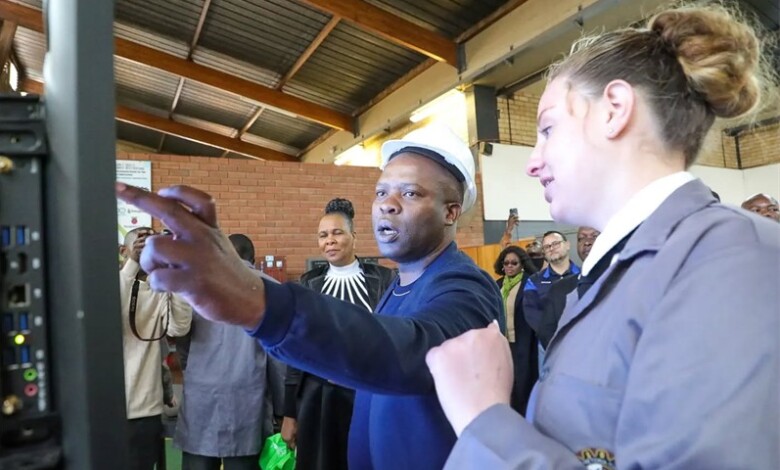
Throughout his walkabout of the SoS, Maile was taken through various programmes the school’s learners were participating in, given a hands-on look into the environment primed to stimulate the economy of the future.
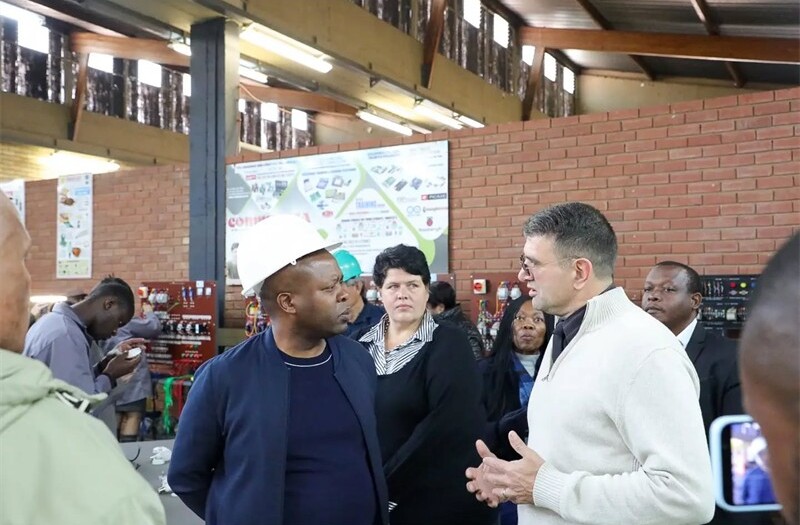
“We want to make sure that our schools, even those that are of specialisation, are adequately resourced. That they have enough educators and enough skills programmes to produce learners that can compete in the economy,” Maile said.
“In fact, one of the key ingredients of SoS’s is that they must be able to raise resources and attract partners. We are happy because this is the first school of specialisation that is English and Afrikaans.
“There have been a lot of naysayers who say we aren’t transforming our education, that there’s still segregation in the education system. Today we are saying that it’s a myth; it’s not true,” Maile said.
“In Gauteng, we’ve made huge progress in making sure we create a non-racial education system where all our kids, irrespective of their background, [race], economic standing in society, gender, and their creed, can coexist and, as we’ve seen, produce wonderful things. The economy will not grow if we don’t innovate,” the MEC said.
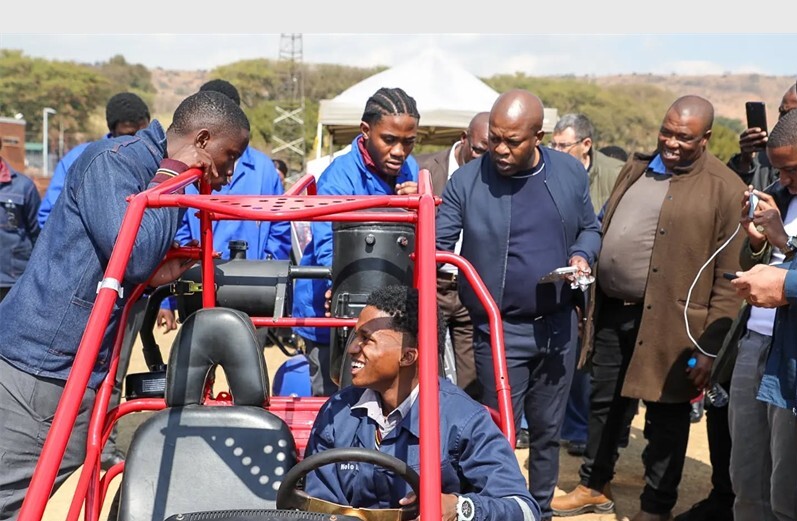
Some of the highlights of the MEC’s walkabout included a ride in a charcoal-powered vehicle they affectionately named ‘Lebza’ after the MEC, hands-on experience in Electrical Technology using training boards to practise electrical wiring and build and test circuits.
Also demonstrated was a breakdown of the Physics Education Technology Interactive Simulator to virtually build and test electrical circuits on a smartboard, allowing them to visualise how circuits work before applying the skills in real life.
An Electrical Technology and Electronics workshop where learners demonstrated their certified technical skills while working with resistors, capacitors and PLC boards was also part of the tour.
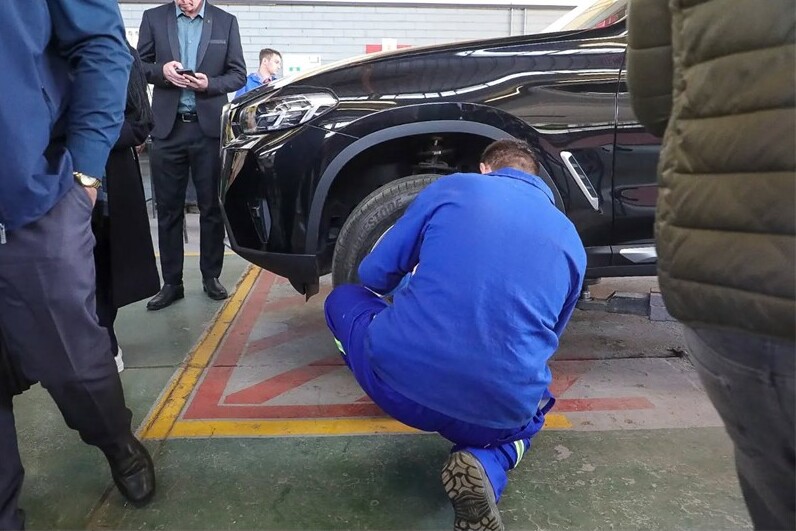
Learners proved they are receiving hands-on exposure to the world of vehicle mechanics, with an engine section, stripped-down vehicle chassis, wheel alignment and balancing equipment. The workshop mirrors a real automotive environment, while a BMW X3 was used in a tyre-changing challenge, with the winning learners completing the change in just 1 minute and 42 seconds.
School principal CS van der Nest said the opening of the specialised school was no small feat, as they applied nine years ago.
“It is a day that will be remembered in the proud history of Pretoria Tuine for generations to come. You saw a lot of the engineering works done on stage here, but the truth is our workshops are becoming some of the best in the country. We only have the department, partners and the hard-working staff to thank for that,” Van der Nest said.
The principal also noted that every learner enrolled will be equipped with world-class technical skills, innovative thinking and the confidence to build South Africa.
“Our workshops will become places where ideas become innovations, where talent becomes careers, and where hope becomes reality. Our new logo reminds us that we are geared for the future,” Van der Nest said.
The principal added that it does not just about technology, but about people as well.
“We will serve our learners, we will serve our community, and we will serve South Africa,” Van der Nest said.
Ward 55’s councillor, Alderman Kwena Yvonne Dzumba, said the school is not simply about opening a building. “It is about opening doors of opportunity, creating pathways to employment, and investing in the skills that will shape the future of young people and the economy.”
“We should encourage graduates not only to look for jobs, but to consider becoming job creators, as there is enormous potential for small businesses in automotive repairs, diagnostics, vehicle maintenance, manufacturing and related services.”
The province aims to open 40 specialisation schools by 2030, but Maile said they are well on their way to surpassing that target.
Watch here: https://www.facebook.com/reel/1097084262985343.
Do you have more information about the story?
Please send us an email to bennittb@rekord.co.za or phone us on 083 625 4114.
For free breaking and community news, visit Rekord’s websites: Rekord East
For more news and interesting articles, like Rekord on Facebook, follow us on Twitter or Instagram or TikTok or WhatsApp Channel