Pretoria water supply to be restricted
Rand Water begins curtailing water supply to the Tshwane metro due to excessive consumption and ongoing leaks. Councillors report dry taps across Elardus Park, Wingate Park, Rietvalleirand, and Moreleta Park. They are urging the community to conserve water while technical teams work to stabilise critically low reservoirs and restore supply.
Residents across parts of Pretoria are facing water shortages after Rand Water notified the metro that it would be throttling water supply to the municipality.
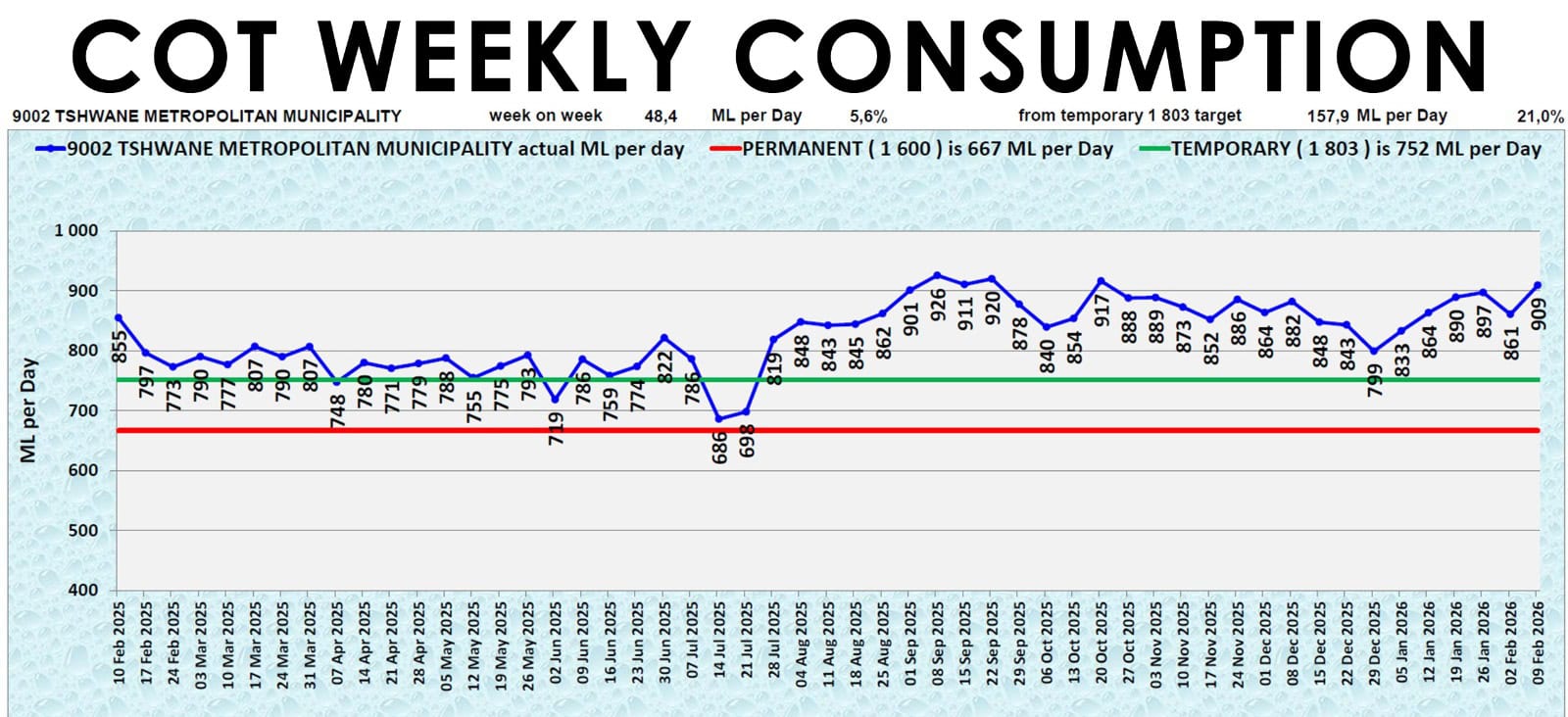
The decision comes as the metro struggles to manage exceptionally high consumption, compounded by persistent water losses due to leaks, leaving thousands of households without reliable access to water.
Throttling of water supply occurs when Rand Water deliberately reduces the volume of water supplied to the city to prevent the system from collapsing under high demand and low reservoir levels, giving the network a chance to recover while ensuring limited supply reaches affected areas.
Ward councillors have reported the Rand Water notification to the metro, among widespread water cuts, which includes Elardus Park, Rietvalleirand, Wingate Park, and Moreleta Park.
DA Councillor Lida Erasmus said she had received multiple complaints from residents experiencing dry taps.
“Bulk services have been requested to investigate the issue,” she confirmed, adding that she would provide updates as they are received.
According to Erasmus, the immediate cause of the water interruptions in the ward is the critically low level at the Garsfontein Reservoir, which has forced the cessation of pumping to the Elardus Park Reservoir.
As a result, the reservoir is now below the level needed to maintain water flow to homes.
“Councillors did not receive any advanced warning that this was going to happen,” Erasmus said.
She has requested that water tankers be dispatched to key points and urged residents to switch off geysers and close all taps to conserve water while the system recovers.
Councillors across the city are calling attention to the underlying infrastructure challenges, highlighting that the metro loses up to 40% of water supplied by Rand Water due to leaks and inefficiencies.
“While councillors are fighting to get leaks repaired, we all will have to work together as a community to ensure that we do not have dry taps,” said DA Councillor Pieter van Heerden of Ward 46 in Pretoria east.
He urged residents to use water sparingly, particularly in high-consumption areas, and advised against watering gardens unless a borehole is available.
Rand Water spokesperson Makenosi Maroo confirmed that persistently high consumption in Gauteng, particularly in Pretoria and Johannesburg, is placing significant strain on the water supply network.
“This above-normal consumption has exceeded allocated volumes and negatively affected water supply in parts of our bulk water supply area,” Maroo said.
“Rand Water, after engaging with high water-consuming municipalities, will be reducing water supply to these areas to stabilise the entire bulk water system.”
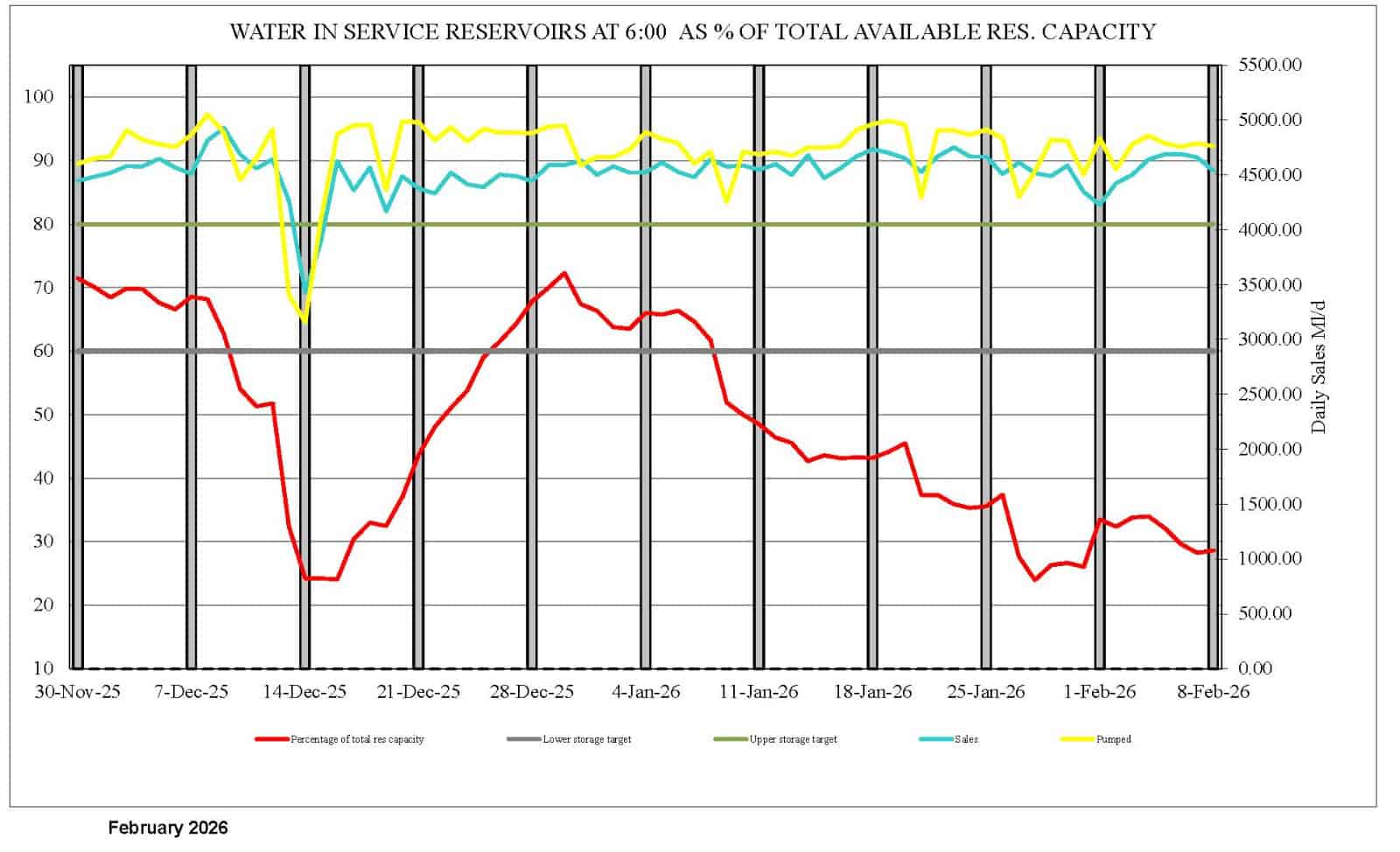
According to metro spokesperon Selby Bokaba, some of the municipality’s reservoirs in regions 1, 3, and 4, which have been struggling since last week due to inflow challenges, are showing slight signs of stability despite remaining at low levels.
He said the Ga-Rankuwa and Mabopane Central reservoirs are operating normally, while Pretoriusrand Reservoir has recovered to stable levels.
In high-consumption areas, Atteridgeville HL and Laudium reservoirs remain stable, though the ongoing high usage continues to strain the system.
However, according to him, several reservoirs are still critically low or empty.
The Mabopane Main, Kruisfontein, and Soshanguve reservoirs currently have no active supply, with technical teams facing difficulties in restoring flow due to network depletion.
Customers in affected areas are urged to use water sparingly to support recovery efforts.
In Bronkhorstspruit, the Zithobeni Tower Zone has been hit hard by high consumption, leaving the reservoir empty despite the plant operating at 30 megaliters per day.
Pumping to the tower will only resume once the Zithobeni West Reservoir has recovered sufficiently to sustain a stable supply.
Metro technicians are maintaining a 50/50 production split to balance supply while closely monitoring the system.
Councillors say the situation underscores a broader failure by the municipality to manage water infrastructure effectively.
“The city is losing 40% of water due to leaks, yet residents are being blamed for high use,” said DA Councillor Siobhan Muller.
“This is clearly a municipal failure, not the fault of residents.”
Councillors are calling for urgent repairs to the city’s leaking network and for better planning to avoid future shortages.
Meanwhile, community members are being asked to adopt strict water-saving measures. Simple steps such as turning off taps when not in use, limiting geyser heating, and avoiding garden watering can help preserve the supply while authorities work to stabilise the system.
The metro has committed to providing ongoing updates, and councillors continue to co-ordinate the deployment of water tankers to alleviate immediate shortages.
Residents in affected areas are advised to monitor official channels and follow guidance from local councillors.
Also Read: Week-long load-shedding in Gauteng rumours false – Eskom
Do you have more information about the story?
Please send us an email to bennittb@rekord.co.za or phone us on 083 625 4114.
For free breaking and community news, visit Rekord’s websites: Rekord East
For more news and interesting articles, like Rekord on Facebook, follow us on Twitter or Instagram or TikTok or WhatsApp Channel