Unions reject government medical scheme contribution hikes
Public service unions have formally rejected above-inflation GEMS contribution increases for 2026, warning that the cumulative hikes threaten healthcare access, erode real wages and undermine the scheme’s original social solidarity mandate.
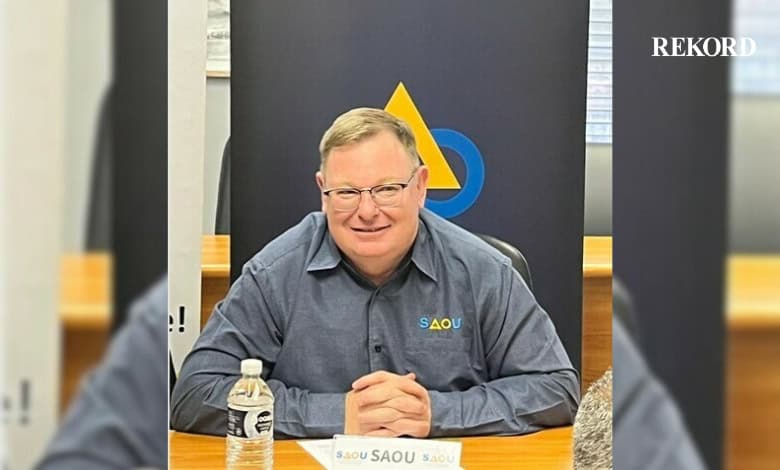
Trade unions affiliated to the Public Service Coordinating Bargaining Council (PSCBC) have formally rejected the Government Employees Medical Scheme’s (GEMS) decision to implement a 9.8% membership contribution increase from January, followed by a revised 9.5% adjustment effective April 1.
These unions include the Health and Other Service Personnel Trade Union of SA, National Professional Teachers Organisation of SA, National Teachers Union, SA Teachers Union, Public Servants Association of SA and the SA Policing Union.
Addressing the media at the PSCBC in Centurion on February 15, union leaders said the increases are economically unjustifiable and socially regressive, particularly at a time when public servants are already under sustained financial pressure.
“These increases are out of step with the lived reality of public servants,” said Paul Sauer, executive officer of the SA Teachers Union.
“Our members are facing rising food prices, transport costs, school fees and debt repayments. Now they are being told to absorb a medical aid increase that far exceeds inflation and wage growth.”
The unions represent hundreds of thousands of public servants across essential services, including education, health and administration.
They argue that the decision undermines the founding mandate of GEMS, which was established as a social solidarity medical scheme through PSCBC Resolution 1 of 2006.
“GEMS was never meant to operate like a commercial medical aid chasing margins,” Sauer said. “It was created to expand access to healthcare for lower- and middle-income public servants, to pool risk fairly and to provide affordable cover. What we are seeing now is a steady drift away from that mandate.”
The unions point to the cumulative impact of recent increases.
GEMS implemented a 13.4% contribution increase in 2025. The combined effect of the January and April adjustments amounts to a 23.2% rise over two years.
By contrast, public servants received a 5.5% salary increase for the 2025/26 financial year and are set to receive a 4% increase for 2026/27, effective April.
Inflation stood at about 3.5% in late 2025.
“The arithmetic is simple,” Sauer said. “Real income is shrinking. Members are being forced into impossible choices between healthcare and other basic needs.”
The unions further argue that the employer subsidy structure does not adequately shield workers from escalating costs.
In their view, the subsidy arrangement fails to offset the impact of the increases, leaving public servants materially worse off.
They also raised concern about what they describe as disregard for regulatory guidance.
The Council for Medical Schemes proposed an average membership contribution increase of 3.3% for 2026.
GEMS proceeded with increases significantly above that benchmark.
Organised labour in the PSCBC has also highlighted ongoing governance and operational concerns within the scheme.
These include weak accountability, insufficient consequence management, continued outsourcing of administrative functions nearly two decades after GEMS was established, and high administrative costs reflected in annual reporting.
The unions argue that there has been no meaningful restructuring of benefit options to protect lower-income public servants.
They warn that without stronger risk pooling and cross-subsidisation mechanisms, members will either downgrade their cover or exit the scheme altogether.
Particular concern has been raised about unilateral changes to the Tanzanite One benefit option, which now requires a down payment when members are hospitalised.
Unions have also expressed dissatisfaction with the manner in which engagements at the PSCBC have been conducted.
They say consultations have not reflected meaningful consideration of labour’s submissions and proposals.
In response, organised labour has tabled a set of demands.
These include the immediate withdrawal of the January and April 2026 increases, a forensic audit into governance and procurement practices, and full transparency on operational budgets and line items. Additionally, they demand a review of outsourcing arrangements and administrative cost drivers, and the implementation of anti-fraud and cost-containment measures proposed by labour.
As part of a co-ordinated programme of action, organised labour will stage a march and demonstration to the GEMS head office at Vutomi House in Menlyn Maine on Saturday, February 21.
Further engagements are planned with the ministers responsible for Public Service and Administration, Health and Finance.
Do you have more information about the story?
Please send us an email to bennittb@rekord.co.za or phone us on 083 625 4114.
For free breaking and community news, visit Rekord’s websites: Rekord East
For more news and interesting articles, like Rekord on Facebook, follow us on Twitter or Instagram or TikTok or WhatsApp Channel