R101m asset write-off not admission of failure, but to strengthen governance – metro
According to mayoral spokesperson Samkelo Mghobozi, the write-off is not an admission of failure, but to strengthen financial oversight by removing outdated or non-viable projects from its books under stricter accounting standards.
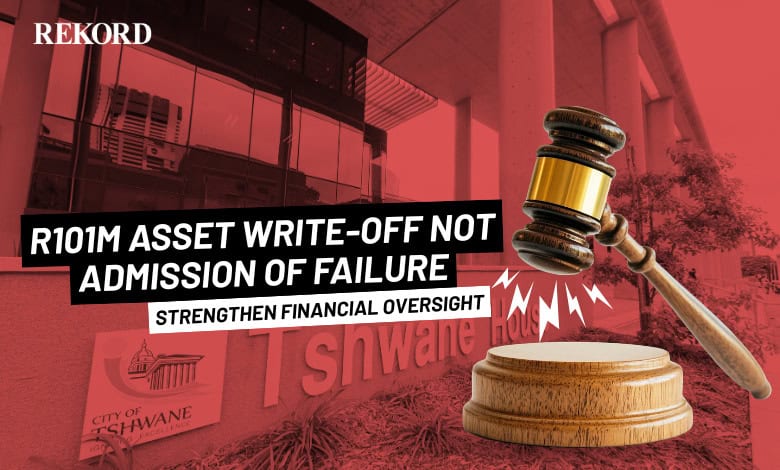
The Tshwane metro has defended its proposed R101-million asset write-off, stating the move forms part of a broader asset verification and clean-up process to correct historical accounting records.
The city maintains that the assets in question were never ‘ghost assets’ but historically recorded and disclosed capitalised works that are now being reassessed under stricter accounting standards.
This comes after the Freedom Front Plus raised concerns that writing off the assets would effectively mean that public funds spent on projects that were never completed or put into operation would be declared lost.
Mayoral spokesperson Samkelo Mghobozi said the proposed write-off relates to historical Assets Under Construction (AUC), and these AUC items were not ghost assets.
“They were historically recorded and disclosed capitalised works. The city is now applying strict accounting criteria to determine whether they still generate value. Where they do not, they are written off.”
Mghobozi said that where negligence is identified, consequence management must follow.
“Cleaning the asset register is not an admission of collapse. It is evidence of responsible governance. By enforcing proper capitalisation rules, applying clear write-off criteria, and linking financial correction to accountability where required, the city strengthens financial stability, improves audit outcomes and creates a credible foundation for sustainable service delivery going forward.”
He said the AUC includes capitalised design reports and infrastructure projects that were either terminated or can no longer be implemented.
“The items in question were properly capitalised when the expenditure was incurred. However, accounting standards require that assets which no longer generate future economic benefit or service potential must be written off,” Mghobozi said.
He explained that the affected projects mainly relate to infrastructure intentions such as electricity, water, sanitation and road services. While many of the designs were originally commissioned to address legitimate service delivery needs, they have since become outdated.
“The service delivery need may still exist, but the original designs are no longer implementable in their historic form, and due to changes in engineering standards, environmental compliance requirements, spatial development and funding constraints,” he said.
Mghobozi added that many of the projects date back to the mid-2000s, with several reaching design completion but never progressing to construction or being terminated before implementation.
He said the write-off is to ensure outdated or inactive projects do not remain indefinitely listed in the city’s financial records.
Addressing concerns about accountability, he said each AUC item is assessed to determine whether it still holds future value, is technically and legally implementable and complies with accounting standards.
“Accounting correction and accountability are related but separate processes. One ensures financial accuracy while the other ensures governance integrity,” he said.
Mghobozi said since 2022, the city has strengthened monitoring of infrastructure projects, improved record-keeping, introduced stricter project lifecycle controls and aligned audit processes with Generally Recognised Accounting Practice (GRAP) standards.
He added that stricter approval systems now require projects to demonstrate feasibility, confirmed budget allocation, legislative compliance, technical viability and implementation readiness before being capitalised.
However, the FF Plus has rejected the proposed write-off, arguing that it reflects major losses of taxpayer funds linked to incomplete infrastructure projects.
FF+ councillor Nick Pascoe said the issue of so-called ghost assets has been a longstanding concern and alleged that poor record keeping and project management allowed unfinished projects to remain listed as capital assets for years.
Pascoe claimed that in 2023, a list of 2 435 incomplete projects valued at R12.78-billion was identified, while a recent departmental report listed 539 incomplete projects valued at R2.62-billion.
“The figures suggest that the scale of incomplete or abandoned projects across the metro could be far greater than currently acknowledged,” Pascoe said.
He also criticised what he described as a lack of accountability for failed projects, claiming responsibility is often shifted to consultants while officials face limited consequences.
Pascoe further referenced comments previously made by Executive Mayor Dr Nasiphi Moya regarding infrastructure projects being initiated without proper planning or budget certainty.
The FF+ said it formally recorded its objection to the report, warning that the proposed write-offs could pose broader financial risks if governance failures are not addressed.
The city has introduced stricter project lifecycle discipline: Clear stage-gate approvals, funding confirmation before implementation, feasibility and compliance validation and structured closure of non-viable AUC items. It also entails escalation where prolonged inactivity occurs and projects that remain viable are updated and re-scoped. Projects that cannot generate future value are written off in compliance with standards.
Also read: Power outages in Ward 82 exceed turnaround time as budget pressures blamed
Do you have more information about the story?
Please send us an email to bennittb@rekord.co.za or phone us on 083 625 4114.
For free breaking and community news, visit Rekord’s websites: Rekord East
For more news and interesting articles, like Rekord on Facebook, follow us on Twitter or Instagram or TikTok or WhatsApp Channel