R1bn backpay deal ends long-running 3.5% wage dispute, payments phased to 2029
Following negotiations with the trade unions, the metro will implement a long-outstanding wage increase from March 1. Backpay, calculated from July 1, 2021, will be paid in phases to 21 089 employees.
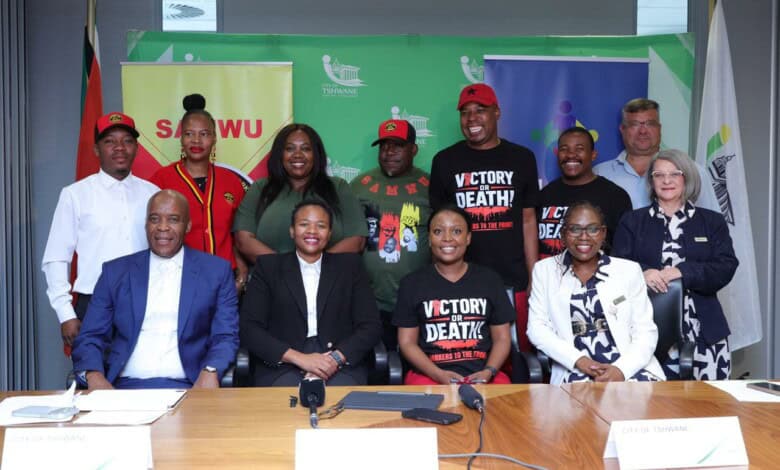
The Tshwane metro has reached an agreement with the South African Municipal Workers Union (Samwu) and the Independent Municipal and Allied Trade Union (Imatu) to implement the long-outstanding 3.5% wage increase, effective March 1, which workers have been owed since 2021.
The settlement means that the metro will pay over R1-billion in backdated salaries from July 1, 2021, bringing an end to a wage dispute that has strained municipal finances.
The settlement follows a 2021 three-year wage agreement between the South African Local Government Association (SALGA) and the two trade unions.
After the city, which was at that time led by a DA coalition, sought an exemption due to financial distress, the Labour Court granted relief for the 2023 increase but referred the 2021 matter back to the SALGBC.
An arbitrator ruled on October 31, 2025, that the metro was legally obligated to implement the increase retroactively.
Originally estimated at about R500-million, the backpay liability escalated over time.
Deputy Mayor and MMC for Finance Eugene Modise acknowledged the cost of the delay.
“What might have been around R500-million has ballooned to between R1.2-billion and R1.5-billion.
“If postponed further, it could have reached R2-billion,” he said, adding that the funds could have gone to basic services such as fixing pipes or building infrastructure.
Through negotiations, the city reduced the liability to just over R1-billion, by calculating the backpay on basic salary only.
The agreement covers 21 089 employees, with payments phased through to February 2029 and lower-income workers prioritised.
The 3.5% increase will take effect from March 1 and apply to both salary and benefits.
Tshwane Mayor, Dr Nasiphi Moya, said during a press briefing on February 19 that the administration opted for resolution rather than prolonged litigation.
She emphasised that salary backpay is a legal obligation that cannot be deferred indefinitely.
“Delays would only increase the burden and deepen instability. This settlement honours workers while safeguarding service delivery and the city’s long-term fiscal health,” she said.
Moya said backpay will be calculated from July 1, 2021, on basic salary only and paid in staggered batches over three years, concluding in February 2029.
Payment will be staggered, beginning with the lowest Tuned Assessment of Skills and Knowledge (TASK) levels.
TASK is a widely-used job grading system, particularly within South Africa and Local Government.
-In 2026, TASK levels 1 to 6, covering 8 139 employees, will be paid in June, August, and October.
-In the following year, the 8 224 employees falling into TASK levels 7 to 10 will be paid in February, May and December.
-In 2028, TASK levels 11 to 18, covering 4 601 employees, will be paid in April, August and November
-Finally, in 2029, TASK levels 19 to 22, covering only 125 employees, will be paid in February.
“The deliberate prioritisation of lower-income employees is central to this agreement. Those who earn the least will receive their backpay first,” Moya said.
She said employees who retire or resign before their payment phase will receive their outstanding backpay upon exit.
Moya said the settlement is supported by the metro’s 2025/26 adjustment budget, which remains fully funded with an operating surplus of just over R1.2-billion.
“To accommodate phase one of this inherited obligation, departments identified targeted reductions in non-strategic and discretionary expenditure, while allocations to key service delivery areas have increased,” she said.
Moya assured residents that no frontline services have been defunded, and no core infrastructure programme has been withdrawn.
However, the dispute has not fully closed. The fate of 43 municipal workers dismissed after a violent three-month unprotected strike in 2023 remains unresolved and talks with labour representatives are ongoing.
Meanwhile, DA Tshwane finance spokesperson Jacqui Uys warned the agreement would come at the expense of service delivery.
She said the DA-led administration in 2021 withheld the increase to protect the city during a R4-billion cash deficit.
Uys pointed to severe staffing shortages, including a 42% vacancy rate in the Electricity Department and a 47% vacancy rate in Water and Sanitation.
The metro is currently facing a looming water crisis, 40% water losses, and threats from Rand Water to throttle supply due to high demand.
Uys rejected the metro’s claim that the agreement was unavoidable.
“This matter could have been taken on review to the Labour Court, as the DA successfully did in 2023. We prioritised residents and protected billions for service delivery. The ANC-led coalition has instead chosen to honour unaffordable promises to union leaders,” she said.
“Leadership requires difficult choices. The ANC may be able to prop up a coalition, but they have once again shown they are unable to lead responsibly.”