Sinoville security officer now fighting Leukemia after years of protecting his community
For nearly 20 years, security officer Henk van der Merwe from Sinoville stood on the frontline protecting his community. Now, after a sudden leukaemia diagnosis has left him unable to work, he is fighting the toughest battle of his life and hoping a stem cell donor could save him.
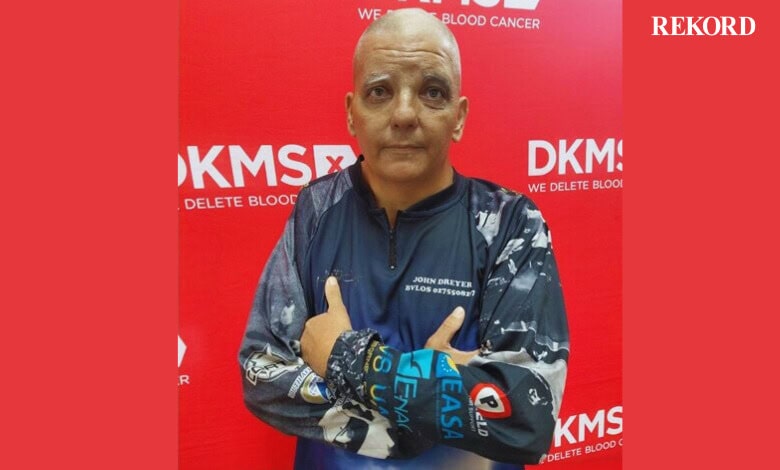
For nearly two decades, Henk van der Merwe dedicated his life to protecting others.
Now, the 45-year-old security officer from Sinovile, who once stood on the frontline fighting crime, is fighting for his own life after being diagnosed with leukaemia.
Van der Merwe’s journey in security began at just 18 years when he joined the SAPS as a volunteer reservist.
He served for more than 10 years, gaining experience in policing while not working in the private sector.
During that time, he received assistance to obtain his Private Security Industry Regulatory Authority (PSIRA) registration, security grades, and firearm training.
After leaving the police force, he entered the private security industry, where he has worked for nearly 20 years.
Over the past two years, he changed companies but remained committed to crime prevention and community safety.
“It’s been already 20 years that I’ve been in the field, fighting crime, trying to help the public,” he said.
Being a security officer, he explains, was more than just a job; it was a calling.
He describes working for his current company as an eye-opener, a place where officers were supported with proper equipment and even mental health support after traumatic scenes.
“It’s extremely dangerous work, and we had the necessary backup, even mental support when we dealt with serious scenes,” he said.
About eight months ago, everything changed.
While working a night shift, Van der Merwe suddenly collapsed, despite having no idea why he was ill.
He woke up in hospital, paralysed from the waist down and struggling to remember who he, his family or his colleagues were.
Days later, a doctor delivered the devastating diagnosis of leukaemia.
“It’s difficult to understand why it happened. They can’t tell me where it comes from.
“You don’t realise what’s going on until the doctor stands next to you and tells you, ‘You’ve got this illness. This is the procedure from now on. You can’t work anymore’.”
If a suitable donor is found, he will need to travel to Cape Town for six months to undergo a stem cell transplant.
He said the uncertainty is overwhelming. “It’s quite a journey to think that things like this can happen and you just have to accept it. There’s absolutely nothing you can do about it.”
The diagnosis has completely upended his life. Unable to work, Van der Merwe now faces severe financial strain.
He has had to explain his situation to banks and submit doctors’ letters because he can no longer meet his obligations.
Physically, the toll is relentless because every second or third week, he risks passing out due to critically low blood levels and requires transfusions.
In December and January alone, he underwent six blood transfusions and according to him, “It’s a constant struggle just to keep your head above water,” he said.
His sister, Susan, describes him as fiercely protective.
“He’s very protective of his family. He’s a good brother. He’s taught me a lot about life and just carrying on,” she said.
At home, she said, Henk was always active. He loved cooking and keeping busy and now he sleeps most of the day.
The illness has forced major changes and having lost his job and home, Henk and his wife are currently staying with Susan.
She admitted that her brother worries deeply about being a burden.
“Having worked since the age of 16 and always provided for himself, depending on family is emotionally difficult. His biggest worry is the pressure it’s putting on me,” she said.
Despite everything, hope remains and Henk prays daily and draws strength from his family and friends.
He is hopeful a matching donor will be found. Without one, he may need lifelong medication that will leave him feeling permanently unwell.
Susan said the community response has surprised her as support from medical professionals, including doctors at Steve Biko Academic Hospital, and various community groups has given them encouragement.
Both Henk and his sister urge people to consider registering as donors.
“People are scared because they don’t understand the process. They think they’re going to drill into them and take bone marrow. It’s not like that. People need to do research and understand what it really means.”
Also read: Effluent complaint sparks metro by-law clarification
Do you have more information about the story?
Please send us an email to bennittb@rekord.co.za or phone us on 083 625 4114.
For free breaking and community news, visit Rekord’s websites: Rekord East
For more news and interesting articles, like Rekord on Facebook, follow us on Twitter or Instagram or TikTok or WhatsApp Channel