Pretoria east land-use dispute goes to public protector
Ratepayer bodies in Pretoria east have taken their fight over Tshwane’s 2025 Regionalised Spatial Development Framework review to the Public Protector, alleging serious procedural flaws, inadequate public participation and missing planning maps. The metro insists it complied with all legislative requirements when adopting the revised frameworks.
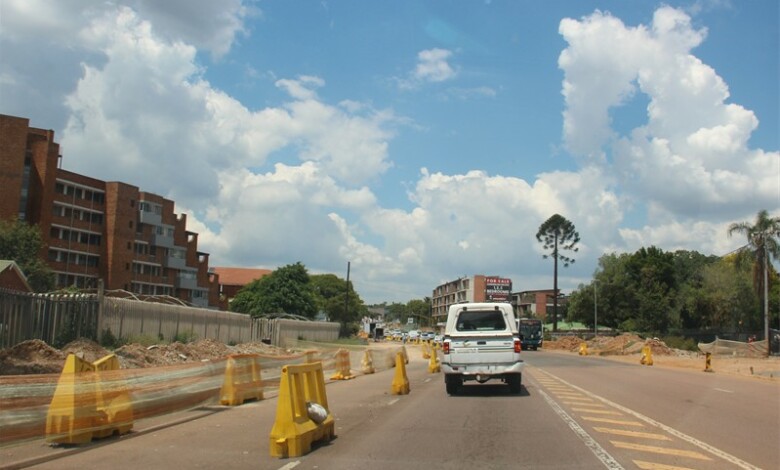
Residents in Pretoria east have escalated their dispute with the metro over the 2025 review of its Regionalised Spatial Development Frameworks (RSDFs) to the Public Protector, alleging improper procedure and inadequate public participation.
The Old Pretoria East Residents and Ratepayers Alliance (OPERRA), which represents several established neighbourhood associations, lodged a formal appeal under the Municipal Systems Act after Council approved the revised frameworks on September 25, 2025.
The frameworks were subsequently gazetted in November 2025.
The alliance was established in February 2012, and is an umbrella body representing 12 affiliated Residents’ and Ratepayers’ Associations (RRAs) from several areas, including Arcadia, Brooklyn, Groenkloof, Lynnwood, Menlo Park and Waterkloof. OPERRA focuses on key issues such as urban planning and rezoning.
The dispute centres on whether the metro followed the Spatial Planning Act and its own Land Use Management By-law when reviewing the seven regional frameworks guiding land use and development.
The Spatial Planning and Land Use Management Act mandates municipal responsibility for land use applications, enforces development principles like sustainability and equity, and requires the implementation of Municipal Planning Tribunals.
In established suburbs in Pretoria east, concerns about increased density, traffic impact and the alignment between policy text and detailed density maps have been particularly prominent.
In previous council documentation, the metro maintained that an extensive public participation process was conducted in line with applicable legislation. OPERRA, however, disputes this.
Erik Buiten, spokesperson of OPERRA, said public consultation was limited to information sessions explaining the review process and inviting written comments on draft documents.
He argued that the meetings did not deal with the substance of the changes and that no detailed explanation or discussion took place.
According to Buiten, the review process fell short of minimum statutory requirements listed in the metro’s own by-law governing spatial planning.
He further contended that “scant attention was given to public comments received on the draft RSDFs and that submissions made by OPERRA were not reflected in the city’s public participation report to Council”.
One of the central procedural concerns raised by the association is whether the metro properly defined the scope and methodology of the review process before publishing draft documents for comment.
“Proper planning requires a clearly defined, step-by-step process, starting with a formal decision on the scope and requirements of the review,” Buiten said.
Only once this is determined, he said, should officials proceed with drafting revised frameworks for Council to adopt as drafts for public comment.
He added that, following such adoption, the metro is required to inform the provincial MEC for Cooperative Governance and Traditional Affairs in writing of its intention to undertake the review and to outline the chosen public participation process.
Members of OPERRA have found no evidence that these steps were followed.
Another key issue is the alleged absence of detailed maps at crucial stages of Council consideration.
Buiten described the maps as the centrepiece of the frameworks, as they depict land use zones, development densities and building heights at a street-block level.
He said that both the draft and final versions of the frameworks were approved by Council based on reports that did not include the detailed maps, which he believes undermines transparency.
The matter has gained urgency since the revised frameworks were gazetted in November 2025.
OPERRA maintains that this step was not adequately communicated to stakeholders and that the appeal process should have been finalised before gazetting took place.
The alliance lodged its Section 62 appeal with the municipal manager on November 12, 2025.
In terms of the Municipal Systems Act, an appeal authority should be assigned to investigate such an appeal within six weeks.
At the time of writing, the organisation said it has not received feedback on the status or outcome of the investigation.
Beyond questions of process, members of the organisation and residents have also raised concerns about the practical consequences of the 2025 revisions.
Buiten warned that “densification is being directed into certain areas without matching infrastructure planning”.
He argued that the metro risks making land use decisions without adequately measuring and quantifying the associated requirements for roads, public transport, water, electricity and social amenities.
In his view, the approved frameworks fail to meet this requirement, continuing a longstanding misalignment.
Responding to criticism that residents’ associations often resist development, Buiten said: “Homeowners are concerned not only about property values but about neighbourhood quality and liveability.”
He maintained that the complaint is not anti-development but aimed at ensuring lawful governance and responsible planning supported by adequate services.
OPERRA has chosen to approach the Public Protector rather than immediately pursuing court action.
Buiten said litigation is costly and often beyond the reach of ordinary residents, while municipalities can defend court actions using public funds.
In its submission, OPERRA is asking that the 2025 RSDF review be set aside and rerun with proper public participation.
The alliance argues that the 2018 approved RSDFs should remain in force in the interim.
It has also called for disciplinary action against any officials found to have acted unprofessionally.
Questions were sent to the metro but no answers had been received by the time of publication.
Do you have more information about the story?
Please send us an email to bennittb@rekord.co.za or phone us on 083 625 4114.
For free breaking and community news, visit Rekord’s websites: Rekord East
For more news and interesting articles, like Rekord on Facebook, follow us on Twitter or Instagram or TikTok or WhatsApp Channel