Tshwane Council approves infrastructure-focused Adjustment Budget
The 2025/26 Adjustment Budget secured a R1.2-billion operating surplus and an additional R341-million from National Treasury, while opposition parties rejected the plan over spending concerns.
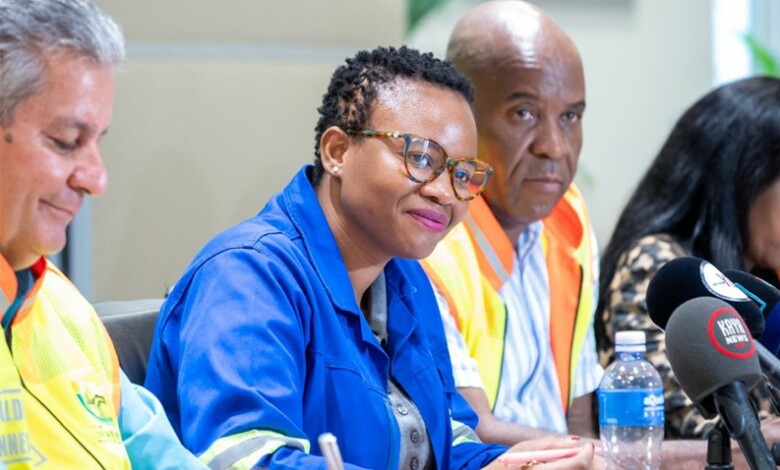
The Tshwane Council, on February 26, passed its 2025/26 Adjustment Budget as a step toward stabilising critical infrastructure and restoring long-term financial sustainability.
The budget was adopted with 117 councillors voting in favour, while DA and Freedom Front Plus (FF+) councillors rejected it.
The city confirmed that the National Treasury has formally assessed and validated the adjustment budget as funded and credible, with an operating surplus of R1.2-billion.
Total operating revenue has increased to R53.4-billion, while operating expenditure stands at R52.2-billion. Capital investment has been strengthened by an additional R309-million.
Deputy Mayor and MMC for Finance Eugene Modise said as of December 31, 2025, the city’s revenue collection rate stood at 83.5%.
He added that strict expenditure controls resulted in spending R3.9-billion below budget, producing an accounting surplus of R4.3-billion.
Capital expenditure reached R1.1-billion, representing 46% implementation of the capital programme by mid-year.
Modise said this performance unlocked an additional R341-million in urban development financing grant funding from the National Treasury, a new national support awarded because the metro met its capital implementation threshold.
“Cash and investments currently stand at R2.5-billion, although the city acknowledged that liquidity remains tight.”
Modise said debt impairment has been increased by R534-million to reflect realistic revenue collection expectations.
“Interest expenditure has increased by R320-million to responsibly provide for financing obligations, including Eskom-related pressures. Bulk water purchases have been increased by R273-million to safeguard continuity of supply during system strain.”
An additional R147.3-million has been allocated to water and sanitation infrastructure.
R37-million will go towards the replacement of worn-out water network pipes.
R9.4-million will go to deficient sewer infrastructure replacement and R47-million is allocated for pump station upgrades.
Water conservation and demand management are assigned R60-million.
Modise said the city has also set aside R15-million to procure city-owned water tankers to reduce reliance on contractors.
Bulk infrastructure investments include R42.7-million for the Winterveldt Bulk Water Line and R4.4 million for Zithobeni Ext 8 and 9.
He added that electricity infrastructure received an additional R109-million in funding, including R11-million for strengthening 11kV cable networks, R6-million for secondary substation upgrades, and R5-million to replace obsolete equipment.
R10-million will go towards the Monavoni 132/11kV Substation and R1-million for the Kentron 132/11kV Substation.
For new electricity connections, R10-million has been budgeted and R27-million for electricity distribution loss reduction.
“These interventions aim to improve grid resilience, reduce outages and shorten restoration times.”
Modise said that despite reductions in certain national transport grants, internal reprioritisation protected key mobility projects, including R8.1-million for Garsfontein Road and R7.1-million rollover for the upgrade of Mfumo Street in Hammanskraal.
“An additional R1.2-million has been allocated for road maintenance machinery to augment jetpatchers and horticultural investments made earlier in the financial year,” Modise added.
The adjustment budget is built on four core principles: maintaining a fully funded and cash-backed budget, prioritising water and electricity stabilisation, reducing reliance on contracted services, and building internal municipal capacity through the filling of critical vacancies.
The R341-million secured from the National Treasury has been directed to trading services and split between water and electricity infrastructure.
Modise said the approval of the adjustment budget marks a critical phase in the city’s recovery plan.
“National Treasury has confirmed that our 2025/26 adjustment budget is funded, credible and built on realistic financial projections. With an operating surplus of R1.2-billion and additional R341-million unlocked through credible infrastructure delivery, we are demonstrating that Tshwane’s recovery is not theoretical, it is measurable.”
Modise said the city’s decision to increase debt impairment by R534-million, provide R320-million for interest obligations, and allocate R273-million for bulk water purchases reflects responsible financial governance rather than short-term optics.
“This is a disciplined, stabilising and resident-centred budget. We are protecting the funded status of the municipality and strengthening our internal capacity to reduce contractor dependence. Recovery is a process, but it is now firmly underway,” he explained.
Modise said the 2025/26 adjustment budget signals a decisive shift toward sustainable service delivery and financial resilience.
Tshwane Mayor, Dr Nasiphi Moya, said the adjustment budget retains the metro’s fully funded status, while significantly strengthening infrastructure investment.
“The adjustment budget maintains our funded position and increases the capital budget from R2.4-billion to over R2.7-billion,” Moya said.
She confirmed that R109-million has been allocated to critical electricity infrastructure in line with the metro’s energy stabilisation plan.
Moya noted that the capital budget exceeded R4-billion in 2019, before declining to R2-billion under the previous administration.
“In just a few months under this new coalition, we have increased the capital budget to R2.7-billion. That signals a clear shift back toward infrastructure-led recovery,” she said.
The city’s 46% capital spending at mid-year, she attributed to improved governance and execution.
“This budget means we must continue investing in infrastructure maintenance and development. Projects in our communities must be completed, including those in townships that were halted while others in more affluent areas continued. We will resuscitate those projects to improve the lives of all our residents,” Moya said.
The DA in Tshwane has rejected the budget, accusing the ANC-led administration of concealing millions of rands in water tanker spending and presenting what it calls a ‘misleading’ financial position.
DA caucus leader Alderman Cilliers Brink said the party ‘proudly voted against’ the adjustment budget tabled in council.
According to Brink, the most serious concern is the alleged failure to allocate additional funding for water tankers despite internal reports indicating that the existing budget had already been depleted.
“Internal reports to the budget steering committee show that the allocation for water tankers was exhausted and that R125-million in unauthorised expenditure had already been incurred by the end of December 2025, with six months remaining in the financial year,” Brink said.
He claimed that continuing to spend on water tankers without making an additional budget allocation demonstrates a clear intent to hide this spending from Council and the public.
Brink further stated that the city had spent R777-million on water tankers in the first year of the ANC-led administration – a 455% increase compared to the preceding DA-led government.
He said the DA disputes the city’s assertion that the adjustment budget is funded.
“While the municipality has maintained that the budget remains funded with an operating surplus of R1.2-billion, internal documentation reflects a worsening financial position,” Brink stated.
He said the city’s deficit has reportedly increased from R1.63-billion to R2.8-billion.
“In addition, R2.5-billion in creditors have been carried over from the previous financial year, effectively increasing the deficit to R5.3-billion,” he said.
He added that the city is allegedly R750-million behind in revenue collections in terms of its funding plan.
Henriette Fröhlich, ActionSA Tshwane Caucus spokesperson, said the passing of the budget confirms the new administration’s commitment under ActionSA Mayor Dr Nasiphi Moya to stabilising electricity infrastructure, addressing water losses and strengthening internal municipal capacity.
Fröhlich welcomed confirmation from the National Treasury that the budget remains funded.
FF+ councillor Grandi Theunissen said the latest adjustments to the Service Delivery and Budget Implementation Plan contradict claims that the metro has tabled a credible, funded budget.
Theunissen said the downward revision of key performance areas shows that the original budget targets were unrealistic and could not be met.
“Financial health indicators such as reserves, liquidity ratios, and collection rates have all been reduced, showing that the metro overestimated its financial resilience,” he said.
He added that financial margins for electricity, water, sanitation and refuse have been adjusted downward, despite continued tariff increases.
“Residents are paying more, yet the metro is delivering less,” Theunissen said.
According to the FF+, housing and community service targets have also been scaled back, including land acquisition for housing and refuse removal in informal settlements, which he described as broken promises to residents.
Theunissen further criticised the reduction in vacancy-filling targets, saying it undermines the administration’s ability to build grassroots capacity.
“These adjustments amount to an admission of failure – over-promising, under-delivering and then lowering standards to mask that failure,” he said.
Do you have more information about the story?
Please send us an email to bennittb@rekord.co.za or phone us on 083 625 4114.
For free breaking and community news, visit Rekord’s websites: Rekord East
For more news and interesting articles, like Rekord on Facebook, follow us on Twitter or Instagram or TikTok or WhatsApp Channel