
Rand Water limits Tshwane supply as Pretoria reservoirs hit critical levels
Emergency tankers roll out and flow-control measures take effect while rising temperatures and heavy usage leave municipal distribution networks struggling to recover.
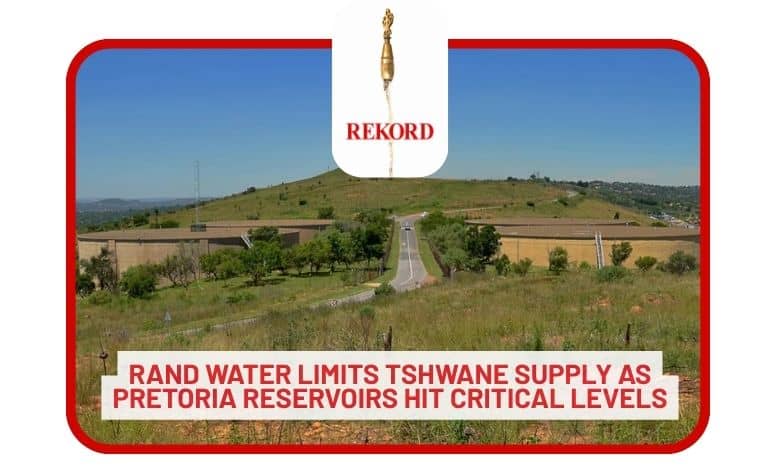
The Tshwane metro faces growing pressure on its water supply as high consumption, strained infrastructure and critically low reservoir levels threaten reliable access to water.
As summer approaches, concerns are mounting that communities could face prolonged interruptions unless demand falls and supply systems stabilise. With temperatures forecast to reach between 31°C and 35°C over the weekend, residents are urged to keep safe drinking water available, particularly for children and older people.
Rand Water warns that it is pumping at maximum capacity, yet consumption across several municipal customers remains exceptionally high.
According to Rand Water, the metro is among the municipalities exceeding its water allocation, placing additional pressure on an already strained regional network.
The situation extends beyond dry taps. Water quality concerns have also affected communities in Pretoria, with a boil-water advisory issued for parts of Pretoria following sewage-related contamination and restrictions placed on tap-water use around Bronkhorstspruit.
On October 20, Rand Water warned that consumption among several municipal customers had reached exceptionally high levels.
Despite pumping at maximum capacity, demand continued to rise, making it increasingly difficult to balance supply across the network.
According to Rand Water, Tshwane was using about 794 million litres of water daily, exceeding its stated allocation of 752 million litres a day.
The metro was urged by Rand Water to reduce consumption immediately by 42 million litres and work towards a gradual reduction of 127 million litres.
Metro spokesperson Lindela Mashigo said on October 23 that Rand Water has restricted water supply to the Klapperkop and Garsfontein receiving reservoirs due to high consumption.
He explained that water levels in both reservoirs have dropped significantly, affecting their ability to supply other reservoirs in the distribution network.
He warned that the Garsfontein and Klapperkop water systems were experiencing critically low levels.
The Garsfontein Reservoir system in eastern Pretoria has come under renewed pressure following a previous recovery from a burst bulk pipeline and temporary repairs earlier in October.
High consumption has since placed the system under strain again.
Flow-control measures implemented
Mashigo said the metro is implementing flow-control measures and reducing outflow to help stabilise the network.
According to Mashigo, these measures could result in intermittent low pressure or temporary interruptions, particularly in high-lying areas that may take longer to recover.
He said water tankers are being deployed to assist affected communities.
DA councillor Siobhan Muller has criticised the metro’s handling of the water crisis, describing the situation as unacceptable and accusing the mayor of failing to acknowledge the extent of the problems facing the city.
Muller also highlighted difficulties in obtaining water tankers for communities in the eastern parts of Pretoria. She said securing a tanker could take days, raising concerns about the effectiveness and responsiveness of emergency water distribution.
Her criticism comes as residents contend with low pressure, interruptions and uncertainty about when normal supply will return.
Where municipal water is unavailable, reliable emergency deliveries become particularly important for households that cannot store sufficient water or access alternative supplies.
“The immediate challenge is to ensure that affected communities receive timely assistance while the city works to restore reservoir levels and stabilise the distribution network,” said Muller.
Scope of disruptions
The Garsfontein and Klapperkop supply systems serve numerous reservoirs and surrounding suburbs, meaning disruptions could extend beyond the immediate reservoir areas.
Potentially affected locations include Garsfontein, Moreleta Park, Elardus Park, Constantia Park, Parkmore, Waterkloof Ridge and Monument Park. Other reservoirs listed in the wider supply network include Eersterust, Mamelodi, Silvertondale, Waltloo, Lynnwood, Muckleneuk, Queenswood, Sinoville and Waverley.
The Klapperkop supply area also includes Carina Street, Salvokop and Waterkloof reservoirs.
The extent and duration of interruptions may vary between neighbourhoods, depending on reservoir levels, network conditions and the effectiveness of flow-control measures.
The metro added that residents should not assume that water will return at the same time across all affected areas.
High-lying locations may experience prolonged low pressure, and households should follow municipal announcements for updated information.
Practical steps to save water
Reducing water consumption is essential while reservoir levels remain critically low. Households should prioritise drinking, cooking and basic sanitation and postpone non-essential activities until supplies recover.
Short showers can significantly reduce household water use. Turn off the shower while soaping up and use a bucket to collect clean water while waiting for the temperature to rise. This water can be reused for suitable household purposes.
Washing machines and dishwashers should only run with full loads. When washing dishes by hand, use a filled basin rather than leaving the tap running continuously. Reuse suitable leftover water for flushing toilets or watering established trees where appropriate.
Outdoor water use should be minimised. Stop watering lawns, avoid washing vehicles with hoses and use a broom to clean driveways and paved areas. Swimming pools should not be topped up during the restrictions.
Households should also inspect taps, toilets and plumbing for leaks. Even small leaks can waste valuable water over time. Keep drinking water in clean, covered containers and use stored supplies carefully.
Collecting and reusing suitable household water can help stretch limited supplies, but water that may be contaminated should never be used for drinking or food preparation.
Localised health and supply advisories
In Pretoria CBD and surrounding areas, a boil-water advisory has been issued for Pretoria Central, Arcadia, Sunnyside, Trevenna, Marabastad, Asiatic Bazaar, Phillip Nel Park and Belle Ombre following sewage contamination associated with Findlay Reservoir. Residents in the affected areas should boil tap water for at least one minute before drinking, cooking or brushing their teeth, and avoid using stored tap water or tap-water ice until the advisory is lifted.
In Bronkhorstspruit and Region 7, tap water has been restricted to flushing toilets only, with no confirmed date for the restoration of safe water in the supplied information.
In Pretoria East, Moreleta Park, Elardus Park and Garsfontein are experiencing a slow supply recovery.

Do you have more information about the story?
Please send us an email to bennittb@rekord.co.za or phone us on 083 625 4114.
For free breaking and community news, visit Rekord’s websites: Rekord East
For more news and interesting articles, like Rekord on Facebook, follow us on Twitter or Instagram or TikTok or WhatsApp Channel


