
Three men granted R10 000 bail in wildlife case
Three men arrested after lion and tiger cubs and other wild animals were seized in East Lynne, Pretoria, have been granted R10 000 bail each. They face charges relating to protected wildlife possession and animal cruelty.
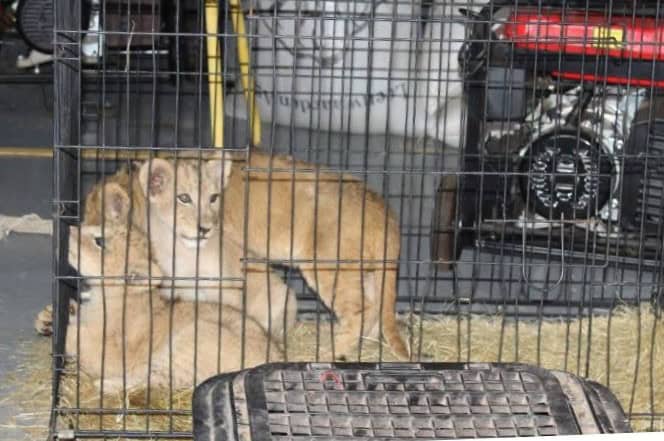
Three men have been granted bail of R10 000 each after appearing in the Pretoria Magistrate’s Court on November 19, after the seizure of lion and tiger cubs and other wild animals at a private property in East Lynne, Pretoria.
Schalk Derckson (24), Johannes Michael Derckson (25), both from East Lynne, and Delron Matthew Lechon Abrahams (21), from Eersterust, face charges of contravening Section 57(1) of the National Environmental Management: Biodiversity Act 10 of 2004 and animal cruelty.
It is alleged that the three men unlawfully possessed three lion cubs, two tiger cubs, two bat-eared foxes and three caracals on November 17. The animals were allegedly kept in unsafe plastic crates.
Lumka Mahanjana, NPA regional spokesperson for the Gauteng division, said the state did not oppose bail but requested that appropriate conditions be imposed. The court granted each bail subject to them surrendering their passports to the investigating officer and reporting to their nearest police station once a week.
The matter was postponed to February 16, 2027, for further investigation.
Social media tip-off sparks raid
The arrests followed an operation on November 17 led by the Department of Forestry, Fisheries and the Environment’s environmental management inspectors, known as the Green Scorpions, with support from Gauteng’s provincial Green Scorpions and the SAPS.
According to the department, the investigation was launched after an informant alerted authorities to wildlife allegedly being advertised for sale on social media.
Engagement with the advertiser reportedly indicated that lion cubs, tiger cubs, servals and caracals were being offered for sale.
The operation was authorised through the North Gauteng Directorate of Public Prosecutions in terms of Section 252A of the Criminal Procedure Act, 1977.
During the raid, the animals were confiscated after the suspects allegedly failed to produce permits authorising restricted activities involving the species.
The animals are being cared for at the Pretoria Zoo while the criminal proceedings continue.
Forestry, Fisheries and the Environment Minister David Maynier described the operation as an example of integrated environmental law enforcement, emphasising the importance of co-operation between environmental authorities and law enforcement agencies in tackling illegal wildlife trade.

Concerns over commercial big cat trade
The seizure has renewed concerns about the commercial breeding and trade of big cats in South Africa, including the role of captive breeding operations and the demand for lion and tiger cubs.
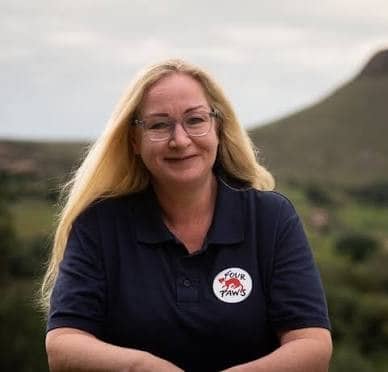
Four Paws director Fiona Miles said the organisation could not speculate on the origins of the specific animals seized in East Lynne while the investigation was ongoing.
She said that the seizure places the spotlight on the trade of big cats and the circumstances in which young animals end up in the commercial industry and illegal trade.
Miles said the organisation cannot speculate about the origin of the specific cubs that were seized in Pretoria, as the police investigation is still ongoing.
“Our research however shows that the legal industry and the illegal trade are not two separate worlds. We identified networks which operate large breeding facilities around public interaction with big cats, while they also trade in living animals and bones, as well as others who provide a start-to-destination service, from purchase to legal and forged documentation and transport,” Miles said.
According to her, the legal trade serves as a cover for a growing illegal trade in big cats. “Whether these cubs come from a registered farm or a backyard operation, the underlying cause is the same: the commercial breeding of big cats.”
Fragmented rules and welfare risks
Miles said South Africa’s regulation of tiger trade is especially fragmented, because tigers are not indigenous to the country and are classified as a non-native species.
“Four Paws’ research has found that every province regulates big cats differently and, in some cases, not at all. When we inquired with the provinces in 2022, Gauteng indicated that no permit was necessary to keep tigers, while Limpopo said tigers are not regulated by their environmental law,” explained Miles.
She believes the lack of a compulsory national register for numbers, births, deaths and movements makes it difficult to determine the scope of the trade.
Miles said the demand for big cat cubs is driven by various markets, including tourism and interaction activities, private detention and international trade.
According to her, cubs used for interaction with tourists are often separated from their mothers shortly after birth.
“On breeding farms, cubs are usually separated from their mothers within days after the birth. Hand-raised cubs miss out on the essential nutrients, socialisation and learning process which only the mother can provide.”
She said these animals can develop nutritional deficiencies, weakened immune systems and behavioural problems, while inefficient vaccinations and deworming, as well as inbreeding, can cause further health problems.
“A thorough veterinary assessment is therefore crucial,” said Miles.
Her premise is that big cats born and raised in captivity cannot be released into the wild and should rather be taken care of in true sanctuaries where they will receive lifelong care, are not bred and not handled by humans.
The organisation calls for a complete termination of the commercial big cat industry in South Africa, with a phasing out of breeding and trading companies, a central register for tigers and stronger control of captivity and movement.
“‘Four Paws’ position is clear: wild animals are not pets. They have complicated needs which include feeding, space, behaviour, climate and social structures that cannot be satisfied at a house,” she added.
ALSO READ: Green Scorpions seize lion and tiger cubs in Pretoria raid
Do you have more information about the story?
Please send us an email to bennittb@rekord.co.za or phone us on 083 625 4114.
For free breaking and community news, visit Rekord’s websites: Rekord East
For more news and interesting articles, like Rekord on Facebook, follow us on Twitter or Instagram or TikTok or WhatsApp Channel


