SARU wants complete transformation in the next five years
SARU's strategic transformation plan, announced earlier this week, aims to fully transform rugby at all levels in the next five years.
Jurie Roux, CEO of the South African Rugby Union (Saru) assured rugby lovers that they will not regulate requirements of their new strategic transformation plan (STP) ‘with a whip’, but “without a structured objective, backed by implementation plans, we would be nowhere”.
With these words, he indeed gave the assurance to rugby supporters that the game would be transformed at all levels at a much quicker pace than with the amalgamation of rugby governing bodies in 1992.
Oregan Hoskins, president of SARU said this plan, which was announced earlier this week, was the culmination of two years’ hard work and consultation. He said the wide-ranging plan – which was approved by the Saru general council in December – would provide a roadmap for rugby over the next five years.
“The development of this plan was essential for South African rugby to maintain its place as a leading South African sport federation. It has been the number one priority for me since I assumed the presidency and for the executive council,” said Hoskins.
“We started this new approach in October 2012 with a transformation indaba. Since then we have worked hard and with great determination to deliver a plan to guide our sport all the way to the 2019 Rugby World Cup in Japan.
“Our document is aligned with the government’s national sports plan and is definitely not only about the number of black players on the field. It has six focus areas: demographic representation; access to the game; skills and capacity development; performance; community development and social responsibility and corporate governance.
“Within these six dimensions are 71 key performance indicators. For instance we want to introduce 150 000 new primary school children to the game by 2019; accredit 1 500 new administrators; raise preferential procurement to 40% from targeted suppliers; increase the number of women in administration to 40% and raise the black representation in our national teams.”
Jurie Roux, CEO of Saru, was at pains emphasising to media that the STP was not a quota system.
“The STP is a roadmap,” said Roux. “We have a destination in mind and know there will be shortcuts and at other times we may stray from the path. There are no punishments if our targets are not met but without a structured objective, backed by implementation plans, we would be nowhere.
“Transformation is a critical business imperative in South Africa and if we had not taken this new approach to what had been an organic process up until recently, we would have put our sport in peril of becoming marginalised.
“It will unlock untapped talent and has the potential to awaken corporate interest in rugby where it may previously not have existed. The simple facts are that the majority of rugby supporters and players – at schoolboy and club level – in South Africa are black; 84% of this country’s u.18s are black African – and we want them in our game in some way.”
Roux said rugby was entirely unrecognisable from the game that returned from isolation in 1992, countering the perception that ‘nothing had changed’.
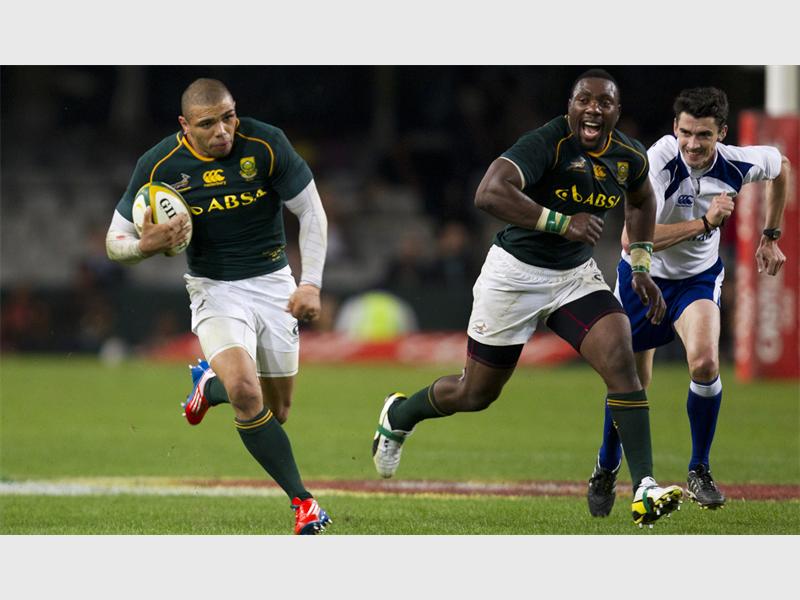
“Saru has had a black president for 17 years; our executive council is 75% black; we have had a black Springbok coach; the leading Springbok try-scorer of all time is black, and the DHL Western Province team who won the Absa Currie Cup in October averaged 40% black representation and had a black coach and captain.
“Rugby is massively transformed, but we know we have challenges. Only one in 35 schools in provinces such as KZN, Mpumalanga, Limpopo and North West play rugby for example, which provides unique challenges for those provinces compared to the Western and Eastern Cape where 60% of school rugby is played.
“And we are only judged on representation in the Springbok team. We have spent R500 million on development in rugby since 1992 and can point to significant advances but the Bok team is the only measure on which we are judged.
“We understand it is also unfair to put pressure on the Springbok coach without offering him any assistance – his teams can only reflect what is going on at the elite end of the domestic game.
“Since we started the process of developing this plan the provinces have shown their bona fides and black representation is increasing. We will reap those rewards over the coming seasons and decades.”
Roux said the STP would be monitored by a new Saru department – strategic performance management – which had been established out of the old development department in December. Specially developed software had also been designed to track progress.
For more community news, visit Rekord’s websites:
Also like our Facebook page and follow us on Twitter.