Tuks professor resigns from IAAF Tribunal in protest over Semenya while ASA is going to appeal against new regulation
A Tuks professor resigned as a member of the IAAF Disciplinary Tribunal in protest against the controversial new rule that is believed to target South African athlete Caster Semenya.
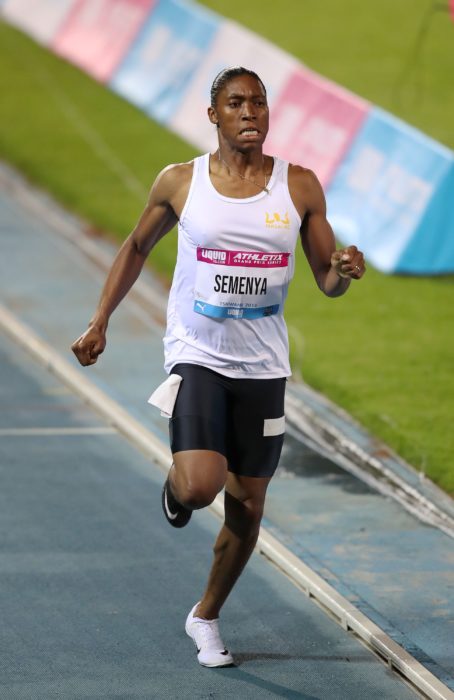
Professor Steve Cornelius of the Tuks Law Faculty decided to resign as a member of the IAAF Disciplinary Tribunal in protest against the controversial new rule that is believed to target gold medal-winning South African runner Caster Semenya.
In a hard-hitting letter to the president of the IAAF, Seb Coe, he explained the reasons for his decision.
“On deep moral grounds, I cannot see myself part of a system in which I may be called upon to apply regulations which I deem to be fundamentally flawed and most likely unlawful in various jurisdictions around the globe. It would also be unethical for me for me to devote time and energy to expose the warped ideology behind the new regulations while serving on the Disciplinary Tribunal.
“I cannot with good conscience continue to associate myself with an organisation which insists on ostracising specific individuals, all of them female, for no reason other than being what they are born to be. The adoption of the new eligibility regulations for female classification is based on the same kind of ideology that has led to some of the worse injustices and atrocities in the history of our planet.
“The new regulation is a sad reflection on the fact that antiquated views of the ‘old’ scandal hit IAAF still prevails and that the promises of reform have been empty indeed,” Cornelius said.
It is not the first time that Cornelius objected to the IAAF’s view on Hyperandrogenism. In paper he wrote in 2016 he pointed out that the IAAF is trying to protect women from having to compete against women with the supposed hormonal advantages of men while there is no similar policy to protect men competing against other men with elevated levels of testosterone.
According to Cornelius it implies that female athletes are weak and require protection against other women who are deemed to be too masculine.
“Men, on the other hand, are presumably strong and do not require protection. The IAAF embarked on a slippery slope of bigotry, sexism and racism. They are seeking to defend the indefensible.
“Whether a female athlete may or may not have an unfair competitive advantage over other female athletes merely because she has elevated natural levels of testosterone is just as relevant as whether a male athlete with elevated levels of testosterone has an unfair competitive advantage over other male athletes.
“It is just as relevant as whether a high jumper who is over two metres tall has an unfair competitive advantage over an average athlete and it is just as relevant as whether a discus thrower with acromegaly has an unfair competitive advantage over an average athlete,” Cornelius concluded.
***************
* Meanwhile, Athletics South Africa (ASA) has also announced that they will appeal against the new regulation.
In a press statement ASA confirmed that, after they studied the new regulations issued by the IAAF on the latest classification of female athletes and the guidance that was issued by the Court of Arbitration for Sport (CAS), they took the liberty to consult widely with role-players on the matter. This included the Minister of Sport and Recreation, SASCOC, various expert institutions and other relevant organisations and individuals.
“Based on this consultation, we have now taken a decision that we will challenge the IAAF on these new regulations as we have found them to be skewed. As a member federation, we will engage the IAAF as our mother body and if they do not change their minds on this new rule after this engagement, we will proceed to CAS for further assistance on the matter,” ASA stated.
According to ASA the IAAF Hyperandrogenism Regulations were first put in place from 1 May 2011. The regulations stated that female athletes who naturally produce levels of testosterone, 10 nmol/L, were not eligible to compete in the female category and needed to take androgen-suppressive drugs to resume competition.
An Indian sprinter was asked to abide by these regulations in July 2014 and she appealed to CAS on grounds that the regulations unfairly discriminated against women who naturally produce higher levels of testosterone.
On 24 July 2015 these regulations were suspended by CAS who stated that they were not satisfied with the evidence the IAAF provided, but allowed the IAAF up to two years (later extended) to submit additional evidence on the correlation between endogenous levels of testosterone and athletic performance.
ASA stated that, with their appeal against the new regulations, they will once again take the opportunity to re-affirm their support for all our athletes who may be affected by this new ruling.
ASA concluded by declaring that, until further notice, they will not be making any further comments on this matter.
For free breaking and community news, visit Rekord’s websites:
For more news and interesting articles, like Rekord on Facebook, follow us on Twitter or Instagram.