On the death of a legend
Blogger Fred Boshoff pays tribute to a literary legend upon his death and remembers the writer's body of work fondly.
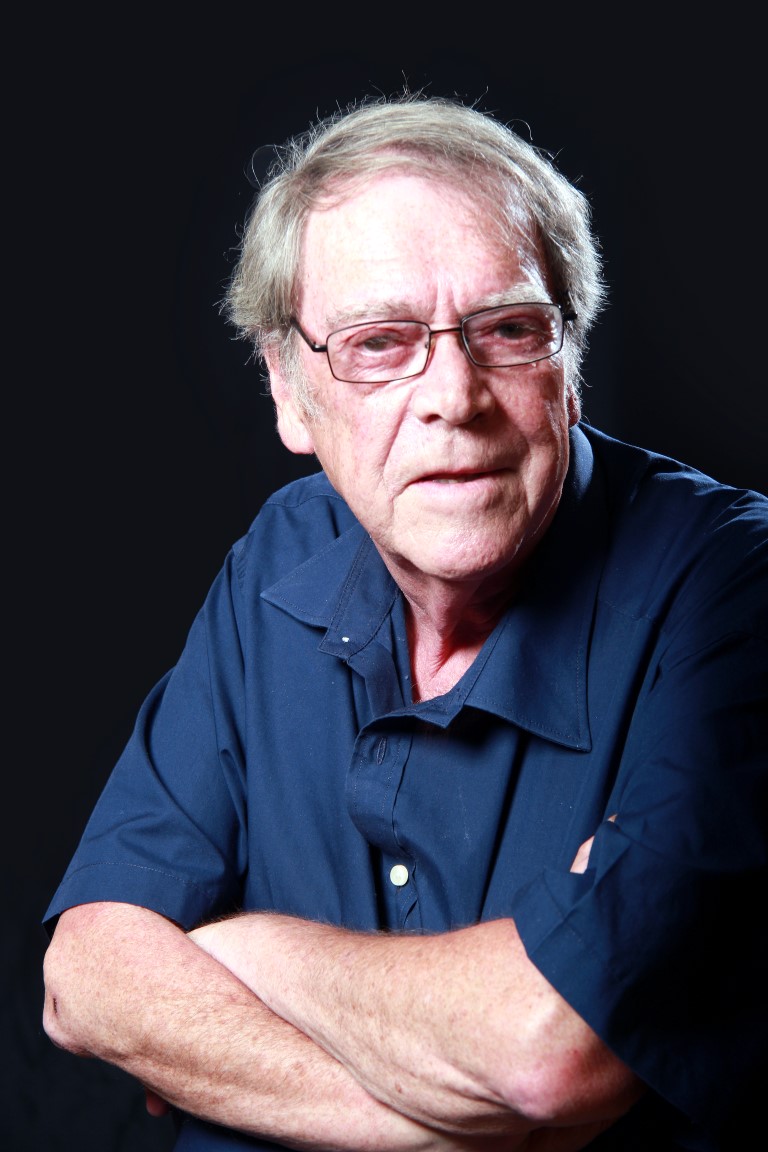
The famous author and Nobel Laureate, Gabriel García Márquez, died two weeks ago at the age of 87, leaving behind a wife, two children, and thousands of pages. His death saddens me, as it does millions, but my sadness is not overwhelming. He had a long, full life, and wrote so well about our coming to terms with loss that I’m sure he left us in peace.
Our task, then, is not so much to mourn him, but rather figure out how to best remember him. I wouldn’t presume to have an answer, but I do have a suggestion. We should read, write, love, and fight with an attitude that seeks out the marvelous in everything – with eyes that are willing to see the magic of reality.
Marques, who received the Nobel Prize for literature in 1982, became a sort of cult figure in modern literature with his Magical Realism style in his books such as One Hundred Years of Solitude, Love in the Time of Cholera, No One Writes to the Colonel and other writings.
To look at his true value in world literature, it may be necessary to look at his memorial service last Monday and see what the mourners said about him. With two heads of state and thousands of tearful admirers, on Monday Mexico bid farewell to Gabriel Garcia Marquez, the Colombian Nobel laureate considered one of the greatest authors of all time.
The ashes of the author were received at Mexico City’s majestic Palace of Fine Arts to several minutes of thunderous applause after being placed on a black pedestal by his widow, Mercedes Barcha, and his two sons, Gonzalo and Rodrigo.
He was eulogised in a brief ceremony in the dramatic art deco lobby by the presidents of both Mexico and Colombia, two countries linked by the writer through his birth, life, heritage and career. “We come as admirers and friends of Gabo from all corners of the planet,” said Colombian president, Juan Manuel Santos, using the nickname by which Garcia Marquez was known throughout Latin America.
“He will live on in his books and writings. But more than anything, he will live forever in the hopes of humanity. Eternal glory to someone who has given us so much glory,” Santos added. Mexican president Enrique Pena Nieto said the writer’s death was “a great loss not only for literature, but for humanity. Various generations … found answers to the questions of life in his stories and tales.”
Attendees released a flurry of yellow paper butterflies, one of Garcia Marquez’s most famous literary images from One Hundred Years of Solitude and the author’s favorite colour. Before the speeches, thousands of people stood in a line stretching more than a kilometre waiting for their turn to pass by the simple urn decorated with yellow roses during a three-hour tribute open to the public.
Dignitaries, friends and artists took turns as honour guards, including Mexico City mayor, Miguel Angel Mancera, and Rafael Tovar y de Teresa, president of Mexico’s National Council for Culture and the Arts. “Gabo was a watershed in my life,” said Nelly Hernandez, a 52-year-old teacher who was waiting outside the Palace of Fine Arts for the doors to open, holding a pair of yellow paper butterflies. “He taught me to relish life through literature.”
The writer’s birthplace in Colombia, the town of Aracataca on the Caribbean coast, held a symbolic funeral on Monday.
Mourners carried hundreds of yellow flowers and yellow paper butterflies, a reference to the character Mauricio Babilonia, who was always trailed by a cloud of yellow butterflies. Aracataca was the basis for the fictional village of Macondo, now iconic in world literature from the novel that has sold tens of millions of copies in dozens of languages.
On Wednesday, Colombia plans a marathon reading of Garcia Marquez’s work No One Writes to the Colonel.
Family members have not said what they plan to do with his ashes. Colombia has said it would like at least some of the ashes to go to his homeland. “Aracataca gave so much to Gabito … that we want some of his ashes to be here,” said Jorge Polo Camargo, head of protocol in the town.