‘Metro putting residents first’, Moya says in second State of the Capital Address
The mayor listed the coalition government’s successes this past year, including the progress made on the A Re Yeng Bus Rapid Transit network and having a fully funded budget. However, the opposition criticised her adress, questioning the credibility of the budget and that service delivery is deteriorating.
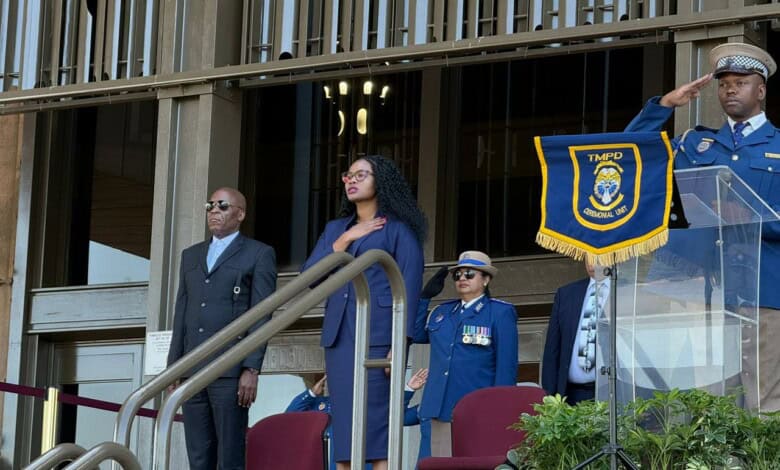
In Tshwane Mayor, Dr Nasiphi Moya’s, second State of the Capital Address (Soca), she declared the coalition government is “moving from repair to renewal, from commitment to action, and putting residents first”.
Moya spoke at Unisa ZK Matthews Great Hall on April 16.
She pointed out that the metro is shifting from crisis management to long-term rebuilding.
She reflected on an administration that took office amid financial strain, institutional instability and declining service delivery, but now claims measurable progress across six key priorities. These are financial stability and revenue enhancement; economic revitalisation and investment attraction; infrastructure development and service delivery; a safe and clean city; social services and community well-being; and strengthening governance and customer care.
“We are not yet where we want to be. We are not where we were, but we remain firmly on course to leave the City of Tshwane in a better state than we found it,” she said.
She said the coalition government inherited ballooning debt exceeding R13-billion, weak internal controls and consecutive unfunded budgets, which had left the city unable to meet growing service delivery demands.
According to her, a key milestone was the adoption of a fully funded 2025/26 budget – the first since 2021 – alongside improved financial discipline and revenue collection.
“Cash-backed reserves have increased from R835-million to over R1.9-billion and are projected to reach R2.86-billion. The city has also reduced its Eskom debt from more than R6.6-billion to approximately R4.7-billion.”
Moya said the metro is beginning to reverse a decade of economic decline, supported by renewed investor confidence.
“The city secured R86-billion in investment pledges through its inaugural investment summit, targeting sectors such as energy, infrastructure, logistics and automotive manufacturing.”
She highlighted that global manufacturer Chery has selected Pretoria as a production base, reinforcing the metro’s position as a key automotive hub alongside operations such as the BMW Group Plant Rosslyn.
“The goal is to grow the economy to 3.9% and create at least 80 000 jobs by 2029,” Moya said.
Initiatives such as the Catalytic Investment Unit and the InvestSA One Stop Shop are expected to fast-track approvals and unlock investment.
Moya said the city is restarting stalled projects and scaling up new developments to support population growth and economic activity.
“More than 220km of roads have been resurfaced across Tshwane, while the sinkhole repair programme in Centurion has been expanded to address dolomitic risks.”
She emphasised that public transport is also being overhauled through the A Re Yeng Bus Rapid Transit (BRT) network.
“Line 2C along Lynnwood Road is nearing completion, while Line 3 linking the Pretoria CBD to Atteridgeville is about 85% complete,” Moya said.
She added that integration with taxi operators has been formalised to improve accessibility and reliability, marking a significant step toward a more unified public transport system.
“Intermodal transport hubs are also progressing, including the Denneboom facility in Mamelodi and the near-complete Wonderboom Intermodal Facility.”
She explained that the Wonderboom National Airport is being repositioned as a logistics, tourism and regional aviation hub, with existing routes connecting to Durban and Cape Town and plans for further expansion through a precinct development strategy.
Moya rejected claims of a water crisis, saying Pretoria’s challenges stem from infrastructure failures rather than a lack of supply.
“There is no water shortage; the issue is losses due to ageing infrastructure, leaks and illegal connections,” she said.
She added that a Water Stabilisation Plan has been introduced to reduce losses and improve reliability, alongside upgrades to reservoirs and pipelines.
Regarding electricity, Moya said more than half of the city’s transformers are over 40 years old, requiring urgent intervention.
“Key substations, including Kwagga, Njala and Rosslyn, are being stabilised as part of an Electricity Stabilisation Plan. Secondary substations are also being prioritised for a stable supply.”
She also highlighted cable theft as a major concern, with losses exceeding R169-million since 2021.
Moya revealed that the city is accelerating efforts to formalise informal settlements and expand access to housing. More than 3 800 households have been relocated to serviced stands, while nearly 70 000 stands are in planning.
“Over 500 informal settlements have been identified and categorised for development, upgrading or relocation.”
Moya acknowledged ongoing governance challenges but said progress is being made, with audit outcomes improving and internal controls strengthening.
Investigations into irregular expenditure totalling R15.5-billion are ongoing, while disciplinary and criminal actions have been instituted in multiple cases.
The city has also filled more than 2 300 vacancies to strengthen internal capacity and reduce reliance on outsourced services.
MMC for Human Settlements, Alderman Aaron Maluleka, said plans are underway to relocate Plastic View residents.
“The city has requested the Gauteng government to purchase land at Pretorius Park Ext 41, so we can develop proper housing for qualifying residents,” he said.
He added that bulk infrastructure installation will begin in the next financial year, with the province expected to construct top structures.
Moya said law enforcement has been intensified through multi-agency operations, with more than 400 businesses inspected and illegal operations shut down.
The city has also cleared over 19 000 tons of illegal dumping, while response times have improved.
On social services, she said indigent support has been expanded, raising the property threshold to R250 000 and providing free basic services to qualifying households.
“Food relief programmes have supported over 2 000 households, while more than 9 000 work opportunities have been created.”
She said healthcare access has improved through extended clinic hours and enhanced service delivery.
Moya acknowledged governance challenges, including past adverse audit outcomes, but said improvements are being made, with reduced qualification areas and ongoing investigations into irregular expenditure.
“We have stabilised where there was uncertainty. We have restored where systems were weakening,” she said.
“We are now laying the foundation for a city that works, not in theory, but in the daily lives of our residents.”
Opposition parties, however, strongly criticised the address.
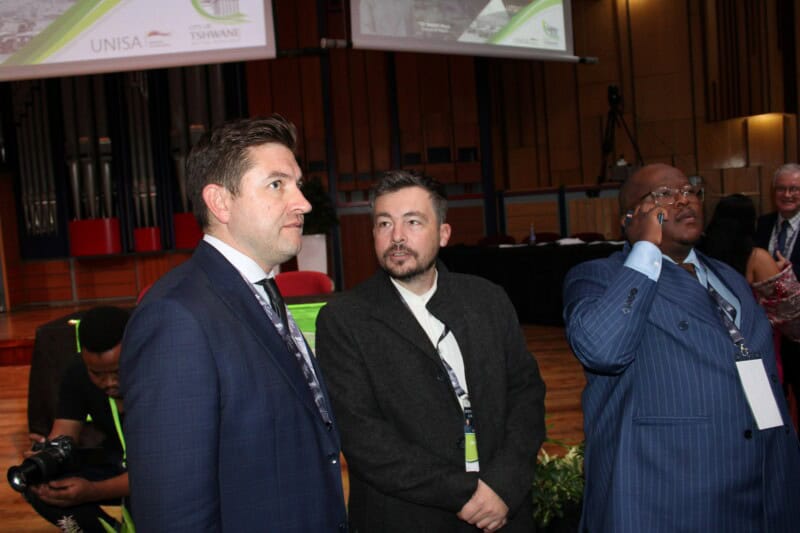
DA Tshwane Caucus leader Cilliers Brink said the city is ignoring worsening service delivery failures, particularly water shortages in Hammanskraal.
“The reality is that residents are facing ongoing water and electricity challenges,” he said.
Brink also raised concerns about the city’s financial position, citing declining revenue collection and questioning the credibility of a ‘funded budget’.
“The reality is that service delivery is deteriorating while residents are left without consistent access to water and electricity,” he said.
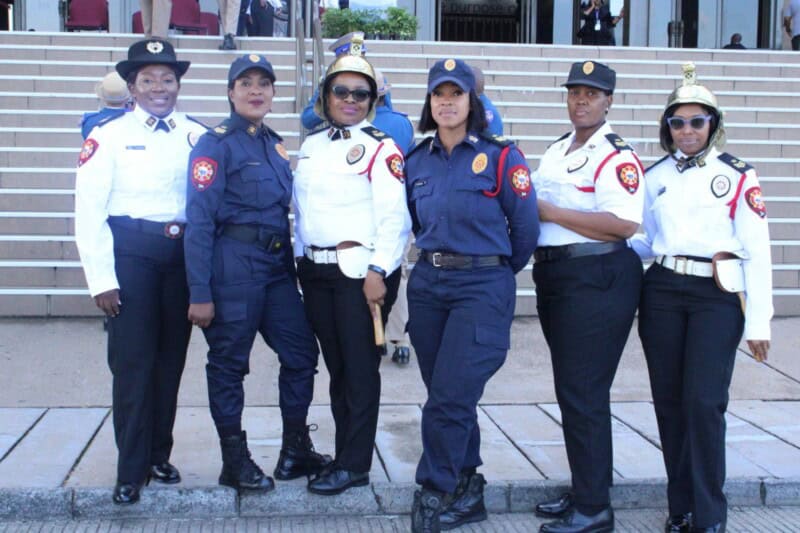
He warned that ongoing power instability is affecting key industrial areas such as Silverton and Waltloo, placing additional pressure on businesses and the local economy.
Freedom Front Plus caucus leader Grandi Theunissen questioned the city’s financial claims, describing the reported surplus as a ‘paper figure’ and warning that the metro’s financial position remains fragile.
He also criticised the cost of hosting the SOCA event, calling it unnecessary spending.
Do you have more information about the story?
Please send us an email to bennittb@rekord.co.za or phone us on 083 625 4114.
For free breaking and community news, visit Rekord’s websites: Rekord East
For more news and interesting articles, like Rekord on Facebook, follow us on Twitter or Instagram or TikTok or WhatsApp Channel