Jobless and homeless; are they dangerous?
They are called thieves, criminals, lazy and dangerous.
POLOKWANE – They are called thieves, criminals, lazy and dangerous.
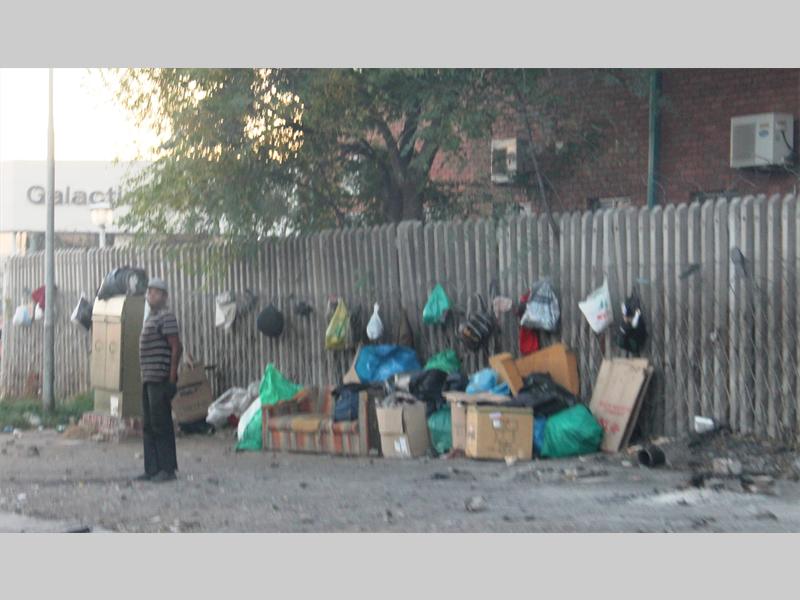
The men who make their living on street corners, like the ones on the corner of Schoeman and Excelsior Street, say the municipality and the departments of health and social development have been turning a blind eye to them and they have no other place to go.
These men, who can be found on this corner any time of the day or night, shared their stories With Review, with Johannes Ledwaba (42) speaking on their behalf.
Ledwaba says this street corner has been his home and his office for the past seven years. He is just one of over 30 men who rely on passersby to give them a few rand for food, or a small job to do for payment.
Ledwaba starts his morning between 04:00 and 05:00. He says he is not quite sure exactly what time, as he does not own a watch. He only has a few belongings, which include a T-shirt, an overall jacket (that he wears to keep warm while sleeping under cardboard boxes) a pair of denim trousers, and a pair of old safety boots.
“I have more than most. Many men here do not even own a jacket or shoes. We are simple people with simple needs and we have become sort of a family.
We look out for ourselves, and sometimes for each other. We do not have other people who will care for us, because the rest of the people in Polokwane feel that we are here to steal from them and make the place look unclean,” Ledwaba says.
A typical day in his life starts with him making a fire on the pavement, a few metres away from the cardboard box under which he spent the night. “The fire keeps us from freezing and is the only way for us to make hot water or food. We use an old tin to cook pap in,” he says. If there is food, it is usually pap. He says he has to hide any mielie meal left over because sometimes other homeless people who pass by will steal it.
“We are not beggars and we are not thieves. We are men looking for an honest way to make a living by doing garden work, helping with moving or anything that can legally give us something to eat at night,” he says. Casual work opportunities (piece jobs) are few and far between, he says, and when they don’t find any jobs to do, it means that they have nothing to eat for days on end.
Life is hard for these men and often their only form of entertainment and way of keeping busy is a game of morabaraba, a traditional board game usually played with stones in a grid of small holes in the ground.
“Some of the shops in the area do try and help by selling us their pies or bread cheap, but that R5 can be used for mielie meal that will go further than just a pie,” Ledwaba explains.
“We do make use of the soup kitchen, but sometimes come back from a job too late and are left without food for the night. Many people pick us up to work on their farms and then leave us to make our own way back to the city, which means we have to walk for hours. Getting a lift is not easy when you stink of sweat and your clothes are dirty,” he says.
He says it is often dangerous sleeping outdoors as there are some people who will try and rob at knifepoint, the men who managed to earn some money during the day. “We could fight these people off easily but usually do not make a scene as the police will come and take us away and the people who pass by here looking for workers could decide not to come again for fear of violence,” he explains.
Just across the street from where he lives, the pavement is filled with street children every night. These children beg on the streets during the day and sleep close together trying to beat the cold. “We know they sleep here because we are men and they think we will look after them, which we do to a certain extent, but the street is no place to make friends and every person is left to fend for himself.”
Municipal spokesperson, Malesela Maubane, said the municipality was aware of the situation but had not intervened as the men were not bothering people. “Where the law is broken the police will do their duty. If children are involved, social services will get involved, but other than that they are left alone,” he said.
Health department spokesperson, Adéle van der Linde said the problem with homeless people in the city, province and country, was that there was no law referring to them. Even street children were not protected by a law saying they should be removed from the street and placed in a place of safety, she said.