Capricorn awards top gender programmes
THE efforts of community-based organisations and others dealing with empowering victims of gender-based violence were recognised, and some awarded, last Thursday.
POLOKWANE – THE efforts of community-based organisations and others dealing with empowering victims of gender-based violence were recognised, and some awarded, last Thursday.
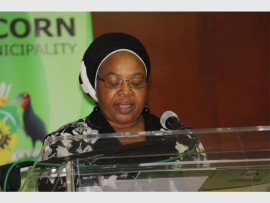
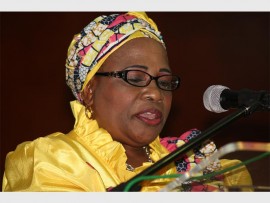
The Capricorn District Municipality (CDM) hosted the District Gender Justice Summit last Thursday and various departments, municipalities, community and faith based organisations, Gender Links, representatives from the Commission on Gender Equality, and non-government organisations attended the event at Bolivia Lodge.
The conversation centred on gender equal-ity, gender-based violence and the role of the CDM in furthering the struggle for equality in society and the workplace.
The theme of the summit was “365 days of local action to end violence and empower the community through economic development in all sectors”.
CDM gender coordinator, Naledi Masipa, said the objective of the summit was to create partnerships and networking opportunities by bringing the stakeholders together.
Stakeholders came from various sectors including those dealing with HIV/aids, community care workers, drop-in centres, crèches, victim empowerment centres, dis-abled care and training centres and men against abuse organisations were among those represented at the summit.
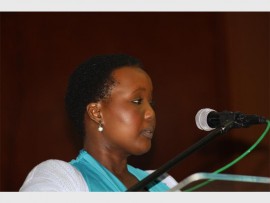
Ntombi Mbadhlanyana of the Gender Links Centre of Excellence in gender mainstreaming said she was proud of the work done and progress in the district by local municipalities in gender equality. She hoped participants would also participate in the annual Gender Links regional summit.
The Khuseleka One Stop Victim Empower-ment Centre was founded in 2011 and its doors are open day and night for victims of gender violence. On average 49 victims are housed at the centre and they stay around six months, depending on the case. The centre cares for victims of crime and violence, sexual abuse and rape. They are taught skills such as sewing and computer skills while at the centre. Successes include three hate-crime families that were re-integrated in nearby communities and a former gr. 12 learner who is now a pharmacy assistant at a hospital.
An unidentified victim-turned-survivor of abuse told her story, and how her husband eventually left her and the children and went to Gauteng.
She was taken in at the Khuseleka centre and today she is a new woman, having her own shop and getting on in life. Her next dream, the self-assured young woman said, was to own her own car.
Parallel sessions were held whereby judges listened to presentations of various organisations.
Bula Mahlo home-based care coordinator Mosale Magwele told attendees the centre helped HIV/aids positive people survive stereotyping and the stigma associated with the illness. “Many HIV-positive people end up lonely and lacking assistance because they do not want to face the discrimination that comes with disclosing their status. We struggle to convince them to take medication because their religious beliefs prevent them from using medication.”
Representing Dinkwe tsa Lethabo Dis-ability Care Centre, Thabo Matshidi, said they aimed at addressing discrimination against those with disabilities in the community.
“Some of our main challenges are financial challenges, as well as sexual and physical abuse against those with disabilities. We want disabled people to know their rights.” Matshidi said they also worked with families who hide family members with disabilities.
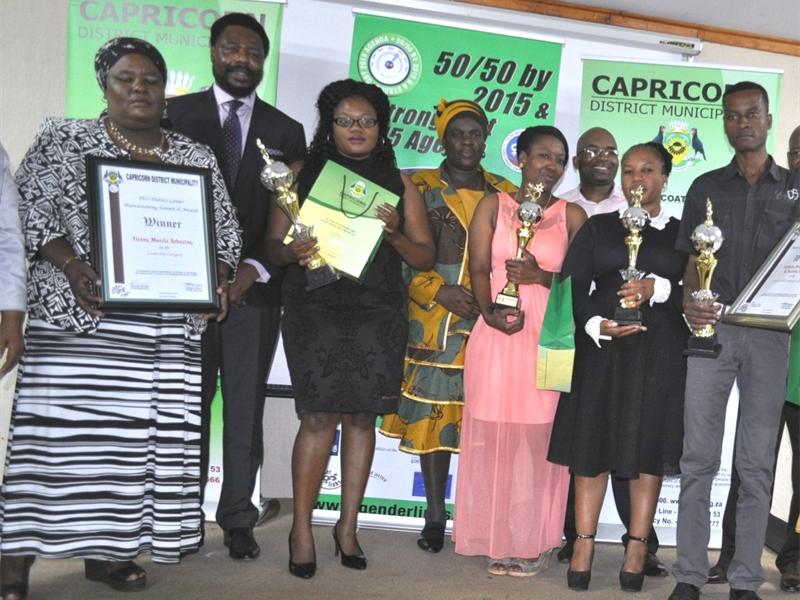
Speaking at the awards ceremony, CDM executive mayor, Cllr Gilbert Kganyago, said South Africa was becoming a violent society.
“We need to work hard to stem the tide of this emerging violence. It is becoming gruesome in some instances.
We need to go back to the basic values that have characterised our humanity over centuries and millennia. We should not tire to do something about it. One of the things that we are guilty of is that we are not promoting social media that is culturally promoting the values of our people. We allow things to be shown on TV that promote the violence that we are talking about here, and that is what we must begin to campaign about, especially we as community organisations. When something is drilled into your psyche, you will begin to live that reality because it was drilled into you,” he said.
He said society was sick and therefore needed healing. “That healing must come from social education,” he said. “Mankweng is notorious in the gender-based statistics, followed by Lebowakgomo and Seshego; people are sick out there and we need to intervene.”
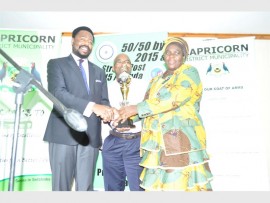
He congratulated the winners of awards in recognition of the work they were doing and urged them to continue doing the good work.
The following organisations won awards:
• A special award was presented to Aganang Municipality for having the highest number of participants at the summit.
• The winner of the leadership award was Tiyang Maatla Drop-in Centre in Sebayeng with the runners-up being Matlhaku Crèche and the Seshego police.
• For HIV/aids care work: Promaster Channel Group and runners-up Releleng Drop-in Centre, BulaMahlo HCBC, and Mashashane HCBC.
• Specific gender-based campaigns: Lethabo Disabled Care and Training Centre, with runner-ups Matlala Victim Empowerment Centre and Mankweng Victim Empowerment Centre.
• The institutional category was won by the Young Women’s Christian Association (YWCA).