
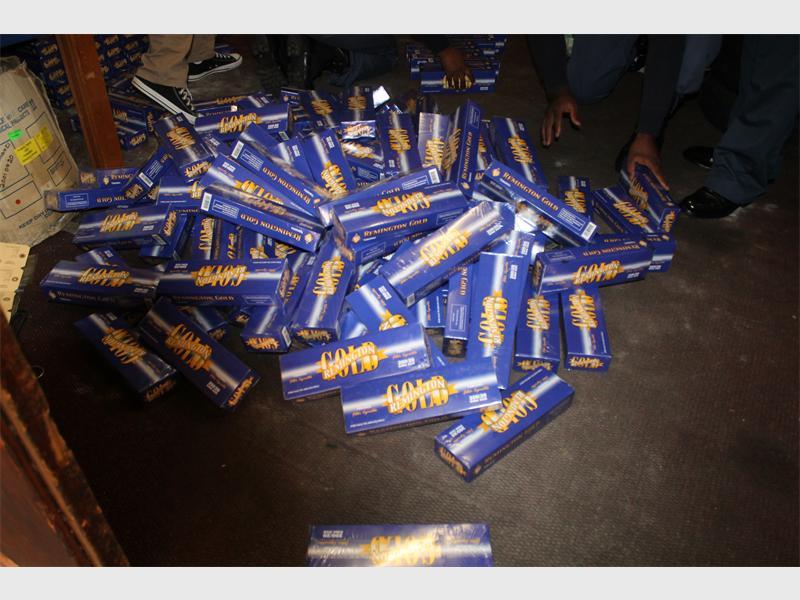
POLOKWANE – The illegal tobacco trade including the hijacking of vehicles transporting tobacco products is fast becoming one of the biggest challenges for the police in the province.
This is according to provincial police commissioner, Lt Genl Fannie Masemola.
At a recent meeting he spoke about the increase in truck hijackings and said it was found that most hijacked trucks were transporting tobacco products. “There is a special need to increase and sharpen up border policing especially closer to Beit Bridge in Musina, which is the border between South Africa and Zimbabwe,” he explained.
Masemola said the police will focus on transportation vehicles and will monitor these vehicles closely. “With the proper cross-border policing it will be possible to eradicate this scourge,” he added.
Provincial police spokesperson, Col Ronél Otto, said it is common knowledge that Limpopo is the Zimbabwean cigarette smuggling hub, as well as being used as a transit route for the illegal tobacco trade.
According to statistics provided by the Tobacco Institute of Southern Africa (Tisa), 30% of South Africa’s illicit tobacco trading takes place in Limpopo. Illegal cigarettes are freely available for purchase by anyone in Polokwane. A Ladanna shop owner who sells illegal cigarettes and spoke to Review on condition of anonymity, said illegal cigarettes are easily available and his customers want the cheapest product possible, not caring whether the cigarettes they buy are legal or not. “They care about the price and not where it comes from. And we make the money that we would have lost if we only sold the legal tobacco,” he explained.
According to Francois van der Merwe, chairperson of Tisa, the trade in illegal cigarettes is a major contributor to illegal trading at border posts, with illegal cigarettes negatively affecting the economy in the loss of billions of rands each year in revenue and taxes. “This is money that could have been channeled to other much-needed services and infrastructure, for instance,” he said in a telephone interview with Review.